

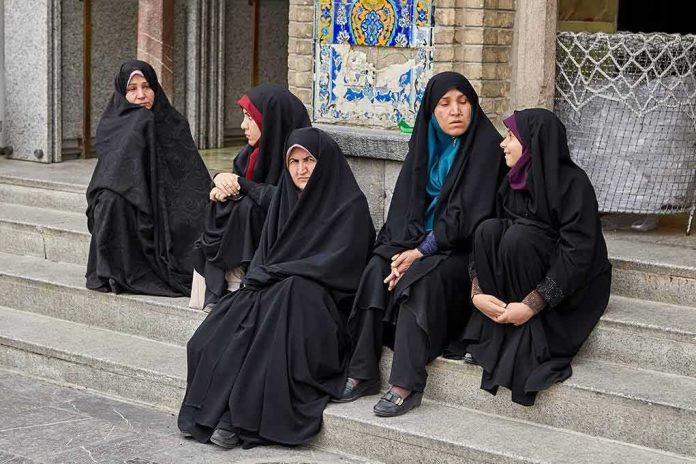
The controversy over taxpayer-funded hijabs for small-boat arrivals is not an aberration; it is the predictable collision of a rules-based detention regime with a political debate that treats any welfare provision as a proxy for border control success or failure.
The Short Version
- The Home Office issues basic clothing to arrivals under binding Short-term Holding Facility Rules; cultural and religious items may be included where needed.
- This is part of a standard welfare pack grounded in health, safety, and dignity—primarily dry, clean clothing for people arriving soaked or contaminated.
- Media reports of roughly 974 hijabs in six months sit within that framework, though the raw dataset has not been published.
- Critics frame the practice as taxpayer-funded religious support and a pull factor, but they offer rhetoric rather than contrary legal or factual evidence.
What the Rules Actually Require
Short-term Holding Facility Rules, made under statutory authority, impose clear duties on the state when individuals are held in processing sites such as Dover or Manston. Two provisions matter here. First, detainees may wear their own clothes if suitable and clean. Second—and this is the operative trigger—if required, a detained person must be provided with clothing adequate for warmth and health, in arrangements approved by the Secretary of State. Home Office equality materials further interpret the regime to mean religious and cultural needs should be catered for as far as practicable within these facilities, embedding accommodation into day-to-day operations rather than leaving it to ad hoc discretion.
This legal architecture predates the moment’s outrage cycle. Comparable rules exist across UK immigration detention and even in other democracies’ short-term custody settings. The through-line is consistent: safety and basic dignity first; reasonable religious accommodation where operationally feasible.
Mechanism on the Ground: From Wet Arrival to Dry Kit
Crossing the Channel in small craft is physically punishing. People frequently land in clothing drenched with seawater or spattered with fuel; either condition can create immediate health and sanitation risks in a congregate facility. The Home Office’s stated practice is to issue a dry clothing pack to arrivals who need it—the backbone items are utilitarian: tracksuits, T-shirts, underwear, socks, footwear, and, in colder months, outerwear and gloves. Within that inventory, facilities may also stock items meeting cultural or religious needs, which is where head coverings for women can appear. The aim is not to accessorize but to stabilize—replace unwearable garments quickly and, where practicable, allow people to remain appropriately dressed by their own lights while they are lawfully in the state’s care.
That is the logic of detention standards: remove immediate risks, meet baseline human needs, and avoid creating avoidable conflicts by ignoring straightforward religious or cultural accommodations. This is housekeeping, not social engineering.
Where the Numbers Come From—and What They Don’t Prove
Recent coverage cites internal figures showing roughly 974 hijabs distributed between January and June 2026, or about 162 per month, folded into the broader clothing packs issued at intake. The underlying spreadsheet has not been published in these reports, so we cannot interrogate site-level variance or item coding, nor can we know how many distributions replaced a damaged personal headscarf versus being provided upon request. The absence of raw data does not undercut the central point, however: issuance occurred within, and because of, the governing welfare rules—rules that explicitly require clothing adequate for warmth and health and contemplate cultural and religious items where needed.
If policymakers want to defuse suspicion, the remedy is procedural transparency: publish the procurement guidance, stock lists by facility, and anonymized monthly issuance tallies by item category. But the rules-based duty itself is not in doubt; it is on the statute book.
The Critique: Taxpayers, Deterrence, and Symbolism
Opponents argue the state should not fund religious items, that any comfort risks incentivizing crossings, and that a hijab is, for some, a symbol of oppression rather than a neutral garment. These are political and moral claims, not factual rebuttals of the Home Office’s legal duties. They rest on the premise that withholding small, low-cost items at intake meaningfully deters maritime smuggling. There is no specific evidence presented in the cited coverage that distributing head coverings at processing sites changes smugglers’ marketing calculus or migrants’ risk decisions; the critique relies on intuition, not counter-data.
By contrast, detention rules codify a narrow, practical accommodation standard. The question they answer is not “what will deter a crossing next month?” but “what does the state owe a person in its custody today to manage health, order, and lawful treatment?” On that question, the statutory answer is clear and has been for years: adequate clothing, and reasonable scope for religious and cultural observance, within operational limits.
Comparative Practice: The Liberal-Democratic Baseline
The UK’s approach is neither unusual nor expansive by international standards. U.S. Customs and Border Protection, for instance, directs that religious articles—including clothing and head coverings—should remain with detainees to the greatest extent feasible in short-term holding, reflecting the same balance of safety, order, and accommodation seen in UK rules. European detention standards and legacy UK detention centre rules follow the same pattern: own clothes if suitable; state-issued clothing if not; and reasonable facilitation of religious practice where practicable.
In other words, stocking a limited number of women’s head coverings in a processing site is the mundane implementation of a well-established custodial norm, not a bespoke benefit for a single faith or a stealth migration incentive.
This year, migrants arriving in the UK by small boats across the Channel have been given almost 1,000 hijabs at the expense of British taxpayers, according to The Mail on Sunday.
According to Home Office figures, 974 hijabs were handed out between January and June, with around… pic.twitter.com/sFnNYu3p5U
— Pax Celtica (@PaxCeltica) October 4, 2026
Policy Implications: How to Argue Honestly About Costs and Control
Two debates are running on parallel tracks and should be kept separate if we want policy that actually works. The first is border control: smuggling networks, surveillance, interdiction, returns policy, safe legal routes, and adjudication speed. The second is custodial standards: what the state must provide from the moment it takes physical custody, irrespective of ultimate immigration outcomes. Conflating them—by turning a line item like head coverings into a referendum on deterrence—muddies both. If deterrence is the goal, target the choke points that matter to smugglers: vessel supply chains, launch interdiction, and rapid, credible returns. If fiscal stewardship is the concern, publish facility stock lists, unit costs, turnover rates, and wastage; sunlight disciplines spending without degrading lawful standards of care.
Bottom Line
Within UK short-term holding facilities, issuing basic clothing—including, where needed, culturally or religiously appropriate items—is a legal duty tethered to health, safety, and order, not a discretionary perk. Reports that roughly a thousand hijabs were distributed in six months fit that framework, even if the raw dataset has not been publicly posted. The principled way to contest migration policy is at the border and in the courts, not by hollowing out the minimal, rules-based accommodations the state owes people it has chosen to hold.
Sources:
redstate.com, thegatewaypundit.com, uk.news.yahoo.com, aol.co.uk, ground.news, dailymail.com, oxfordshire.gov.uk, assets.publishing.service.gov.uk