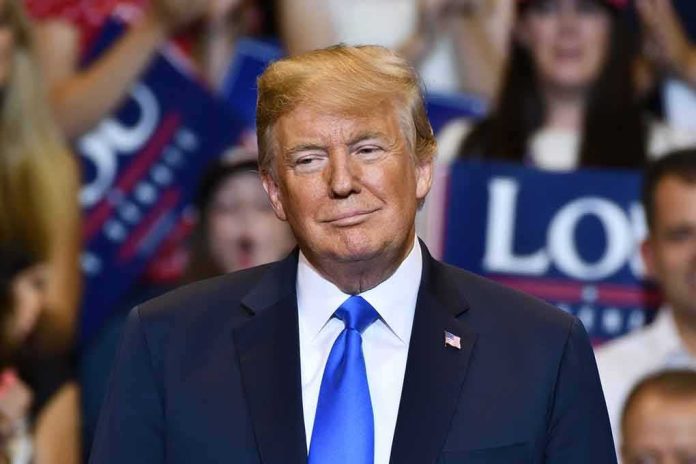
The substance of the Trump–Zelenskyy engagement is not a mystery of atmospherics but a test of leverage: each side used UN General Assembly week to lock in negotiating positions on the Russia–Ukraine war, and they did so through a confirmed leader-to-leader call and a planned in-person meeting in New York, with specific pressure points—energy infrastructure, escalation control, and prospects for a deal—put squarely on the table.
At a Glance
- President Zelenskyy publicly confirmed a direct call with President Trump and said they agreed to meet in New York during UN General Assembly week.
- Multiple outlets reported the meeting would occur on the UN’s sidelines, framing it as part of intensive Ukraine diplomacy in New York.
- Reporting indicates Trump pressed Zelenskyy on curbing Ukrainian strikes on Russian oil refineries—a live issue given energy-market repercussions.
- Trump signaled optimism about a possible deal trajectory in the war, a stance consistent with his emphasis on rapid negotiations.
What Happened: A Confirmed Call and a Planned UN-Side Meeting
Volodymyr Zelenskyy went on record that he held what he called an important conversation with President Trump and that the two agreed to meet in New York during UN General Assembly week. That is not rumor; it is Zelenskyy’s own public characterization of the outreach and the plan to convene in New York. Reuters and others reported the same timeline, situating the encounter among the inevitable cluster of leader bilaterals that define UNGA’s diplomatic marketplace. The spine of the story is therefore straightforward: direct contact at the leader level, agreement to meet in New York, and a focused agenda tied to the war’s most consequential levers.
In parallel, reporting described a substantive thread in Trump’s engagement: repeated pressure on Ukraine to stop striking Russian oil refineries. That is not a peripheral talking point. Attacks on refinery infrastructure affect both Russia’s logistics and global fuel prices; they are among the few Ukrainian actions that reverberate beyond the battlefield into energy markets and sanctions geometry. Axios attributed this specific ask to a source familiar with the call—squarely in the lane of what leaders bargain over when they believe leverage runs through energy and escalation management.
The Mechanism of Leverage: Why Refineries, Why Now
Targeting refineries is coercive diplomacy by other means. For Ukraine, striking oil-processing nodes raises costs for Russia’s war machine—diesel supplies, distribution bottlenecks, and domestic pressure on the Kremlin. For Washington, those same strikes can boomerang through global markets, complicate allied political calendars, and risk horizontal escalation if Moscow decides to retaliate against Ukraine’s critical infrastructure more broadly. Asking Kyiv to pause or curtail such attacks isn’t merely about sympathy for energy traders; it is an attempt to shape the ladder of escalation and to preserve negotiating space. In practical terms, this is how leaders talk when they believe a ceasefire architecture might be assembled from a series of de-escalatory rungs rather than a grand bargain drafted in a single sitting.
Trump’s public line—“I think they’re going to make a deal”—should be read through that lens. The statement functions as signal and pressure simultaneously: it reassures audiences that an endgame exists and nudges both Kyiv and Moscow toward testing the price of a pause. Optimism is not a policy, but optimism backed by specific asks, like refinery restraint, is a recognizable negotiating tactic: trade an action that worries your partners for an opening to talk about guarantees, air defenses, or sanctions relief sequencing. That is the grammar of UNGA-side diplomacy, where leaders swap narrow, testable steps rather than litigate the entire war in a photo op.
How We Got Here: A Pattern of Public Theater, Private Bargaining
Trump–Zelenskyy encounters have long been more than protocol. The relationship has oscillated from confrontation to cordiality, but the through-line is transactional bargaining over the war’s conduct and the terms of any prospective talks. Early high-profile meetings in 2025 were volatile, with televised friction over aid and minerals; subsequent White House engagements in 2025 and 2026 were reported as more measured, yet still heavy on closed-door substance and thin on immediate breakthroughs. That rhythm—sharp public signaling, controlled leaks, and incremental backstage movement—matches how contentious conflicts typically move at UNGA: set the stage in public, do the work in private, and let markets and militaries adjust to the new cues.
The UN General Assembly compresses time and attention in a way few venues can. Leaders arrive with packaged asks, pre-cleared talking points, and an appetite for short, consequential trades. For Ukraine, New York offers access—to the U.S. President, to swing-state European leaders, and to the financial ecosystem that underwrites reconstruction bets. For Washington, it concentrates leverage: statements in Turtle Bay echo in Moscow and Brussels, and a single bilateral can synchronize messages across the G7. The confirmed plan to meet in New York placed the Trump–Zelenskyy dialogue exactly where it would have the most catalytic effect on allies and adversaries alike.
The Agenda in Practical Terms: Escalation, Air Defense, and the Shape of Talks
Strip away the theater and three workstreams remain. First, escalation management: refinery strikes, long-range fires, and air-defense coverage. Each variable affects not just battlefield outcomes but the viability of any pause—no party will enter talks while exposed to the other’s most painful tools. Second, capability and production: Ukraine’s push to shore up interceptors and munitions, sometimes framed as co-production or expedited licensing, is a prerequisite to negotiating from a position of security rather than desperation. Third, the talks architecture itself: channel, guarantors, and enforcement. Signals from the U.S. side about a possible deal, married to concrete asks of Kyiv, point to an exploration of sequencing—what stops first, what resumes if promises are broken, and who pays if they are.
None of this is abstract. The lived experience of the past year taught policymakers that air-defense shortages invite blackouts, that refinery hits move prices at the pump, and that partial pauses collapse when verification and retaliation ladders are left undefined. A serious conversation in New York would, by necessity, touch all three. That is why reports emphasizing refinery restraint carry weight; they map onto the actual hinge-points of a sustainable ceasefire or interim arrangement.
President Donald Trump meets with Ukrainian President Volodymyr Zelenskyy at the United Nations General Assembly, per The White House.
— Pure Signal (@thepuresignal) September 22, 2026
Why It Matters: Markets, Deterrence, and the Road to a Deal
For energy markets, the difference between sporadic refinery disruptions and a negotiated pause is measured in price volatility and shipping insurance premiums. For deterrence, drawing a visible boundary around long-range strikes can reduce the incentive for reciprocal escalation against Ukraine’s grid, stabilizing civilian life and industrial output during winter months. And for diplomacy, even a modest de-escalatory trade can create the political oxygen necessary to test a broader framework—prisoner exchanges, localized disengagements, humanitarian corridors—without forcing either side to confess defeat at the podium.
The public record establishes enough to take the engagement seriously: a confirmed call, a scheduled New York meeting, specific pressure on a live operational tactic, and a president signaling that a deal path exists. That is what real movement looks like in hard wars: incremental, concrete, and premised on changing behavior, not just rhetoric. The proof will be whether the battlefield reflects these signals—fewer refinery fires, tighter air defenses, and, eventually, a channel for talks that can bear the weight of enforcement. Until then, the New York encounter stands as the clearest marker of how Washington intends to translate UN week into leverage on the ground.
Sources:
youtube.com, theguardian.com, abcnews.com, indiablooms.com, aljazeera.com, news.meaww.com, nbcnews.com, pravda.com.ua