

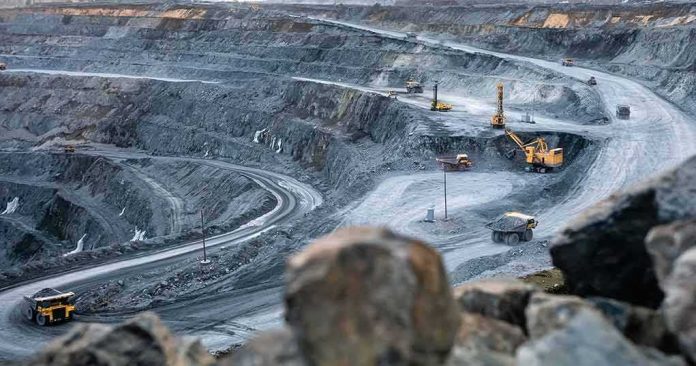
In resource economies, the real fight is rarely over rocks in the ground; it is over administrative levers that decide who may lawfully touch them. The CoreX–Kazakhstan copper dispute is a case study in that architecture: a private deal conditioned on state approval collides with a licensing system that vests decisive allocation power in the government.
At a Glance
- CoreX says it agreed in January 2024 to acquire operators of two Kazakh copper deposits; the government later directed the rights to a different company, Altyndara, prompting expropriation claims.
- Kazakhstan’s legal framework treats subsoil as state property and subsurface-use as a time-limited license or contract granted by a competent authority, not ownership of the deposit.
- Astana presents its 2017 Subsoil and Subsurface Use Code as transparent and rules-based, including a “First Application” licensing model.
- CoreX signals potential investor–state arbitration via Turkish or Dutch treaty routes; as yet, no filing is identified in the record.
What CoreX claims happened — and why it matters
CoreX, identified in reporting as a Turkish–Dutch mining investor, says it reached a January 2024 agreement to buy 100% of two Kazakh operating companies tied to the Koktaszhal and Kyzylshoky copper deposits, with closing contingent on government approval of the ownership change. The company contends that, instead of approving that change, Kazakhstan’s investment council instructed the Ministry of Industry and Construction to grant the subsoil-use rights “on a priority basis” to Altyndara, a newly formed local firm; CoreX responded publicly by calling the move an “organized, aggressive appropriation and illegal expropriation” of its investments. The stakes are twofold: control over copper assets in a supply-constrained market, and the credibility of Kazakhstan’s promise of a transparent, rules-based licensing regime for foreign capital.
CoreX also points to established ties with Kazakh leadership and years of sector engagement as evidence it is not a speculative entrant to the market. A 2018 presidential readout records a meeting between President Kassym-Jomart Tokayev and Yıldırım Group’s chairman on mining and chemical investment, with an expressed interest in further cooperation. In short, the investor casts itself as an incumbent partner displaced in favor of an unseasoned local recipient.
How Kazakhstan’s subsoil regime actually allocates mineral rights
Kazakhstan’s subsoil belongs to the people, with the state exercising the property right on their behalf. A subsurface-use right is not fee-simple mineral ownership; it is a time-limited, state-granted right arising from a license or contract to explore or produce within a defined area, subject to performance obligations and regulatory oversight. The competent authority — under the Subsoil and Subsurface Use Code adopted in 2017 — organizes tenders, applies technical and financial capability criteria, and grants or refuses rights. The Ministry of Industry and Construction characterizes the current system as transparent, with clear requirements and, for certain areas, a “First Application” principle intended to streamline access where eligibility is met.
This architecture carries two consequences for disputes like CoreX’s. First, a private share purchase of a local operator rarely substitutes for state consent where the underlying subsoil right requires approval for ownership changes. Second, reallocations and priorities can be lawful if they follow published procedures and statutory grounds. Even so, the same framework can be abused if administrative discretions are applied arbitrarily or to favor insiders — the line between legitimate regulation and indirect expropriation is drawn in the factual record of how decisions were made, not in slogans about resource sovereignty.
The contested transfer: what is established and what is missing
The public record, as assembled from party statements and secondary reporting, makes three load-bearing assertions: that CoreX had a January 2024 agreement to acquire the companies holding the relevant licenses (subject to approval), that a government council directed priority treatment for Altyndara, and that subsoil rights for Koktaszhal and Kyzylshoky were subsequently granted to Altyndara. What is not in the record are the decisive documents: the share-purchase agreements and their conditions precedent; the ministry’s approval file; council minutes and legal rationale; the formal instrument reallocating rights; and corporate registry extracts detailing Altyndara’s age, capitalization, and beneficial ownership. Without those, one can describe the vectors of the dispute, but not adjudicate it in public.
Kazakhstan has not, in the materials reviewed, provided a case-specific explanation for declining to approve the CoreX-linked ownership change or for selecting Altyndara. Its published framework speaks to process, not to these facts: eligibility criteria, competent-authority powers, and a policy ambition for streamlined licensing. The U.S. State Department’s investment-climate reporting also notes the Code’s designation of strategic deposits and the possibility of unilateral termination in national-security circumstances — a reminder that extraordinary levers exist in the statute, albeit with conditions. None of that, by itself, resolves whether this reassignment was an abuse of discretion or an application of the rules.
What investor–state arbitration would actually test
CoreX has floated recourse to arbitration, reportedly considering the Turkey–Kazakhstan and Netherlands–Kazakhstan bilateral investment treaties. Those instruments, if applicable to CoreX’s corporate structure and timing, typically guarantee fair and equitable treatment, protection against unlawful expropriation, and access to neutral arbitration. They also contain jurisdictional gates — definitions of protected “investment,” nationality tests, temporal reach, fork-in-the-road or denial-of-benefits clauses — that can become case determinative. As of the available record, no ICSID registration or notice of arbitration is identified; “preparing a claim” is not the same as seising a tribunal.
On the merits, tribunals in mining disputes often focus on three questions: whether the claimant held a qualifying investment (licenses, contractual rights, shares), whether state conduct frustrated legitimate expectations through inconsistency or arbitrariness, and whether any deprivation rose to the level of direct or indirect expropriation. Kazakhstan has both won and lost elements of such fights over the past three decades; UNCTAD’s case navigator lists multiple disputes in which licensing and management rights were central to the claim, underscoring that this is a recurring pressure point in the country’s investment model.
Central Asia has the minerals.
That does not mean it will capture the money.
The region holds an estimated:
39% of global manganese ore reserves
31% of chromium
20% of lead
13% of zinc
9% of titanium
about 5% of copper, cobalt and molybdenumKazakhstan is the world’s…
— Roberto Balbino (@RobertoBalbinoX) November 1, 2026
How seasoned investors should read the signal
Viewed as risk telemetry rather than verdict, the CoreX episode highlights the single point of failure in asset strategies that hinge on post-signing ministerial approvals. Private purchase agreements confer leverage only if the underlying public-law right can actually be transferred — and in subsoil regimes, that is an administrative decision with its own criteria and calendars. Diligence therefore has to extend beyond the target’s corporate data room into regulatory process-mapping: who signs off, under what published standard, on what timeline, with what history of approvals and refusals, and with what potential for third-party applicants to preempt or displace you.
The practical playbook is well known but often abridged: obtain a local-law opinion on approval risk; trace the ownership chain to select the optimal treaty umbrella without abusive restructuring; document reliance and expectations contemporaneously; and run a red-team on denial-of-benefits and fork-in-the-road defenses before you need them. Where possible, sequence capital at risk to regulatory milestones, not to contractual ones. And if a dispute does arise, speed to the paper — the ministry file, council minutes, license instruments, registry extracts — will shape both bargaining power and tribunal sympathy.
What would settle the public debate
Three disclosures would move this out of allegation and into analysis. First, the January 2024 share-purchase agreements and correspondence with the ministry, showing conditions, submissions, and any deficiencies flagged. Second, the government’s decision record: the investment-council directive, staff memoranda, and the formal license or amendment conferring rights on Altyndara, with the statutory basis cited. Third, corporate records for Altyndara: date of incorporation, beneficial owners, capitalization, and relevant technical capacity. With those, one can assess whether the reassignment reflected a rules-based process, a policy choice within legal discretion, or conduct shading into treaty breach.
Sources:
zerohedge.com, akorda.kz, qazba.kz, erdem-erdem.av.tr, fastmarkets.com, erdem-erdem.com, gov.kz, wto.org, globalarbitrationreview.com