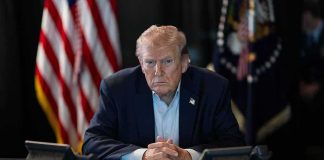
A phone call between Washington and Moscow has become the single most reliable barometer of the Ukraine war’s diplomatic temperature — and, just as reliably, the least reliable predictor of what happens next on the battlefield.
Key Points
- Trump and Putin spoke for 55 minutes on June 14, 2026 — Trump’s 80th birthday — with the Kremlin calling the exchange “friendly and frank” and centered on ending the war in Ukraine.
- Trump held a separate, back-to-back call with Ukrainian President Volodymyr Zelensky the same day, and the two agreed to meet again at the G7 summit.
- Zelensky said Trump told him the war would never have started had there been “strong leadership” when Russia seized Crimea in 2014.
- This is at least the fifth substantive Trump-Putin call since February 2025, and independent analysts have repeatedly found that warm readouts have not translated into movement on ceasefire terms, territory, or security guarantees.
- Shuttle diplomacy by envoys Steve Witkoff and Jared Kushner has run in parallel with the leader-level calls, producing what Zelensky called “several very good, worthwhile ideas” but no signed framework.
What Actually Happened on June 14
According to Kremlin foreign policy adviser Yuri Ushakov, Trump and Putin spoke for 55 minutes in a call he described as “friendly and frank in character,” timed to land on Trump’s 80th birthday. Ushakov’s readout, distributed through Russian state channels and confirmed independently by Reuters, quoted Trump telling Putin that ending the war in Ukraine was “vital” and that he was “ready to help.” Bloomberg and CNN corroborated the length and tone of the call, both citing the Kremlin’s characterization rather than a competing account, since the White House did not immediately issue its own detailed transcript.
Within hours, Trump also spoke with Zelensky — a call Kyiv’s presidential office confirmed lasted at least thirty minutes. Zelensky later told reporters the conversation covered “many key things — peace, surely,” and that the two leaders agreed to meet again at the G7 summit later that week. Notably, Zelensky recounted a specific Trump remark: that the war “would have been no war in Ukraine if there had been strong leadership” when Crimea was annexed in 2014. Taken together, the day’s two calls — Moscow first, Kyiv second — reflect a now-familiar choreography in which Trump manages both capitals in parallel rather than insisting on a single trilateral channel.
A Diplomatic Pattern Four Years in the Making
To understand why this call matters, it helps to see it as one entry in a long ledger. Trump’s first call with Putin as president, in February 2025, ran ninety minutes and was described by Moscow as evidence that Putin had gotten “what he had been waiting for”: a framework in which Washington and Moscow would discuss Ukraine’s future directly, with Kyiv and its European partners sidelined. A March 2026 call ran two-and-a-half hours and again ended without a comprehensive ceasefire — Putin agreed only to pause strikes on energy infrastructure, a partial concession the Belfer Center’s analysis found fell well short of the thirty-day truce Washington had sought. A ninety-minute call in late April produced, in the assessment of the Warsaw-based OSW think tank, “no shift in either side’s position” despite both men calling it “friendly, open and businesslike.”
The recurring gap analysts have documented is not between what leaders say and what they mean, but between the newsworthiness of a call and the durability of its substance. A call is, by its nature, an event — it generates a readout, a headline, a burst of market and diplomatic reaction. A shift in Russia’s position on territorial control, NATO’s eastward posture, or verifiable ceasefire monitoring is a process, and processes rarely resolve inside a single conversation, however long. Carnegie’s Russia-Eurasia program has argued that for Moscow, each call functions less as a step toward settlement than as a normalization exercise — reducing Russia’s diplomatic isolation while ruling out the kind of full ceasefire that would constrain its battlefield position.
Where the Real Machinery Sits: Envoys, Not Just Leaders
The leader-to-leader calls are the visible layer of a negotiation that runs mostly beneath them. In early September, envoys Steve Witkoff and Jared Kushner spent more than three hours with Putin in Moscow and held separate talks with Zelensky in Kyiv, describing the exchange as producing genuine progress even as no ceasefire, timetable, or security guarantee emerged. Witkoff, who by his own account has met Putin eight times, has pushed to revive a trilateral US-Russia-Ukraine format he and Kushner found productive months earlier — a structural fix aimed precisely at the problem that bilateral leader calls create: each side hears what the other wants it to hear, and the substance gets negotiated separately, out of public view, by teams whose work is far harder to summarize in a single quotable line than “friendly and frank.”
Welcome to We Are The News Now, where we don’t just report the news we red-pill the shit out of it.
Top of the desk tonight: President Trump hopped on the phone with Vladimir Putin, called the chat “positive,” and then said the real problem is that Putin and Zelensky hate each… https://t.co/UVuajrEfN7
— KGR₳M$ 🇺🇸 🐇🕳️🇮🇱✡️✝️ (@KGRAM_ADA) September 9, 2026
What This Means Going Forward
None of this makes the June 14 call meaningless. Agreeing to meet at the G7, keeping both Kyiv and Moscow simultaneously engaged, and Trump’s explicit framing of a ceasefire as “vital” are all diplomatically consequential — they keep a channel open in a war that has, at various points, seen channels close entirely. But the pattern is now well enough established that the honest reading of any single call is modest: it signals continued engagement, not resolution. Zelensky’s own later description of a July conversation with Trump as “very good” while he simultaneously pressed for greater “American resolve” to help end the war captures the duality precisely — warmth in tone, urgency still unresolved in substance. The reader’s fair expectation should be calibrated accordingly: watch for signed terms on territory, monitoring, and guarantees, not adjectives in a Kremlin or White House readout.
Sources:
themoscowtimes.com, cnn.com, reuters.com, kyivindependent.com, bloomberg.com, usnews.com, pravda.com.ua, al-monitor.com, apnews.com, bbc.com