

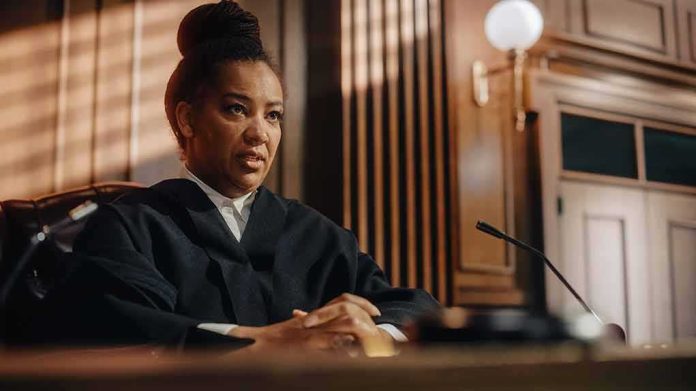
When a public judge chooses to offer wedding ceremonies, the state is not running a boutique; it is administering a gateway to a civil status. That is the core of the fight in Texas: whether judges may selectively officiate marriages based on religious objection, or must either serve every legally eligible couple or step out of the officiant role entirely.
The Short Version
- Texas adopted a judicial-ethics comment in 2025 allowing judges to refrain from weddings based on sincerely held religious beliefs.
- Chief justice–elect Sam Houston Ellis has proposed replacing that carveout with a simple rule: judges who officiate, officiate for all; otherwise, officiate for none.
- The Hensley litigation is the flashpoint: a justice of the peace refused same-sex ceremonies, referred couples elsewhere, and ultimately won damages and fees, plus protection from discipline.
- The unresolved legal crux is access to marriage versus access to a particular government officiant; how a court frames that distinction will determine whether an all-or-none rule is permissible or required.
What the proposed “all or none” rule actually does
Ellis’s stated aim is administratively stark and therefore clean: if a Texas judge chooses to perform weddings, that judge should solemnize any marriage the law allows—opposite-sex and same-sex—or not perform weddings at all. The point is to remove selective service from a public function and thereby neutralize what Ellis has called “back-door discrimination” by ending the practice of officiating opposite-sex ceremonies while declining same-sex ceremonies. In rulemaking terms, that single standard would replace a 2025 judicial-ethics comment adopted by the Texas Supreme Court that currently permits a judge to refrain from a ceremony on the basis of sincere religious belief.
Mechanically, nothing in this proposal forces any judge to conduct weddings. In Texas, officiating is not a core adjudicative duty; it is a discretionary service many judges offer to the public. The proposed change targets selective officiation by judges who have already chosen to act in that discretionary, quasi-civil-ceremonial capacity, not the religious rites of clergy or private officiants.
How Texas got here: the Hensley case as the test bed
Justice of the Peace Dianne Hensley announced that, because of her religious beliefs, she would not perform same-sex weddings but would continue to officiate opposite-sex ceremonies and refer same-sex couples to other officiants. The dispute drew scrutiny from the State Commission on Judicial Conduct and then years of litigation. Two strands matter. First, Texas’s high court recounted the sincerity of Hensley’s religious belief and the presence of a referral system; the controversy did not turn on whether same-sex couples could marry at all, but on who within government had to solemnize their weddings. Second, subsequent proceedings ended with a final judgment awarding Hensley damages and substantial attorney’s fees and enjoining discipline over her refusal, a concrete signal that Texas courts afforded weighty protection to her accommodation claim.
After that, in October 2025, the Texas Supreme Court added a two-line comment to the Code of Judicial Conduct stating that a judge does not violate the canons by publicly refraining from performing a wedding ceremony based on a sincerely held religious belief. Ellis’s all-or-none proposal directly challenges that comment, not a hypothetical policy; it would replace it with an equal-service baseline within the officiant function judges voluntarily undertake.
The legal hinge: marriage access versus access to a particular officiant
Post-Obergefell disputes often turn on a deceptively simple question: does the constitutional right to marry entail a right to a specific government officiant, or only to the status and its incidents from the state? A concurring opinion in the Hensley litigation framed the entitlement as the latter, reasoning that so long as couples can marry, they have not been denied the constitutional right even if a particular judge declines to preside. Appellate treatment in related proceedings emphasized religious-liberty defenses and the availability of alternatives, not a categorical duty of every individual judge to solemnize every marriage.
Ellis’s position approaches the same terrain from the opposite direction: when the state opens a government counter—here, a judge’s ceremonial calendar—it cannot parse access by sexual orientation while still offering the service to others. That view treats selective officiation as unequal administration of a public function; the fix is to eliminate selectivity by collapsing the choice to all or none. The proposal thus avoids adjudicating the content of beliefs and focuses instead on the structure of government service delivery.
Religious accommodation and its limits for public officials
In the broader national context, religious or private officiants enjoy strong First Amendment protection to decline ceremonies, but the constitutional footing is narrower for public officials performing civil functions; the Congressional Research Service has long summarized that distinction in the wake of Obergefell. Litigation involving county clerks after 2015 crystallized a pattern: accommodations for objecting officials are sometimes permissible if they do not burden couples’ timely access to marriage, but “sincere, personal opposition” cannot be a basis for excluding same-sex couples from civil marriage as a matter of state action.
Texas’s current rule effectively codifies one accommodation—public refusal by a judge who continues to officiate other weddings—on the premise that referrals preserve access. Ellis’s rule would move the line: the state can accommodate belief by allowing a judge to opt out of officiating altogether, but it would stop short of endorsing selective delivery of a public service. That is a contestable but coherent reconciliation of equal access and religious exercise, and it rests on a practical reality: officiating is optional for judges, while equality before a government counter is not.
Where the evidence is thin—and why it matters
The case for change does not yet present statewide data showing delays, higher costs, or longer travel born by same-sex couples because of judicial refusals. The Hensley record features a referral system, even an officiant “within walking distance” charging the same rate, according to her advocates, which undercuts claims of widespread practical denial of access. Nor is there a published legal memorandum from Ellis’s camp addressing how an all-or-none rule would fare under the Texas Religious Freedom Restoration Act and the First Amendment—analysis that will be necessary to supplant an existing judicial-ethics comment.
Still, the absence of quantified harm does not end the inquiry. Anti-discrimination law often treats selective service by a public actor as a structural wrong independent of demonstrable hardship; equal treatment at a government window does not turn on whether a substitute window is nearby. That is the normative fulcrum on which an all-or-none rule will be argued, and it is why the framing—public function versus personal choice—does so much work here.
Texas reprimanded Justice of the Peace Dianne Hensley for declining to officiate same-sex weddings because of her Christian faith.
The state commission ended up paying her damages and attorney’s fees.
Maggie Ellis, a Democrat just elected chief justice of the Texas Supreme… pic.twitter.com/NKXDlsns2L
— CURE News Blogger (@YourBCN) November 12, 2026
What to watch next: durability, design, and downstream effects
Three tests will determine whether this proposal becomes durable policy. First, authority and process: amending a rule adopted by the state’s highest court requires clear procedural footing and likely consensus among justices; no such majority or formal draft has surfaced publicly. Second, legal viability: any final language will have to survive religious-freedom scrutiny under state and federal law, which means carefully cabining the duty to the discretionary officiant role and demonstrating neutrality and general applicability. Third, implementation effects: if an all-or-none rule causes many judges to withdraw from officiating, counties will need capacity from clerks, magistrates, or private officiants to absorb demand; if capacity holds, the rule’s promise—equal service without substantial loss of availability—becomes empirically credible.
Sources:
lifesitenews.com, texarkanagazette.com, supreme.justia.com, lgbtqnation.com, christiantimes.com