
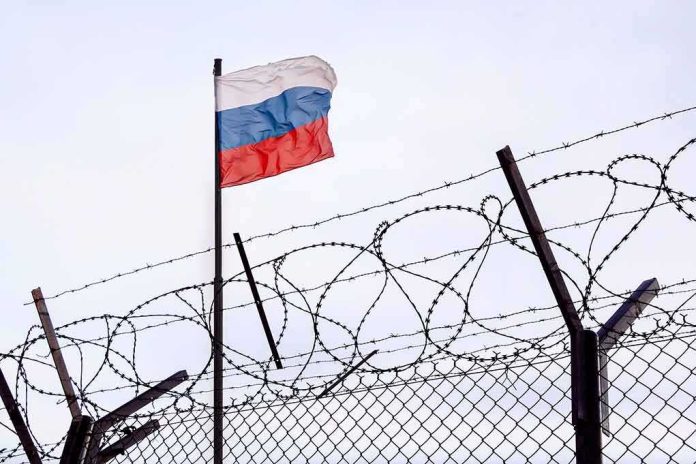
Russia’s military footprint in Syria is not disappearing; it is being re-labeled, narrowed, and repurposed so that Damascus can reclaim formal sovereignty while Moscow keeps a strategic foothold on the Mediterranean.
Key Points
- Syria says it has reached a memorandum with Russia to convert the Hmeimim and Tartous military sites into joint training and qualification centers.
- The arrangement also transfers civilian facilities, including parts of the airport and port, to Syrian state management.
- The deal preserves Russian access in a new form rather than ending Russia’s presence outright.
- The language of “reorganization” is typical of basing negotiations, where control, access, and legal authority matter as much as physical infrastructure.
What the new arrangement actually does
According to Syria’s Foreign Ministry, the agreement with Russia redefines the role of the coastal facilities used for military purposes, turning the Russian bases into joint training and qualification centers and shifting civilian facilities to Syrian state management. NBC News, CNN, Al Jazeera, and Anadolu all reported the same core structure: Hmeimim and Tartous are no longer described as simple Russian outposts, but as sites whose military functions are being folded into a new joint framework.
That distinction matters. A military base is not just a piece of land with runways and warehouses; it is a bundle of command rights, access rules, logistics channels, and legal permissions. If civilian management moves to Damascus while Russian personnel remain for training or qualifying purposes, the balance of power changes on paper and in practice. Moscow loses the old symbolism of unilateral control, but it may retain enough access to keep influence, supply lines, and regional reach intact.
Why the language is so carefully chosen
The official phrasing is doing two jobs at once. For Syria, “reorganize” and “joint training center” signal restored sovereignty after years in which the bases were associated with the Assad-era order. For Russia, the same language avoids the political cost of a visible retreat from one of its most important Middle Eastern footholds. This is why base politics so often turn into administrative theater: each side needs a result it can describe as a win.
That pattern is visible in the broader reporting around the talks. Reuters described Russia as gambling to keep its military bases in post-Assad Syria, while other analysts noted that Moscow had already been discussing the “possible reformatting” of its military presence before this agreement surfaced. The reported deal fits that trajectory. It does not look like a clean eviction, and it does not look like a frozen occupation. It looks like negotiated continuity under a new label.
How Syria and Russia got here
The strategic importance of Hmeimim and Tartous has always exceeded their size. Hmeimim is Russia’s air hub on the Syrian coast; Tartous is its naval lifeline on the Mediterranean. Together, they anchored Moscow’s intervention in Syria, enabled regional logistics, and gave Russia a rare, durable military platform in the eastern Mediterranean. After the fall of Assad, the political meaning of those bases changed, but their utility did not. Moscow still had incentives to preserve them; Damascus had strong incentives to recover formal control without provoking a rupture that could create new security or economic costs.
That is why the reported memorandum is better understood as a renegotiation of dependence than a simple handover. The Syrian side gets civilian administration over key facilities and the optics of reclaimed authority. The Russian side keeps a presence, training access, and a continued role in a country where it has spent years building military and political leverage. In the language of diplomacy, that is compromise. In the language of strategy, it is continuity under constraint.
What the agreement signals about power in post-Assad Syria
The deeper lesson is that bases rarely vanish when regimes change; they are repurposed, subordinated, or re-badged. In this case, the reported transformation from military bases to joint training and qualification centers is the kind of formula that allows both governments to claim success at home. Syria can say it has taken back civilian control of strategic territory. Russia can say it has adapted its posture rather than abandoned it.
That is not a minor semantic shift. Control of access to an airport or port determines who moves personnel, cargo, and matériel; control of the military mission determines whether a foreign power still shapes local security capacity. If the reported transition is implemented as described, Russia’s footprint in Syria will become smaller in visible terms but not necessarily weaker in strategic terms. For Moscow, the prize is persistence. For Damascus, the test will be whether reasserted sovereignty remains real once the ceremonial language is stripped away.
Less than 48 hours after Syria and Russia signed their base reorganization deal on Sunday, Tartus port's fourth pier entered commercial operations Tuesday, receiving its first vessel and beginning cargo handling. The 630-meter pier can reportedly accommodate three large vessels…
— Wise Hieronymus (@WiseHieronymus) August 11, 2026
What to watch next
The crucial details are not the announcement itself but the implementation: who commands the facilities day to day, what Russian personnel remain on site, how “training” is defined, and whether civilian control extends to real operational authority. Anadolu reported that the agreement called for civilian management of Hmeimim Airport and part of Tartous port, with military facilities becoming joint training centers within three months. That timeline makes execution, not declaration, the decisive phase.
If the arrangement holds, it will become a template for how states unwind an inherited foreign military presence without fully severing ties. If it stalls, the old Russian footprint may persist under a thin layer of rebranding. Either way, the central fact remains the same: the battle over Syria’s coast is now being fought as much through memoranda and administrative titles as through troops and hardware.
Sources:
zerohedge.com, sana.sy, nbcnews.com, aa.com.tr