
When a gunman turns a workplace into a killing ground, seconds—not slogans—decide outcomes; in Tampa, a contracted security officer’s rapid, well-aimed counterattack ended an assault that began with a vehicle breach and a rifle, and almost certainly prevented more deaths.
The Short Version
- A man crashed into Citibank’s Tampa-area campus, shot and killed a woman outside, and moved toward more potential victims.
- An armed on-site security officer engaged the attacker within minutes, shot him, and stopped the threat; the suspect was later pronounced dead at a hospital.
- Law enforcement credited the guard’s intervention with preventing additional casualties and detailed a large-scale, coordinated response.
- This event fits a rare but consequential pattern: an active shooter in a commercial setting neutralized by private security, a scenario addressed in evolving training and FBI analyses.
What Happened: A Rapid Attack Met by a Faster Intervention
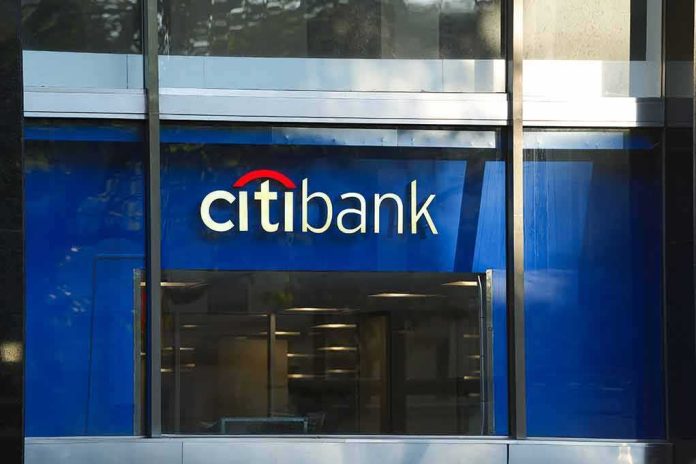
According to Hillsborough County Sheriff’s Office leadership, the sequence was stark. Around midday, a man drove over medians, crashed through a perimeter fence into an outdoor seating area on the Citibank campus, exited with a rifle, and shot a woman, killing her. He then moved deeper into the complex, including toward a cafeteria where employees had sought safety. A Citibank security officer—armed and on duty—confronted the attacker and exchanged gunfire, striking him and stopping the assault. Deputies transported the suspect to Tampa General Hospital, where he was pronounced dead. These core facts were detailed by Chief Deputy Frank Losat and echoed across local and regional outlets drawing on official briefings.
Timing mattered. Multiple 911 calls hit at 12:11 p.m.; the security officer engaged the shooter roughly four minutes later, a response tempo consistent with active-shooter doctrine, which prioritizes immediate engagement over perimeter stabilization. Sheriff Chad Chronister publicly credited the security team with halting a gunman he characterized as prepared to inflict mass harm, and Losat said the guard’s actions likely saved lives. The sheriff’s office coordinated a significant response—reporting hundreds of deputies on scene—and declared the complex clear within a few hours, standard practice for a campus-style facility with multiple structures and potential secondary threats.
Mechanics of Stopping the Kill Chain
Three linked mechanisms determine outcomes in events like this: speed of recognition, speed of movement, and decisiveness at first contact. The attacker compressed the timeline by using his vehicle as a breaching tool, emerging already armed and mobile in a target-rich, open-air zone. The security officer countered by collapsing the interval between first shots and armed resistance—the single most powerful lever to limit casualties in active killings. The exchange of gunfire in or near the cafeteria achieved what doctrine seeks: force the attacker to break momentum, divide attention, and transition from offense to survival. That transition is often when attackers are injured, flee, surrender, or die.
Details available through subsequent briefings and coverage reinforce this pattern: the guard was equipped, positioned within moving distance of likely congregation points, and trained to close with and engage. Law enforcement emphasized that the security action occurred within minutes of the first calls, which aligns to current private-sector post orders at large campuses, especially those with executive protection or elevated threat awareness. The medical end state—suspect transported, then deceased—tracks with the majority of fast-neutralization events where responders prioritize stopping the threat before extended medical workups occur on scene.
Where This Fits in the Larger Record
The FBI’s active-shooter reporting defines these incidents functionally: an individual actively attempting to kill in a populated area, regardless of the final casualty count. Under that lens, commercial sites like office campuses represent a steady share of incidents. What is rare is the intervention by private security rather than law enforcement or unarmed bystanders. In recent FBI reporting, only a small subset of tracked incidents involved on-site security personnel directly engaging and stopping the attacker; some years see only a single such case nationally, and across multi-year windows the number remains low compared with the overall incident count.
Recent editions of the FBI’s annual and multi-year reviews cite isolated episodes where armed security neutralized attackers—often in houses of worship or commerce—and document both the value and the risks of these engagements, including occasional security casualties. The base rate matters for planning: while law enforcement will always surge, the first 2–5 minutes belong to those already inside the perimeter. In this Tampa event, the outcome maps to the higher-probability success path when trained, armed security is present: life safety improves because the kill chain is interrupted early.
Policy and Practice: Why the Guard’s Preparedness Mattered
Organizations with sprawling campuses and predictable employee flows face a tactical paradox: access control and visitor management reduce some risks, but the highest-consequence threats exploit routine—shift changes, lunch periods, and outdoor congregation points. Defensive design and drills mitigate these windows; an armed, trained security element translates mitigation into decisive action. The Tampa case reflects several best practices: threat intelligence routed quickly to local law enforcement, access control that slows but does not fully prevent vehicle-borne intrusion, interior refuge options, and an on-site armed responder capable of immediate interdiction.
Crucially, the guard’s engagement appears to have occurred before the attacker could establish positional dominance indoors. That matters because casualty counts rise when shooters can move room-to-room among unprotected occupants. A cafeteria is both hazard and opportunity: many potential victims, but also sight lines that favor a trained responder who can take cover, return accurate fire, and force a malfunction or retreat. Law enforcement’s praise for the guard’s actions is not public-relations reflex; it reflects how modern active-killer response evaluates success—by shortening the attacker’s window to harm.
A timeline from the Hillsborough County Sheriff's Office on the Citibank Campus shooting on Wednesday, Nov. 4, near Tampa, Florida. https://t.co/PtIYXxoxGU pic.twitter.com/CCsBHsvIwV
— FOX 13 Tampa Bay (@FOX13News) November 6, 2026
Implications for Companies, Campuses, and Security Leaders
Two lessons travel well beyond Tampa. First, speed is a function of proximity and clarity. If you outsource campus security, ensure your post orders authorize immediate interdiction of an imminent deadly threat, and that your guard force trains to move toward gunfire with law-enforcement-compatible communications. Second, the threshold for “good enough” preparation keeps rising. Coordinated exercises with local agencies, camera coverage that supports real-time cueing, and medical staging for rapid hemorrhage control are no longer nice-to-haves at scale—they are the floor.
The broader record will continue to show variability in motives, weapons, and offender profiles. What it will not change is the arithmetic of prevention: physical hardening and policy deter many, but when one breaks through—as this attacker did—lives hinge on the first capable person willing to fight back. In Tampa, that person wore a private security badge. The result speaks for itself.
Sources:
townhall.com, wtsp.com, unionleader.com, nbcmiami.com, wsbtv.com