

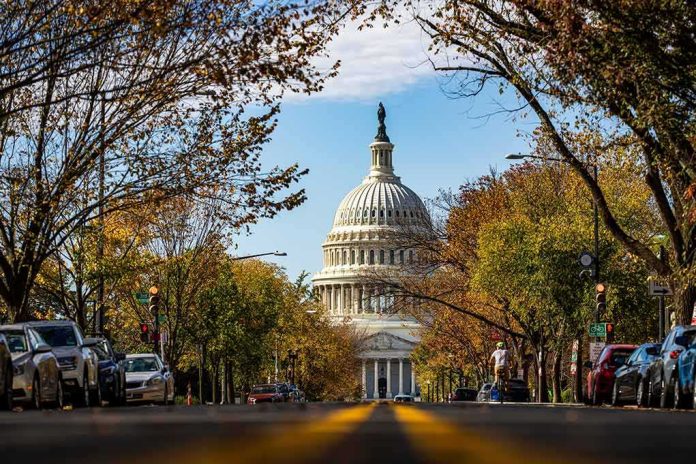
Every outgoing Congress gets one last constitutional window to finish its business before a new majority takes the gavel, and the history of that window is a story of modest, practical achievement far more often than sweeping ideological victory — a pattern the current Republican lame-duck push is unlikely to break.
Key Points
- The lame-duck session runs November 9, 2026, through January 3, 2027, giving Republicans only 20 House and 22 Senate legislative days to act before Democrats take control.
- Government funding, the defense authorization bill, a farm bill, debt-limit legislation, and an energy-permitting overhaul are the concrete vehicles already in play.
- Budget reconciliation offers a filibuster-proof path for fiscal measures, but a broader third reconciliation bill remains undrafted and procedurally uncertain.
- History shows lame-duck Congresses routinely pass appropriations — 11 of the last 15 that convened one enacted at least one funding measure — but rarely deliver sweeping partisan legacy legislation.
- Incoming Democrats have little incentive to cooperate now, since delay until January hands them greater negotiating leverage.
The Mechanism: A Fixed Clock and a Narrow Procedural Door
A lame-duck session is simply Congress continuing to function after an election has already determined who will hold power next — a consequence of the Twentieth Amendment, which fixed the new Congress’s start date at January 3 but left the old one in office until then. That gap is not a loophole; it is a deliberate constitutional feature, and Congress has used it 22 times since the amendment took effect. This year’s version runs from November 9, 2026, through January 3, 2027, and the math is unforgiving: roughly 20 House legislative days and 22 Senate legislative days to settle whatever remains unfinished. Legislative days are not calendar days; they are the relatively few sessions in which floor votes, committee markups, and conference negotiations can actually happen, and holidays, recesses, and leadership organizing eat into the total quickly.
Procedure matters as much as time. Ordinary legislation in the Senate requires 60 votes to overcome a filibuster, a threshold Republicans cannot reliably hit without Democratic cooperation that evaporates the moment an election outcome is known. Budget reconciliation is the exception: a parliamentary mechanism, created by the Congressional Budget Act of 1974, that allows certain tax, spending, and debt-limit measures to pass the Senate with a simple majority. That is why debt-ceiling action and fiscal measures keep surfacing in Republican lame-duck planning — they are among the only items that can move without 60 votes. Everything else, including a hoped-for third party-line policy bill, needs either bipartisan buy-in or a reconciliation instruction that, as of the reporting examined here, had not been drafted.
What Is Actually on the Table
Five vehicles anchor the Republican agenda, and they are not all equally viable. Government funding and the National Defense Authorization Act are shared, must-pass priorities that Congress handles nearly every year regardless of which party controls it. A farm bill and debt-limit legislation sit in a similar must-address category, driven by expiring authorizations and statutory deadlines rather than partisan ambition. The one genuinely new conservative-aligned priority with real momentum is an energy-project permitting overhaul, which Senate Republican leadership has already teed up for procedural votes — and, notably, it carries bipartisan Senate support and White House backing, which is precisely the combination that survives a filibuster-constrained calendar.
What is missing is any confirmed path for a broader, purely partisan legislative legacy. Politico’s reporting found the Senate had not acted on House groundwork for a third reconciliation bill, and many close observers doubted there was enough time to draft such a measure from scratch before January. That distinction — between legislation Congress has to pass and legislation Republicans would like to pass — is the single most important fact for understanding how this lame-duck session will actually unfold.
Where the Real Tension Lies
The genuine disagreement here is not about whether Republicans want to act; it is about whether the incoming majority has any reason to let them. Democrats taking control in January gain substantial leverage the moment the new Congress is seated, and reporting indicates they have little incentive to advance Republican-led measures in the interim, preferring instead to let negotiations slide into the new year when they can set terms. That is not obstruction for its own sake — it is the same rational calculation every incoming majority has made in similar circumstances, including Republicans themselves in past transitions. The crowded calendar compounds the problem: funding deadlines, the defense bill, farm legislation, and possible debt-limit action are all competing for the same handful of legislative days, which means something will almost certainly get deferred or compressed into an omnibus-style package rather than considered on its own merits.
History was made last night.
For months, we were saying that 2026 was the most consequential midterm election of our lifetimes.
Unfortunately, we were right. Sometimes history is to be celebrated; other times, it is to be mourned. Always, it must be reckoned with.
2026 was…
— Ted Cruz (@tedcruz) November 4, 2026
What History Suggests Happens Next
The base rate is instructive. Appropriations legislation has been a feature of most lame-duck sessions — 11 of the 15 Congresses that held one enacted at least one appropriations measure, totaling dozens of regular and continuing resolutions over that span. That is the pattern most likely to repeat: funding gets handled, the defense bill likely clears because it almost always does, and the permitting measure has the bipartisan coalition needed to survive the filibuster. What history argues against is the sweeping, legacy-cementing conservative overhaul some reporting has floated as aspirational. Lame-duck sessions following a change in chamber control are not rare — seven have occurred since 1940 — but the ones that produced durable, far-reaching policy did so on narrow, often bipartisan vehicles, not partisan reconciliation bills assembled against the clock. The sensible expectation for this session, grounded in both the procedural arithmetic and the historical record, is incremental, bipartisan-leaning progress on a short list of must-pass items — not a last-minute conservative reconstruction of federal policy.
Sources:
house.gov, nypost.com, politico.com, congress.gov, wilmerhale.com, senate.gov