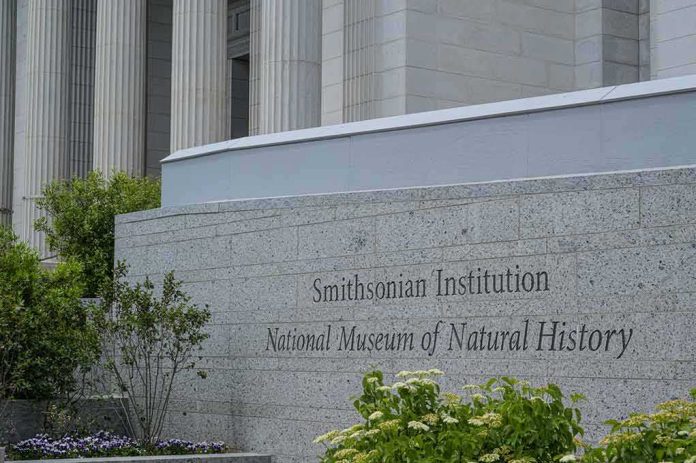
Leadership changes at great cultural institutions are rarely just about one person; they are inflection points for mission, governance, and public trust. Lonnie G. Bunch III’s planned retirement as Secretary of the Smithsonian at the end of 2026 sits squarely in that frame: a personal decision by a career historian who built and led major museums, and a transition occurring while political pressure on the nation’s largest museum and research complex has intensified.
The Short Version
- Lonnie G. Bunch III, the Smithsonian’s 14th secretary and its first Black leader, plans to retire at the end of 2026; he frames the decision as family-driven and about timing after decades of work.
- His tenure encompassed fundraising and capital overhauls, including marquee projects at Air and Space and programming for the nation’s 250th anniversary.
- The announcement arrives amid heightened White House scrutiny of Smithsonian leadership and governance, a dynamic common in the history of contested museums.
- The Regents now face a consequential succession: choosing a leader who can steer scholarship and public exhibitions while navigating federal oversight and political crosswinds.
What Happened: A planned end date and a clear personal rationale
Lonnie G. Bunch III announced that he will retire as Secretary of the Smithsonian Institution at the end of 2026, concluding a seven-year term atop the 21-museum, national zoo, and research complex. In his public statement, he cast the decision as the culmination of a nearly four-decade relationship with the Smithsonian and a recalibration toward family at age 73; he described the role as a privilege and signaled an orderly transition rather than an immediate exit. In interviews, he was explicit that the timing reflects life priorities more than politics: after 45 years of putting work first, he wants more years with children and grandchildren. Bunch’s tenure as secretary began in 2019; before that he was the founding director of the National Museum of African American History and Culture, and he is a career historian and curator by training.
The Smithsonian’s own coverage underscored the longevity of his service and the institutional framing—continuity, stewardship, and succession—rather than rupture. That framing matters. The Smithsonian is a trust instrumentality of the federal government governed by a Board of Regents; leadership changes are designed to be deliberate, paced, and insulated from day-to-day politics even when the political weather is rough.
The Work: Building, raising, and modernizing at scale
Evaluating any Smithsonian secretary begins with the core work: collections care, research output, capital projects, public programming, and fundraising. Bunch’s years included some of the most complex infrastructure and exhibition overhauls in the system. At the National Air and Space Museum, a multi-year “Transformation” required vacating artifacts, rebuilding galleries, and delivering new interpretive approaches to science and technology for the next generation. The project paired a significant philanthropic campaign with modernization of galleries and learning spaces, including plans for expanded youth programming and a reimagined observatory—work Bunch publicly championed as part of a broader commitment to keep the institution’s flagship museums world-class for another half century.
Fundraising at this scale is as much diplomacy as development. It requires securing federal appropriations, mobilizing donors, and aligning curatorial goals with capital realities. Secretaries are judged on whether they can sustain momentum across long timelines—and across administrations. Bunch’s record fits that brief, with visible progress at Air and Space and continued institutional coherence across the Smithsonian’s diverse portfolio, from art to anthropology to zoology.
The Political Weather: Oversight pressures and competing readings
The timing of Bunch’s announcement overlaps with sharp political scrutiny of the Smithsonian’s direction. Coverage across outlets has documented White House criticism of leadership and exhibits, board appointment tensions, and efforts to reframe programming leading into the Semiquincentennial. Those disputes have placed the secretary’s office in the public eye more than usual, with Bunch defending curatorial integrity and the museum’s mission in the face of administration critiques.
Two things can be true at once in cultural governance: a leader can retire on his own timing for personal reasons, and the political environment can be unusually charged. Bunch has been clear that his decision is family-driven, not a response to political pressure. At the same time, the Smithsonian is not unique in facing heightened oversight and ideological contestation; modern museum history is replete with leadership departures occurring amid controversy, whether at the Whitney Museum, Berlin’s Jewish Museum, or national institutions under government pressure elsewhere. These cases illuminate a general pattern: political stakes rise around culture; boards and funders become battlegrounds; leaders weigh mission, resilience, and personal calculus. The Smithsonian’s moment is recognizable within that wider canvas.
Mechanism and Governance: How Smithsonian leadership transitions work
The secretary is elected by the Board of Regents, which includes members of Congress, the Chief Justice of the United States as chancellor, and citizen Regents. That design embeds both democratic accountability and institutional continuity: Congress appropriates funds; the Regents hire and evaluate the chief executive; curators and scholars run the research and exhibitions. The secretary’s job, at bottom, is to hold those pieces together—guarding curatorial independence while maintaining trust with elected overseers.
In practice, an end-of-2026 retirement date affords the Regents time to shape a search that reflects the Smithsonian’s strategic needs: continued capital execution, digital modernization, collections care under climate stress, and balanced interpretive leadership for the nation’s complicated story. It also creates space for an orderly handoff to ensure ongoing Semiquincentennial projects and long-horizon renovations do not stall. The Smithsonian has done this before; successful searches surface leaders who can speak collections, scholarship, and construction schedules with equal fluency.
What Bunch’s Tenure Signifies: Scholarship anchored to public service
Bunch’s career arc is inseparable from the creation of the National Museum of African American History and Culture—a project that demanded vision, coalition-building, and a curator’s insistence on evidence. As secretary, he brought that same sensibility to a confederation of museums and research units with differing publics and pressures. His public comments often returned to a simple thesis: museums are not neutral because history is not absent of conflict, but museums can be trustworthy if they are rigorous—anchoring interpretation in sources, widening the lens to include more Americans, and welcoming critique without ceding fact to partisanship. That stance has earned both praise and attack, which is what happens when an institution matters.
His planned retirement does not resolve ongoing debates about what the Smithsonian should say or how it should say it. It does, however, mark the close of a chapter led by a working historian who became a chief executive without forgetting why archives, artifacts, and careful storytelling endure. Britannica’s capsule on his biography captures the through-line: historian, curator, institution builder, first Black secretary of the Smithsonian.
🚨 The Smithsonian Institution is getting new leadership. Secretary Lonnie Bunch III announced he will retire at the end of the year after leading the Smithsonian since 2019, a decision that comes amid an ongoing dispute between the institution and the Trump administration over…
— Erik Hoffmann (@TheErikHoffmann) September 8, 2026
What Comes Next: Choosing for resilience and reach
Succession is strategy. The Regents will be choosing not just a manager, but a theory of the Smithsonian’s future. Candidates who can keep capital projects on time, protect scientific and curatorial standards, and maintain constructive relationships with appropriators will rise. So will those who can make the Smithsonian indispensable to Americans who do not visit Washington—through traveling exhibitions, partnerships with schools and local museums, and digital scholarship that meets people where they are.
There will be calls—some loud, some quiet—for ideological course corrections. The best answer to those calls is old-fashioned museum craft: peer-reviewed research, transparent sourcing, and exhibits that invite the public into the evidence rather than pushing them out with rhetoric. That is where trust is earned. And it is the handoff a secretary can leave to a successor: a stable institution with the confidence to withstand pressure because its work is strong.
Sources:
townhall.com, smithsonianmag.com, wsj.com, dailysignal.com, nytimes.com, washingtonexaminer.com, britannica.com, nypost.com