

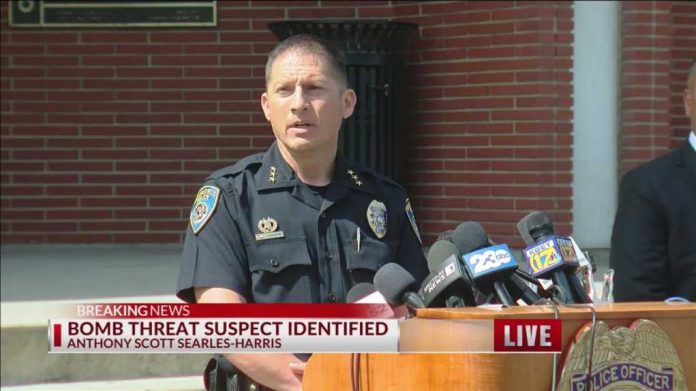
A Bakersfield hostage standoff exposed a suspect with a disturbing criminal past and a military discharge that deepened questions about how Anthony Scott Searles-Harris ended up in such a violent confrontation.
Quick Take
- Authorities identified Anthony Scott Searles-Harris, 41, as the suspect in the Bakersfield bomb threat and hostage incident.[1]
- Law enforcement said he served in the United States Army from 2006 to 2007 and was dishonorably discharged for going absent without leave.[1]
- Reporting linked him to earlier sex-offense charges and sex-offender registration, along with a 12-year prison sentence in an unrelated case.[1][2]
- The public record provided shows a serious prior history, but the available reporting does not fully document the military paperwork or every step in the background narrative.[1][2]
What Authorities Said About His Background
Authorities identified Searles-Harris as the man who made the bomb threat, took hostages, and was later killed by the Federal Bureau of Investigation (FBI) in downtown Bakersfield.[1] Law enforcement also said he had been in the Army from 2006 to 2007 and left under a dishonorable discharge after going absent without leave.[1] That detail matters because it places his prior conduct in a documented military timeline rather than in rumor or online speculation.[1]
The criminal history attached to his name was severe. Bakersfield-area reporting said Anthony Searles-Harris hosted teen girls at parties at his Oildale home, gave them alcohol and drugs, and coerced them into sex acts.[2] The same report said he was convicted of forcible oral copulation in concert with a child under 14, lewd acts with a child under 14, and oral copulation with a child under 14, then sentenced to 12 years in prison and ordered to register as a sex offender.[2]
Why The Military Discharge Drew Attention
The discharge story has drawn attention because it adds another layer to a suspect already described as a repeat offender.[1] According to the reporting, the Army service lasted only about a year, and the discharge was tied to going absent without leave, which is a serious disciplinary problem in military service.[1] For readers trying to understand the broader picture, that history suggests a pattern of disregard for rules and responsibility rather than a single isolated collapse.[1][2]
At the same time, the public record provided here does not include the underlying personnel file, court transcripts, or full law-enforcement case file.[1][2] That means the strongest confirmed facts are the ones published by local and national reporting: his identity, the hostage incident, the Army service window, the discharge description, and the prior conviction record.[1][2] Anything beyond that would go beyond the evidence available in the research package.[1][2]
Why The Bakersfield Case Resonated
The Bakersfield episode landed hard because it combined public danger, a bomb threat, and a suspect with a documented sex-offense past.[1][2] For many Americans, especially those already fed up with soft-on-crime policies and the steady erosion of public order, cases like this underline a simple point: communities pay the price when dangerous repeat offenders keep cycling through the system.[1][2] The facts provided here support concern about the suspect’s history, not speculation about motives.[1][2]
The reported sequence is stark. Authorities said the suspect took hostages, tied up five people on the second floor, and was later killed by the FBI, ending the standoff.[1] Local reporting then filled in the background that made his name instantly recognizable to Bakersfield readers: prior sex-offense convictions, sex-offender registration, and a military discharge tied to misconduct.[1][2] Taken together, those details explain why the story drew intense attention well beyond Kern County.[1][2]
Sources:
[1] Web – Vile past of Bakerfield bank robber Anthony Searles-Harris — and why …
[2] Web – Man gets 12 years in prison for drinking, sex parties with teens – …