
Ro Khanna is not just mad at immigration agents in general; he is warning that putting them anywhere near our ballot boxes could quietly scare millions of lawful voters into staying home.
Story Snapshot
- Ro Khanna calls Immigration and Customs Enforcement a “rogue” agency that harms American citizens and violates constitutional rights.
- He wants to strip its extra $75 billion in funding, end legal shields for agents, and even tear the agency down.
- New legislation would stop immigration agents from operating near polling places to prevent voter intimidation and “wide scale” fear.
- Critics say noncitizens cannot vote, so worry about immigration agents at polls is overblown, but the clash is really about chilling lawful voters in immigrant communities.
Why Khanna Sees Immigration Agents As A Threat To American Voters
Ro Khanna does not talk about Immigration and Customs Enforcement like a normal federal agency; he talks about it like a threat to basic freedoms. On national television he has argued that Immigration and Customs Enforcement is violating the First, Second, and Fourth Amendments, and “killing American citizens.” He rejects more money for the agency and urges Democrats to hold the line, saying he cannot back a government that funds an arm of the state he believes is trampling core rights.
Khanna goes beyond budget talk and dives into structure and accountability. In his “How to Block ICE” interview, he calls for ending qualified immunity for Immigration and Customs Enforcement officers, so they can be personally sued when they violate the law. He wants Congress to repeal the $75 billion multi‑year funding increase Immigration and Customs Enforcement secured, and he openly says the agency “cannot continue” in its current form and should be torn down and replaced.
From Detention Abuses To Fears Of Voter Intimidation
Khanna’s distrust did not come out of thin air; it hardened after what he saw inside detention facilities. Reporting on his oversight work notes his description of “lawlessness” in detention, where immigrants held under civil rules are treated like high‑security prisoners. Six people died in custody in a single month, with thirty‑two deaths in the prior year, the highest in two decades. He has pushed legislation to end family detention, solitary confinement, and to force real health and safety standards on facilities.
That picture of harsh treatment feeds into his wider worry about how Immigration and Customs Enforcement shows up in everyday life. Khanna has described agents mistreating immigrants on city streets and ignoring constitutional limits on searches and seizures. In a podcast conversation that links Immigration and Customs Enforcement abuses to voter suppression, he and the host warn that this “culture of impunity” could disenfranchise huge numbers of Americans by making them too afraid to engage with the system at all. For him, the leap from rough street enforcement to quiet election fear is not very big.
Why Polling Places Are Becoming The Next Flashpoint
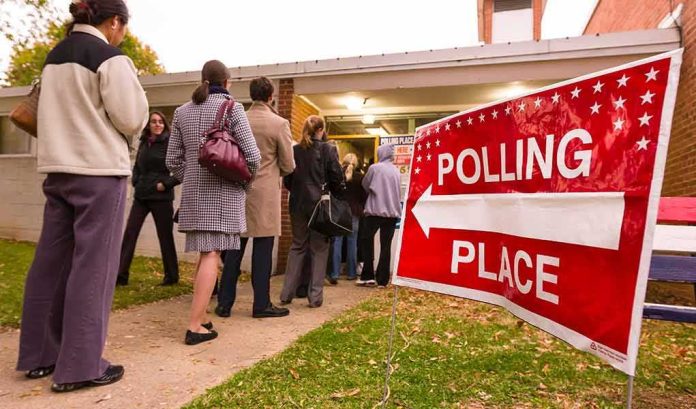
The fight over immigration agents at polling places is no longer just theory; allies in Congress are putting bills on the table. Representative Nikema Williams’s “Stop ICE Election Militarization Act” aims to explicitly block immigration enforcement entities, including Immigration and Customs Enforcement, from being deployed at polling places and near election operations, in order to prevent “wide scale intimidation of communities.” The bill’s language shows the fear plainly: visible immigration agents close to where people vote can scare mixed‑status families, naturalized citizens, or anyone with relatives at risk.
Outside Congress, Democratic officials are making the same warning. Former Washington governor Jay Inslee urged Congress to add a ban on Immigration and Customs Enforcement agents “near polling places” into spending legislation, and caught heavy criticism from the right for it. A similar proposal in Virginia would block immigration enforcement within forty feet of polls and drew attacks based on the claim that only citizens vote anyway. The pattern is clear: one side sees enforcement uniforms near voting sites as intimidation, the other insists the worry is fake because noncitizens cannot legally cast ballots.
Noncitizens Cannot Vote, But Fear Can Still Silence Citizens
The counter‑argument sounds simple: if you must be a citizen to vote, why worry about immigration agents at polls? That logic fits on a bumper sticker, but it ignores how fear works in real families. Many households are “mixed‑status,” with one spouse a citizen, another still working through the system, and children in different legal positions. A citizen eligible to vote may think twice about walking past armed immigration agents with kids or relatives who could be questioned or flagged.
Khanna’s broader record sharpens that point. He alleges Immigration and Customs Enforcement has followed people to church and bookstores and monitored American citizens along with immigrants. If voters believe that, then the sight of those same agents at or near polling places is not neutral law enforcement; it is the government bringing a suspect eye to the one place where ordinary people are supposed to feel safe speaking through the ballot. Even if there is no arrest at the door, the chilling effect is real.
American Conservative Values And The Line Between Security And Suppression
Conservative instincts rightly value the rule of law and secure borders, but they also prize constitutional limits on government power. Khanna’s claims of Immigration and Customs Enforcement violating core amendments are serious if they hold up. His push to end qualified immunity and to prosecute agents who break the law lines up with a basic principle: armed officers should answer to the same Constitution as the rest of us. That is not a left‑wing idea; it is a bedrock American one.
At the same time, his calls to “tear down” Immigration and Customs Enforcement and repeal $75 billion in funding help critics paint him as driven by ideology more than evidence. The record provided does not yet show hard data proving that immigration agents at polls have cut turnout, and there is no direct Khanna quote about a specific polling‑place incident. For readers who care about both secure elections and limited government, the honest tension is this: how do we guard the ballot box from fear and abuse without gutting needed enforcement or turning every uniform into a political villain?
Sources:
redstate.com, youtube.com, pbs.org, jns.org, ktvu.com, en.wikipedia.org