

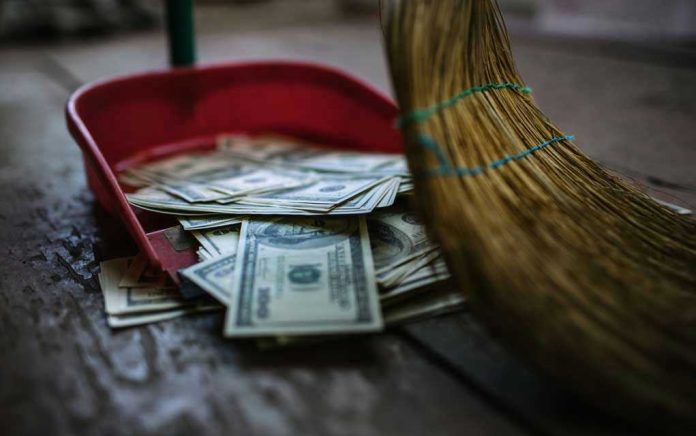
Small-dollar, recurring donations have turned political ideology into a subscription product, and New York’s socialists have embraced that model with unusual clarity and discipline.
At a Glance
- NYC-DSA and Mayor Zohran Mamdani explicitly promote monthly giving—$5, $15, or $50—to finance organizing and elections across city, state, and federal levels.
- The approach mirrors a broader shift toward digitally enabled small-donor finance that now constitutes a significant share of U.S. political money.
- Recurring payment design can meaningfully increase total contributions—and refunds—by exploiting default settings and donor inertia.
- The strategic bet: regular, modest contributions can underwrite year-round grassroots capacity that pays off at the ballot box and in governing.
What Happened: A Socialist Case for Monthly Giving
Zohran Mamdani, New York City’s mayor, released a direct appeal urging supporters to make monthly donations to the New York City chapter of the Democratic Socialists of America (NYC-DSA). He framed the pitch as “the best deal in town,” naming suggested tiers—$5, $15, or $50 a month—and tying those subscriptions to movement-building and electoral outcomes, including socialists elected to Albany, the City Council, Congress, and Gracie Mansion. The message was not coy about purpose: treat recurring giving as the fuel for an organization intent on electing and sustaining socialist officials.
This is fundraising as movement infrastructure, not a one-off cash call. The subscription frame packages ideology with a clear value proposition: predictable dollars operationalize predictable work—organizing, candidate recruitment, and sustained voter contact—across cycles rather than in the frantic bursts that define traditional campaigns.
How It Works: The Mechanics of Subscription Politics
Recurring small-dollar fundraising rests on three interlocking elements. First, list-building and digital distribution—email, text, and social—lower the marginal cost of each ask and deliver compelling calls to action at scale. Second, payment friction is minimized; once a donor commits to monthly giving, inertia and habituation keep contributions flowing. Third, organizations convert that cash flow into year-round capacity: field organizers, canvass launches, targeted mail and digital, volunteer training, and rapid-response issue campaigns that, in turn, feed fresh donor appeals. The loop is self-reinforcing when executed well.
Academic work on “choice architecture” shows how defaults and interface design amplify these effects. Pre-checked recurring boxes and optimized donation flows can increase total receipts by tens of millions nationally, particularly among first-time and small donors, though they also raise the incidence of refunds as some contributors later course-correct. Subscription politics thrives in that behavioral terrain: steady commitments accumulate quietly; spikes arrive with salient events; and refund risk, while real, is treated as manageable “breakage” in exchange for more reliable revenue.
Why Groups Bet on Small Donors: Scale, Legitimacy, Timing
Small-dollar money is no longer a novelty. Contributions of $200 or less made up roughly 18% of all political giving in the 2022 midterms, and Democrats, in particular, have learned to attract a growing share of their individual funding from such donors, driven by online platforms and emotionally resonant appeals. The appeal to subscribe leverages three advantages. It scales without courting a handful of large checks. It confers movement legitimacy—thousands of modest gifts tell a story of breadth. And it arrives early enough in the calendar to finance the unglamorous work that wins close races: field plans built in February, not July; volunteer captains trained before petition season; message testing before opponents define you.
Political science has long observed that well-resourced local operations can mobilize voters and change outcomes on the margins that decide competitive seats; recurring gifts are the closest thing to an annuity for that work. In this light, the Mamdani–NYC-DSA pitch is less a gimmick than a capitalization strategy for a local party-adjacent organization.
What the Subscription Funds: From Field to Candidate Pipelines
Organizations like NYC-DSA typically direct recurring revenue toward durable capacities that episodic fundraising struggles to sustain. These include candidate recruitment and training, endorsements and volunteer surge plans, precinct-level canvassing, relational organizing programs, and policy campaigns that keep supporters engaged between elections. A steady funds base also professionalizes compliance and data operations—mundane line items that, paradoxically, generate the biggest efficiency gains in targeting and turnout.
The linkage between money and manpower is tight: more recurring gifts mean more predictable field shifts and better planning horizons. Studies of grassroots mobilization show gains in turnout and persuasion when local groups coordinate canvassing, events, and GOTV with sufficient lead time and consistent resourcing. Subscription revenue buys that time.
The Design Choices That Matter: Defaults, Refunds, and Donor Trust
Recurring giving is not value-neutral in its implementation. Donation pages that default to monthly may greatly increase participation and total dollars, but they also increase refund requests when donors realize they enrolled in a subscription unintentionally. One large-scale analysis estimated that defaults boosted total donations by over $43 million while prompting nearly $3 million in additional refunds—effects strongest among small donors and those unfamiliar with recurring charges.
The normative and strategic lesson is straightforward: transparency sustains donor trust and reduces churn; aggressive defaults boost cash flow but can erode goodwill. Sophisticated operations calibrate the mix—clear labeling of recurring options, easy cancellation, and periodic “are you still in?” prompts—because predictable revenue is only as durable as the relationship that underwrites it.
But Mamdani didn't say to join DSA. He said to set up a monthly donation to NYC-DSA, which isn't the same thing.
— Peter Sterne (@petersterne) November 19, 2026
Implications: Movement Capital and the Competitive Landscape
The evident wager behind the Mamdani appeal is that a critical mass of small, regular contributions can convert a factional brand—socialism in this case—into movement capital: money, people, and attention that compound across cycles. If enough supporters subscribe, the group locks in an advantage competitors must either match with their own small-donor engines or offset with institutional money and allied PAC spending. In jurisdictions with strong grassroots cultures and dense media markets, the compounding effect is especially potent; it purchases message repetition and person-to-person contact at scale.
For observers, the key metric is not the headline dollar figure but the cadence of activity it sustains: how often the organization knocks doors, how quickly it spins up support when an endorsed candidate declares, and how effectively it carries momentum from victories into governing coalitions. Subscription politics, done honestly, is a promise about tempo and staying power as much as about ideology.
Sources:
thedailybs.com, degruyterbrill.com, fec.gov, cambridge.org, preprints.apsanet.org