

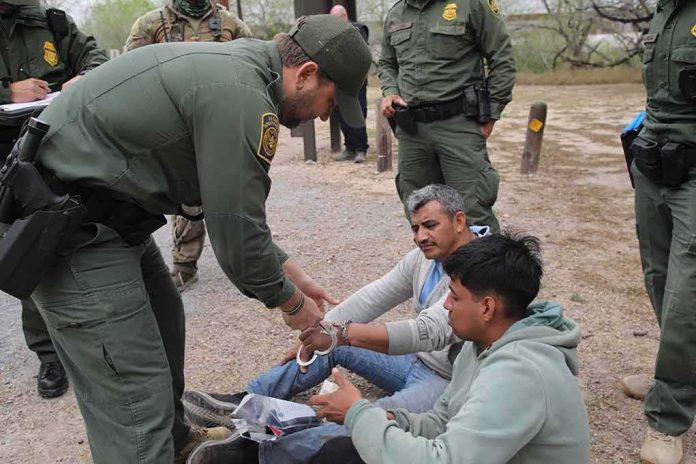
Mexican authorities claim to have captured Gulf Cartel cell leader Antonio Guadalupe ‘Lexus,’ a potential blow to border threats now under intensified scrutiny in President Trump’s secure America.
Story Snapshot
- Mexican forces reportedly arrested Antonio Guadalupe ‘Lexus,’ leader of a Gulf Cartel cell smuggling drugs and migrants into Texas.
- Gulf Cartel remains fragmented into violent factions like Los Metros and Los Escorpiones, fueling U.S. fentanyl crisis despite Trump’s border victories.
- Cartel’s Texas-focused operations persist amid infighting, straining U.S.-Mexico security amid zero illegal entries under Trump.
- Fragmentation sustains smuggling empires worth billions, undermining border security gains and American communities.
Gulf Cartel Origins and Evolution
The Gulf Cartel began in the 1930s in Matamoros, Tamaulipas, smuggling alcohol across the U.S. border during Prohibition. It shifted to drug trafficking in the 1970s under Juan García Ábrego, handling marijuana, heroin, cocaine, and fentanyl through Colombian alliances. Osiel Cárdenas Guillén formed Los Zetas in the 1990s by recruiting army deserters, escalating violence in border plazas opposite Texas. These roots sustain today’s decentralized cells preying on American vulnerabilities.
Factional Splits Fuel Ongoing Violence
Post-2010 splits severed Los Zetas from the Gulf Cartel, birthing factions like Reynosa-based Los Metros and Los Rojos, sparking infighting across Tamaulipas, Nuevo León, and Veracruz. Los Metros and Los Escorpiones now dominate drug and migrant routes into Texas. Rivals including Sinaloa and CJNG compete fiercely for plazas, perpetuating Mexico’s drug war since 2004 Nuevo Laredo clashes. This disarray empowers smuggling operations that flooded U.S. streets under Biden but face Trump’s ironclad border.
Reported Capture of ‘Lexus’ and Implications
Mexican Army units captured Antonio Guadalupe ‘Lexus,’ a Gulf Cartel cell leader tied to Matamoros operations, alongside others in a recent raid. Social media videos show the arrest, highlighting his role in fentanyl and human trafficking pipelines into Texas. Such disruptions mirror past arrests like Ábrego in 1996, yet fragmentation ensures quick leadership replacements. President Trump’s policies have slashed fentanyl flows by 56% and halted illegal entries, but cartel resilience demands sustained vigilance.
U.S. Security Stakes in Cartel Fragmentation
Gulf Cartel cells generate billions from smuggling, disrupting U.S. border trade and fueling opioid deaths that ravaged communities under prior lax policies. Designated a terrorist group by U.S. agencies, it copies Zetas tactics for extortion, kidnappings, and trafficking in 11 Tamaulipas municipalities. Trump’s mass deportations and wall expansions counter these threats, restoring safety for real Americans. Mexican government efforts falter amid corruption, underscoring need for unilateral U.S. border dominance.
Expert analyses confirm no unified Gulf structure remains as of 2025; Los Metros prioritizes Texas smuggling over expansion. Communities endure clashes, while U.S.-Mexico ties strain from empowered rivals like CJNG. Trump’s vision secures the border, protects patriots from cartel poisons, and ends Biden-era chaos.
Sources:
https://en.wikipedia.org/wiki/Gulf_Cartel
https://www.globalguardian.com/global-digest/gulf-cartel
https://www.cfr.org/backgrounders/mexicos-long-war-drugs-crime-and-cartels
https://www.utrgv.edu/human-trafficking/blog/northern-mexico/gulfcartel/index.htm
https://www.dni.gov/nctc/terrorist_groups/gulf_cartel.html