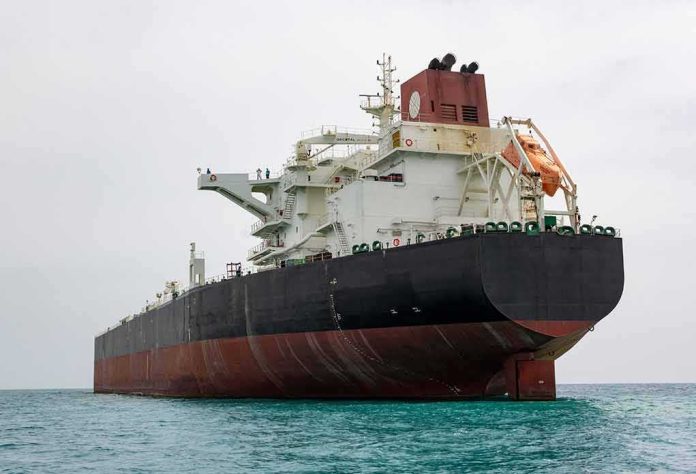
A massive oil slick near Iran’s Kharg Island threatens the world’s most vital oil corridor, exposing vulnerabilities in global energy security that no government seems equipped to protect.[1][2]
Story Snapshot
- Satellite images from May 6-8 reveal a suspected oil slick covering 45-65 square kilometers west of Kharg Island, Iran’s hub for 90% of oil exports.[1][2][3]
- A second slick, 12-20 square kilometers, appeared May 11, detected by maritime firm Windward AI, drifting toward Saudi Arabia and UAE.[2]
- Iran denies spills, blaming tanker discharges, while experts point to aging infrastructure amid US-Iran tensions.[2][5]
- The spills risk environmental catastrophe in the Persian Gulf, straining supplies and hiking energy costs for Americans.[1][2]
- Both sides of the political aisle see federal failures in securing energy independence against such global threats.[1]
Satellite Detection Confirms Massive Slick
Europe’s Copernicus Sentinel-1, Sentinel-2, and Sentinel-3 satellites captured a gray-and-white slick west of the 8-kilometer-long Kharg Island between May 6 and 8, 2026.[1][2][8] Researchers from the Conflict and Environment Observatory estimated coverage at 45 square kilometers, visually consistent with oil.[1] Data Desk consultancy co-founder Louis Goddard agreed the images likely depict an oil slick.[1] Kharg Island handles nearly 90% of Iran’s oil exports, making the site critical to global energy flows.[1][2][3]
Maritime intelligence firm Windward AI identified the primary slick at about 65 square kilometers, equivalent to tens of thousands of barrels.[2] Experts assess it as crude oil, possibly from pipeline issues or failed ship-to-ship transfers, not ship fuel.[2] The slick drifts southwest, projected to enter Qatar’s economic zone in four days and reach UAE shores near Al Mirfa in 13 days.[2]
Second Slick Heightens Disaster Fears
Windward AI detected a second suspected slick on May 11 at 11 a.m. local time, spanning 12 to 20 square kilometers near Kharg Island.[2] United Nations officials warned of potential environmental catastrophe in the Strait of Hormuz amid ongoing crisis.[2] The new slick compounds risks as the larger one continues moving toward Saudi Arabian waters.[2]
Iran’s Oil Terminals Company denied leaks after inspections of storage tanks, pipelines, loading facilities, and nearby tankers found no evidence.[2] A spokesman claimed the sheen resulted from a European tanker’s discharge, labeling reports psychological warfare.[2][5] However, no specific vessel data, AIS tracks, or chemical analysis supports this claim.[2]
Geopolitical Strain and Energy Risks
Experts link the slicks to aging Iranian infrastructure under “war mode” pressures from US enforcement in the region since February.[2] No direct evidence confirms active spills or exact origins, but patterns match oil releases.[1][2] Persian Gulf nations face cleanup burdens and fishery damage, amplifying regional tensions.[2]
Second suspected oil slick detected close to Iran’s Kharg Island, UN warns of catastrophehttps://t.co/JDc6VwJFdH
NEWYou can now listen to Fox News articles! A second suspected oil slick has been detected near Iran’s Kharg Island export hub, according to maritime intelligence… pic.twitter.com/O511TiEKWP
— WhizBuddy (@WhizBuddy) May 10, 2026
Americans feel the pinch through volatile oil prices—crude hit 95.42 USD per barrel on May 8—exacerbating high energy costs.[14] Conservatives decry globalist dependencies leaving the US exposed; liberals lament fossil fuel risks widening inequality.[2][14] Shared frustration mounts over federal inaction on energy dominance, echoing elite priorities over citizen hardships.[1][2]
Sources:
[1] Satellite Images Show Suspected Oil Spill in Iran’s Kharg Island
[2] A 45 km² oil slick appears in satellite images near Kharg Island, an …
[3] Satellite Images Show Oil Slick Off Iran’s Kharg Island: Report – NDTV
[5] Iran denies suspected oil spill near country’s Kharg Island export hub
[8] Suspected oil spill seen on satellite images near Iran’s Kharg Island …
[14] Crude Oil – Price – Chart – Historical Data – News – Trading Economics