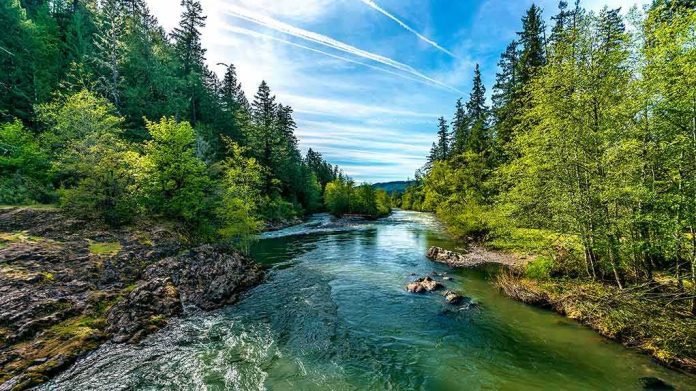
When a watershed is irreplaceable and failure modes are permanent, competent governance defaults to precaution; Minnesota’s pause on nonferrous mining near the Boundary Waters is a textbook application of that logic, rooted in specific legal duties and a long record of contested science and litigation rather than vibes or veto points.
The Short Version
- Executive Order 26-10 directs state agencies to stop environmental review, permitting, and leasing for nonferrous mining in the Rainy River Headwaters while core mining rules are reworked and court cases conclude.
- The order also withholds state cooperation in federal environmental reviews and triggers scrutiny of existing leases—shifting the practical locus of control to Minnesota’s agencies and courts.
- This is not a novel anti-mining edict; it extends a decades-long Boundary Waters pattern in which high, irreversible downstream risk pushes policy toward caution, litigation, and rule reform.
- Proponents cite mineral demand and jobs; the state’s action weighs those benefits against the hydrology and chemistry of sulfide-ore mining in a connected, low-buffer wilderness watershed where mistakes are not readily remediated.
What the order actually does—and why that matters
Executive Order 26-10 is surgical, not rhetorical. It instructs the Department of Natural Resources (DNR) and the Pollution Control Agency (MPCA) to halt environmental review and permitting work for nonferrous mineral mining proposals in the Rainy River Headwaters Watershed (RRHW) until two things run their course: the Northeastern Minnesotans for Wilderness v. DNR litigation over Minnesota’s siting rule and the related rulemaking the litigation has catalyzed. In parallel, it bars the state from acting as a cooperating agency in any federal environmental review for RRHW nonferrous projects. By removing the state’s capacity and consent needed for key approvals, the order effectively pauses project pipelines without purporting to adjudicate the merits of any single mine plan. The text of the order is unambiguous on these points.
That structure matters because Minnesota’s nonferrous mines require a stack of state permits and leases, plus Clean Water Act and Clean Air Act authorizations issued or certified by the state. Without active state participation and while siting rules are under revision, advancing copper-nickel proposals in the RRHW becomes impracticable. The order’s design thus aligns authority with responsibility: if the state must ensure the Boundary Waters’ water quality and wilderness character under its own rules, it should not be simultaneously processing projects while those rules are being reexamined for adequacy.
The mechanism behind the pause: rules, courts, and administrative prudence
The proximate trigger is a formal adequacy review of Minnesota Rule 6132.2000—the state’s nonferrous mine siting rule—as applied to the Boundary Waters. After taking expert testimony and more than 4,000 public comments, the DNR concluded the existing framework was not sufficient to protect the BWCAW from certain impacts, including noise and light; the agency moved to reopen and rewrite elements of the rule, a decision intertwined with ongoing court proceedings. When an agency determines that its governing rule may be inadequate for a uniquely sensitive resource, pausing discretionary project work until the rule is repaired is not overreach; it is administrative hygiene.
This is consistent with how Minnesota has handled Boundary Waters conflicts for generations: rules first, projects second. The Boundary Waters Canoe Area Wilderness has had layer upon layer of protections since the 1970s, including state siting prohibitions inside the wilderness and its mineral management corridor, and recurring federal withdrawals or moratoria upstream. The litigation-and-rulemaking choreography of 2023–2026 fits that lineage rather than breaking from it.
Hydrology, chemistry, and why this watershed is different
Nonferrous mining in northern Minnesota targets sulfide-bearing ore bodies hosting copper, nickel, and associated metals. When exposed to air and water, sulfide minerals can generate sulfuric acid, which mobilizes heavy metals. In a tight industrial setting with robust water treatment and waste management, risk can be substantially mitigated; in a low-gradient, lake-and-wetland mosaic with short hydrologic pathways and thin soils, the margin for error narrows. The RRHW drains directly into the Boundary Waters—an interconnected chain of lakes prized precisely because its water is extraordinarily clear and its biological communities are sensitive to changes in acidity and metals loading.
That risk profile explains why the state has been methodically tightening the protective envelope—first on obvious footprint issues like noise and light that fragment wilderness experience, and, via the current order, by refraining from advancing projects while the overall siting adequacy is under judicial and administrative review. Weighing a persistent, potentially irreversible downstream hazard against deferrable extraction is exactly where a precautionary approach becomes rational policy rather than ideology.
How we got here: decades of contested leases, reviews, and do-overs
The Boundary Waters mining debate is not a 2026 invention. It traces to 1960s federal leasing in the Superior National Forest, 1970s court rulings and wilderness legislation, and repeated cycles of environmental review, withdrawal, and litigation involving projects like Twin Metals and PolyMet. In recent years, federal agencies have alternated between restricting and reopening the watershed to leasing, while state courts and agencies have been pressed to defend whether Minnesota’s own rules are adequate for a world-class wilderness at the downstream end of any mistake. That back-and-forth explains the governor’s reliance on a process pause tethered to rulemaking and court resolution rather than a one-off denial—durable outcomes require solid rule underpinnings.
Within Minnesota’s framework, Rule 6132.2000 already draws hard lines inside the BWCAW and the adjacent corridor; the adequacy question now under review concerns whether the remaining upstream siting and performance criteria are sufficient. The DNR’s administrative record and the court’s oversight provide the structure for that answer. Until then, the order prevents what agencies dread most: committing scarce review resources and institutional credibility to project timetables that the rule rewrite might ultimately invalidate.
The counter-arguments: minerals, jobs, and the “we can regulate it” case
Mining proponents make two serious claims. First, that the United States needs more domestic sources of copper, nickel, and related minerals for energy transition, defense, and high-tech manufacturing. Second, that modern sulfide-ore mining is heavily regulated; therefore, projects should be allowed to advance under existing laws and be judged case by case. Both points have merit in the abstract. But they do not resolve the governing question for this watershed: does the current siting and permitting architecture demonstrably control low-probability, high-consequence failures in a landscape where dilution and distance do not buy time? Minnesota’s own agencies answered “not yet,” at least with respect to certain impacts, and moved to repair the rule set before resuming project processing.
Put differently: the state has not declared that nonferrous mining is categorically impossible everywhere; it has declared that, in this specific headwaters, and under rules presently being updated under court supervision, it will not move projects through the system. That is an institutional judgment about sequencing, not a forever verdict about mineral development statewide. To suggest otherwise is to confuse a targeted precautionary hold with a programmatic ban—two different policy instruments.
What changes on the ground now
For project sponsors, three immediate realities follow. First, environmental review and permit applications in the RRHW are frozen at the state level; schedules anchored to near-term milestones must be rewritten. Second, any federal environmental impact statements will lack Minnesota’s cooperation—an analytical and practical gap, given that state permits, standards, and data ordinarily form part of the federal record. Third, existing state mineral leases in the watershed face heightened scrutiny for compliance with their terms; noncompliance can trigger administrative actions short of (and including, where authorized) termination or nonrenewal. Each of these steps is grounded in authority the order cites to the agencies themselves.
For communities, the order preserves the status quo ante while the rulemaking and litigation resolve—a period measured in months to a handful of years rather than decades. During that time, the outdoor recreation economy that has flourished around the Boundary Waters continues without the uncertainty of concurrent major mine review and construction traffic, while the state attempts to produce a rule set that, if mining ever advances upstream, is both more defensible and more protective.
How this compares to other “hard-to-fix if wrong” decisions
Across U.S. environmental governance, agencies lean toward precaution when the damages of a misstep are effectively irreversible at human time scales—think municipal drinking water aquifers, intact wetlands complexes, or designated wilderness headwaters. The Boundary Waters dispute belongs to that class. Minnesota’s own pattern—leveraging pauses tied to judicial review and rule repair—mirrors national practice in such settings: rent-seeking by either side is curbed by channeling conflict into updating the rules of the game, then applying them prospectively. You do not “permit now and fix later” when “later” is too late.
This is also why the order’s withholding of state cooperation in federal analyses is consequential. Cooperating agencies shape alternatives, methodologies, and mitigation commitments in the federal record; when the state says “not until our house is in order,” it prevents a procedural mismatch where a federal review presumes state standards that are, at that moment, under revision.
MN Governor Tim Walz issued an executive order banning new mining in the Boundary Waters. And major media is missing. https://t.co/a7ut1j4djg
— Linda Robinson (@ZiggityBoomer) August 18, 2026
What to watch next
Three milestones will define the next chapter. First, the court outcomes in the Rule 6132.2000 adequacy litigation—those decisions will either validate or redirect the DNR’s approach. Second, the DNR’s promulgation of revised siting and protection provisions, including how they address wilderness-affecting externalities such as noise, light, and hydrologically mediated contamination pathways. Third, legislative efforts to codify longer-term protections or clarify agency authority—either to entrench the precautionary stance or to reopen pathways under specified safeguards. Until those land, the governor’s order holds the line that prudence, not speed, governs the headwaters of America’s most-visited wilderness.
Sources:
minnesotareformer.com, cbsnews.com, northernnewsnow.com, savetheboundarywaters.org, wpr.org, npr.org, house.mn.gov