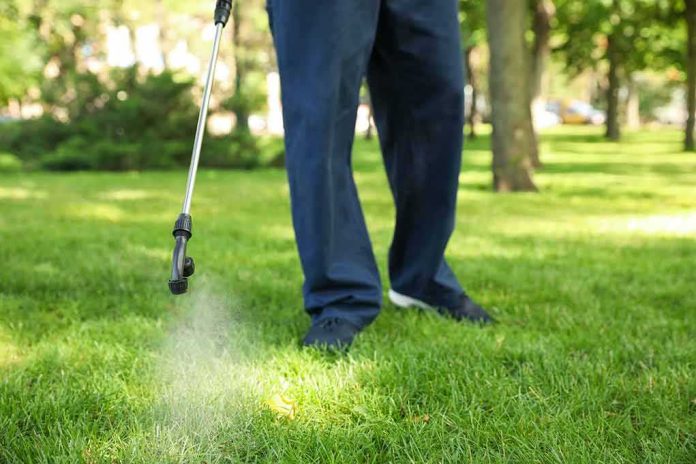
In a wealthy California suburb where chemicals are sprayed almost daily, parents now fear an unusual cluster of rare childhood cancers may be the price of “perfect” landscaping.
Story Snapshot
- Families in Ladera Ranch report up to nine rare Ewing sarcoma cases in children since 2007, prompting federal and local review.
- A federal prosecutor has asked the Environmental Protection Agency to investigate possible environmental causes, including heavy pesticide use.
- Resident records show 17 different pesticides and herbicides were used in a single month, with near-daily spraying across the community.
- Health agencies and the American Cancer Society say no environmental cause is known for Ewing sarcoma, and no official cancer cluster has been confirmed.
Parents Sound Alarm Over Rare Child Cancers
Since 2007, Ladera Ranch families say as many as nine children have been diagnosed with Ewing sarcoma, a rare bone and soft tissue cancer that usually affects only a few hundred children nationwide each year. The latest known case involved 17-year-old Brody Matteson, who died in March 2026, pushing grief-stricken parents to organize and demand answers from officials and their own homeowners group. These families say the numbers in their town simply feel too high to be random.
First Assistant United States Attorney Bill Essayli has now stepped in, formally asking Environmental Protection Agency Administrator Lee Zeldin to open an environmental investigation into the Ladera Ranch cases. In his July 17 letter, Essayli said his office learned of “multiple pediatric Ewing sarcoma cases” in the community and of resident concerns about a possible cancer cluster, urging federal scientists to evaluate whether local environmental factors might be playing a role.
Heavy Pesticide Use Raises Bipartisan Concerns About Local Safety
Local resident and attorney Jackie Frentz, working with other parents, reviewed public records and found that during June alone, crews applied 17 different pesticides and herbicides across Ladera Ranch, with spraying taking place almost every day. Parents say this level of chemical use feels extreme for a suburban neighborhood and have pressed the Ladera Ranch Maintenance Corporation, which oversees common areas, to switch to non-toxic methods and to share detailed information about what is being sprayed, when, and where.
In private Facebook groups, one mother asked neighbors to report cancer diagnoses in their families; within a short time, 62 people replied with different cancer cases, including six reports of Ewing sarcoma, four of them since 2021. These numbers are self-reported and not yet medically verified, but they have deepened community fears that something in the local environment—whether pesticides, power lines, or some other factor—may be contributing to illnesses in a town many residents chose for its planned safety and clean image.
Health Officials Urge Caution, Say Evidence Is Still Limited
The Orange County Health Care Agency says it has begun a formal review of cancer data for Ladera Ranch, working with the California Cancer Registry, the University of California Irvine cancer center, and the county agricultural commissioner. Officials say an initial look at cancer statistics did not show a clear pattern or prove a true cancer cluster, but they are reexamining the numbers because of continued concern from residents and new reports of rare cancers in local children.
The California Cancer Registry has also started reviewing the reported cases, following complaints from families who feel their worries were first brushed aside. At the same time, the American Cancer Society states that there are currently no known environmental causes for Ewing sarcoma, even though some studies have linked childhood cancers more broadly to environmental contaminants. National reviews of cancer clusters show that only a small share of investigations ever confirm higher-than-expected cancer rates, and just one in twenty years clearly tied a cluster to an environmental cause.
Landscape Association Pauses Chemicals as Investigation Pressure Grows
Ladera Ranch’s landscape management group has come under heavy pressure from parents who say “insane” amounts of chemicals are being used on parks, paths, and common areas their children play in. In response to recent news coverage, the association paused certain weed-control products for 60 days and announced a committee to review its landscaping practices, while saying it will follow guidance from public health and regulatory agencies once more data are available.
As More Cases of Rare Cancer in Children from California Town Are Reported, Parents Say ‘This Is Not Random’
Parents in Ladera Ranch are concerned about pesticide use, which they question is the cause of a cluster of rare cancers in children.
— Mavis 🌺 (@MauvisSongBird) July 18, 2026
In a written statement, the Ladera Ranch Maintenance Corporation said it takes the concerns seriously and is cooperating with ongoing government reviews but added that it is “not aware of any determination” by health agencies identifying a specific environmental cause or linking its landscape practices to the illnesses. That gap—between official caution and parental fear—captures a wider frustration shared by many Americans on both the right and the left, who see a federal system slow to confront possible environmental risks until tragedy forces action.
How This Fits a Larger Pattern of Community Cancer Fights
Across the United States, citizen-reported cancer clusters often follow the same path now unfolding in Ladera Ranch: worried neighbors compare diagnoses, local agencies run quick data checks, residents collect their own information, and formal investigations begin only after pressure builds. A national review of 428 cancer cluster investigations found that increased cancer rates were confirmed only 13 percent of the time, and just one case showed a clear link to an environmental exposure.
Health experts say proving that a true cluster exists requires careful statistics, comparing the number of cases in one area to expected numbers over time. Even when that bar is met, finding a direct cause in community settings is rare, because cancers often have many possible sources and develop over long periods. For Ladera Ranch families, that scientific caution can sound like delay, especially when children are sick now and chemicals have been sprayed for years, but it also means any Environmental Protection Agency and state findings will face strong scrutiny before officials blame pesticides or any other specific exposure.
Sources:
thegatewaypundit.com, ourcancerstories.com, vinnews.com, reddit.com, particle.news, cancer.org, acsh.org, pmc.ncbi.nlm.nih.gov, portal.ct.gov