Elon Musk’s OpenAI courtroom fight is turning into a public referendum on whether powerful tech “elites” can quietly abandon safety promises once the money gets big.
Story Snapshot
- Musk told a federal jury in Oakland that he warned then-President Barack Obama in 2015 about AI dangers, arguing his concerns predate today’s AI boom.
- Musk also described a 2015 fallout with Google cofounder Larry Page, including a claim that Page called him a “speciest” for prioritizing humans over AI.
- The civil case centers on Musk’s allegation that OpenAI drifted from an open, nonprofit mission into a profit-driven, closed model tied to major commercial partnerships.
- The trial’s outcome could shape how courts treat “mission promises” made by founders when nonprofit tech projects later become high-value businesses.
Musk’s “I warned them early” strategy meets a skeptical moment
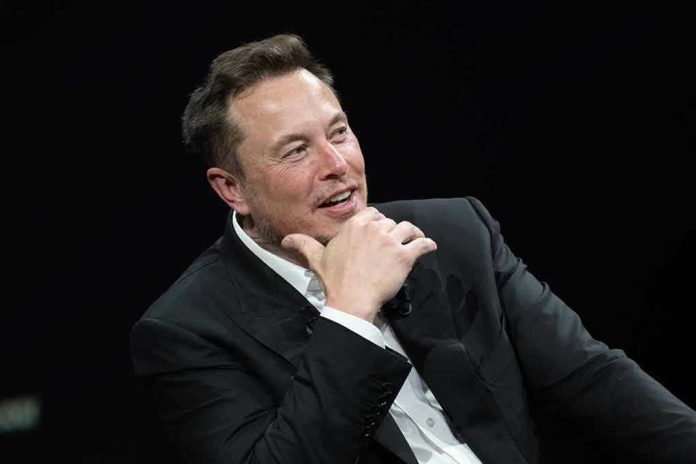
Elon Musk testified first in the OpenAI civil trial in Oakland federal court, using personal stories to show he has long treated AI risk as a serious national concern. Musk told jurors he met one-on-one with Barack Obama in 2015 for about an hour to warn about AI dangers, and he framed that meeting as evidence he was sounding alarms before AI became a household product. The account, as presented, relies on Musk’s testimony.
In OpenAI trial, Elon Musk points to meetings with Barack Obama and Larry Page as proof he's serious about AI risks https://t.co/lBly1MxruY
— Jazz Drummer (@jazzdrummer420) April 29, 2026
Musk’s testimony also leaned on a 2015 dispute with Larry Page, then Google’s top executive, to argue that major tech players were not treating safety with urgency. Musk said Page called him a “speciest” for prioritizing humanity over AI, and that the conflict eventually led Page to refuse further contact. Those claims may help explain Musk’s motivations, but they remain anecdotal in the public record beyond the sworn testimony described in reporting.
What the lawsuit is actually about: control, mission, and money
The core dispute stems from Musk’s 2024 lawsuit accusing OpenAI and CEO Sam Altman of abandoning what Musk describes as OpenAI’s original nonprofit, open approach in favor of a profit-oriented, closed model. Musk co-founded OpenAI in 2015, at a time he said AI was still nascent and “no one was really using” it in everyday life. In the courtroom narrative, Musk cast OpenAI’s creation as a counterbalance to Google’s AI ambitions and a safety-driven alternative.
That backstory matters because it gets at a broader American frustration: institutions make promises when they need public trust, then rewrite the rules when incentives change. Musk’s complaint, as summarized in coverage, is essentially a “mission drift” argument—OpenAI’s structure and commitments changed as the commercial stakes rose. Supporters of limited-government principles often prefer private innovation to heavy regulation, but they also expect honest dealing and transparent governance when organizations claim a public-interest mission.
The “pro-humanity” framing and the alignment question
Musk described himself as “pro-humans,” and used a vivid analogy: AI as a “very smart child” that needs values to avoid catastrophe. In practical terms, that argument points to the unresolved “alignment” problem—how developers ensure advanced systems consistently follow human priorities, not just optimize for narrow goals. The testimony put the safety question front and center, even though the lawsuit itself is a civil dispute over OpenAI’s direction, leadership, and commitments rather than a referendum on AI philosophy alone.
For many voters—especially those already distrustful of concentrated power in Silicon Valley—the trial highlights a real governance gap. Congress can debate guardrails for AI, but much of the decision-making still happens behind closed doors inside companies and nonprofits that operate globally, move fast, and answer primarily to investors or insiders. Musk’s testimony implicitly argues that, absent enforceable constraints, the AI race rewards speed and dominance over caution and public accountability.
Why this case resonates beyond tech circles
The immediate stakes are personal and corporate: Musk is trying to persuade a nine-person jury, and the case could affect how OpenAI is structured and led going forward. The longer-term stakes are broader. If courts take founder-era commitments seriously, it could set a precedent for how mission-based tech organizations evolve when they become lucrative. If courts do not, critics will likely argue it validates a familiar pattern—big players can market “for the public good” branding, then pivot once scale and revenue arrive.
Reporting available here is limited to one detailed courtroom account, so readers should treat the Obama and Page anecdotes as trial claims unless corroborated by filings or additional independent coverage. Still, the broader theme is clear: Americans across the political spectrum increasingly suspect that the people shaping transformational technologies answer to a small circle of insiders, not to voters, workers, or families living with the consequences. The trial is one more test of whether the system can impose accountability without choking innovation.
Sources:
Musk Cites Meetings With Obama and Larry Page in OpenAI Trial