Washington’s decision to publicly hunt an Islamic State leader in Nigeria was about more than one terrorist; it was a signal flare aimed straight at Africa’s new anti‑Western military bloc.
Story Snapshot
- U.S. and Nigerian forces say they killed the Islamic State global “number two” in a joint strike.
- Public talk of “Christians under attack” collides with Nigeria’s insistence the mission was not about religion.
- Confusion over locations, names, and deleted posts shows how fast narratives outrun hard proof.
- The operation doubles as a warning shot to juntas in the Sahel flirting with Russia and Iran.
How A Remote Nigerian Strike Became Global Power Signaling
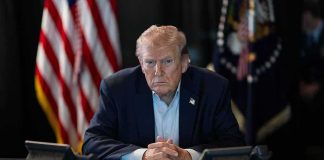
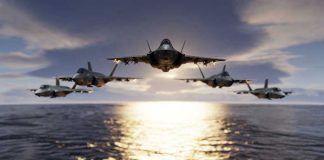
President Donald Trump announced that Abu‑Bilal al‑Minuki, described as the second‑in‑command of the Islamic State, was killed in a joint operation by United States and Nigerian forces, with United States Africa Command saying the strike hit Islamic State camps and killed multiple fighters.[1][2] The Pentagon released a video showing a missile launched from a warship, presented as footage of the mission.[1][2] Reuters noted it could not independently verify where or when that clip was filmed, a crucial caveat once the propaganda dust settles.[1]
The Nigerian government publicly embraced the mission as a joint counterterrorism operation, with Foreign Minister Yusuf Maitama Tuggar stressing that it had “nothing to do with a particular religion.” That line directly contrasted with Trump’s framing of the targets as “ISIS terrorist scum” who had been killing Christians in northwest Nigeria, a theme echoed in conservative media coverage.[2] Nigerian officials highlighted coordination and sovereignty; Washington emphasized righteous retribution and presidential resolve.
The Claims: Flawless Strike, Top Target, Christian Victims
Trump told Americans that, at his direction, “brave American forces and the armed forces of Nigeria flawlessly executed a meticulously planned and very complex mission” to eliminate the most active terrorist on earth.[2][3] United States Africa Command and supportive outlets characterized the dead as “high‑value” Islamic State militants, including the supposed global number two.[2][3] That storyline resonates with American conservative values: protect innocent Christians, punish jihadists decisively, and demonstrate that U.S. power still counts in far‑off trouble spots.[2]
The official narrative carried three pillars: the strike was joint, it was lawful because Nigeria consented, and it removed a uniquely dangerous mastermind.[1] Multiple major outlets repeated those points almost verbatim on day one, citing United States Africa Command statements and brief social media posts.[1] That echo chamber does not prove the claims false, but it does show how quickly one version of events can harden into “what everyone knows,” long before the evidence file is complete.
The Gaps: Names, Maps, And Deleted Posts
Basic details wobble the moment you lean on them. Reports place the strike in “northwest Nigeria,” “Sokoto State,” and, in other coverage, “northeastern” Nigeria and the Lake Chad Basin.[1][2] The target’s name appears as Abu‑Bilal al‑Minuki, Abu Bilal al‑Manukhi, or Abu Balal al‑Manuki, depending on which chyron you read.[2][3] That sort of inconsistency is common in fast‑moving counterterrorism stories, but it also makes serious verification harder for anyone who is not already inside the intelligence loop.
United States Africa Command reportedly posted on X that the strike occurred at Nigeria’s request, then removed the post later.[1] That kind of revision raises obvious questions: was the language diplomatically sensitive, factually sloppy, or both? Conservative common sense says any lethal overseas operation deserves a clear, stable public record: what authority approved it, who was targeted, and what damage was done. When posts disappear and wording shifts, citizens are wise to ask why.[1][3]
Why Nigeria’s Message Differs From Washington’s
Nigerian officials confirmed a joint strike against Islamic State militants and welcomed U.S. support, but they did not publicly repeat Washington’s claim that the Islamic State’s global number two died in the attack. Their statements focused on sovereignty, terrorism, and national security, not on Christian victimhood or the target’s global rank. That divergence may reflect both political caution and limited independent intelligence; Abuja benefits from a success narrative but also must manage a complex, multi‑religious society.
US Africa Command Releases Video of Strike Targeting ISIS Fighters in Northeastern Nigeria
On its X handle on Saturday, the Command said, "Last night's operation targeted a significant presence of ISIS fighters in Northeastern Nigeria, eliminating multiple high-value individuals pic.twitter.com/PKH8Ub284b
— TVC News (@tvcnewsng) May 16, 2026
From a conservative American perspective, highlighting attacks on Christians makes moral and strategic sense; the West should care when believers are slaughtered for their faith. Yet Nigeria’s leadership knows that branding operations as religious crusades can inflame local tensions and feed jihadist recruitment. So you see a calibrated duet: Washington plays to an American audience that wants moral clarity, while Abuja speaks the language of neutral counterterrorism, even if both governments broadly agree on the enemy.
Message To The Sahelian Alliance: We Can Still Reach You
This operation unfolded against the backdrop of a new “Sahelian Alliance” of military juntas in Mali, Burkina Faso, and Niger, regimes that have expelled Western forces while courting Russia and Iran. Washington’s ability to strike Islamic State targets from a warship, in coordination with an elected Nigerian government, sends an unmistakable message to those juntas: American power no longer needs a big footprint to be felt.[1][3] Cooperation with U.S. forces remains valuable; alignment against them carries risks.
For all the gaps in the public record, one thing is clear: both Washington and Abuja want this episode remembered as proof that their partnership can hit jihadists hard.[1] That may be true, and many Nigerians interviewed by reporters welcomed more such strikes.[2] Yet citizens on both continents should insist on fuller disclosure over time—target confirmation, casualty counts, and legal justifications—so that justified counterterrorism does not slide into unaccountable shadow war, no matter how satisfying the explosions look on released video.[1][3]
Sources:
[1] YouTube – US launches airstrike on ISIS militants in Nigeria | REUTERS
[2] Web – US AFRICOM video shows targeted strike against ISIS fighters in …
[3] YouTube – US Strikes in Nigeria: What Really Happened? | Diplomatic Channel