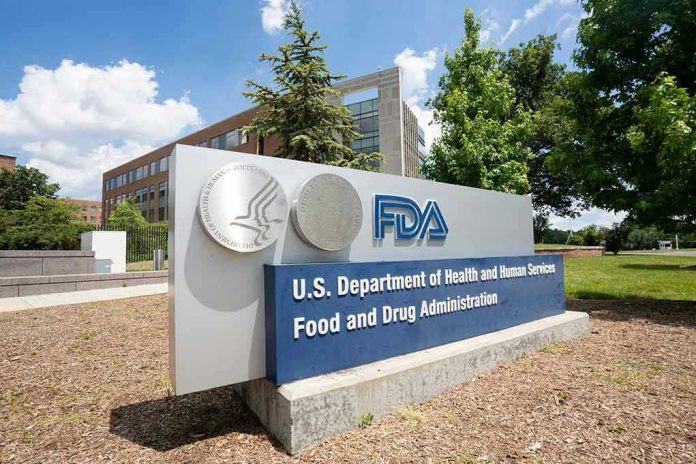
The FDA has blocked Moderna’s groundbreaking mRNA flu vaccine from even entering the review process, marking a dramatic shift under the Trump administration’s newly confirmed Health Secretary Robert F. Kennedy Jr., who has openly criticized mRNA technology and slashed over $500 million in federal mRNA research funding.
Story Snapshot
- FDA issued rare “refusal-to-file” letter rejecting Moderna’s mRNA flu vaccine application despite 40,000-patient trial showing superior efficacy in adults 50+
- Vaccine Director Dr. Vinay Prasad cited control arm concerns, contradicting 2024 Biden-era FDA feedback that approved Moderna’s trial design
- HHS Secretary Robert F. Kennedy Jr.’s anti-mRNA agenda has eliminated federal mRNA funding, rolled back COVID vaccine recommendations, and removed dissenting FDA advisors
- Over a dozen former FDA commissioners condemned the new approval barriers as harmful to U.S. biomedical innovation leadership
- Moderna plans urgent FDA meeting while pursuing approvals in EU, Canada, and Australia where reviews continue without issue
FDA Rejects Moderna Application After Contradicting Prior Guidance
The FDA delivered a stunning setback to Moderna in early February 2026, refusing to review the company’s mRNA-based seasonal flu vaccine through a “refusal-to-file” letter. Vaccine Director Dr. Vinay Prasad claimed Moderna’s 40,000-participant phase 3 trial failed to use the “best-available standard of care” as a control, arguing the study lacked an “adequate and well-controlled trial.” This reasoning directly contradicts 2024 guidance from the FDA’s Center for Biologics Evaluation and Research, which deemed Moderna’s standard-dose comparator acceptable, though preferring high-dose shots for seniors 65 and older. Moderna proceeded with the agreed protocol and even supplemented data with high-dose comparisons.
RFK Jr.’s HHS Overhaul Targets mRNA Technology Across Federal Agencies
The refusal-to-file letter represents the latest action in Health Secretary Robert F. Kennedy Jr.’s systematic campaign against mRNA vaccines since joining the Trump administration in 2025. HHS terminated over $500 million in federal BARDA funding for mRNA flu research last summer, rolled back COVID-19 vaccine recommendations, mandated new mRNA vaccine warnings, and removed FDA advisors who supported streamlined approval processes. Dr. Prasad’s 2025 internal memo ended decades-old FDA practices allowing flu vaccine approvals based on immunogenicity data rather than full efficacy trials, specifically targeting mRNA products. More than a dozen former FDA commissioners publicly condemned this policy shift as unnecessarily disruptive to established scientific processes that have safely regulated seasonal vaccines for years.
Moderna CEO Stéphane Bancel issued a sharp rebuke, stating the FDA’s decision “does not further America’s leadership in innovative medicines.” The company immediately requested an urgent meeting with FDA officials and took the unprecedented step of publicly releasing the refusal-to-file letter. Bancel emphasized that no regulatory mandate requires the “best standard” control the FDA now demands, and noted the agency raised no safety or efficacy concerns about mRNA-1010’s performance. The trial demonstrated superior protection compared to standard flu shots in adults 50 and older, the very population most vulnerable to seasonal influenza complications. This marks a rare instance of FDA issuing a refusal-to-file letter for a vaccine after extensive pre-submission discussions supposedly aligned the agency and manufacturer on trial design.
International Regulators Proceed While U.S. Stalls Innovation
While the FDA blocks domestic review, regulatory agencies in the European Union, Canada, and Australia continue evaluating Moderna’s mRNA flu vaccine without raising similar objections. The company anticipates potential approvals in these jurisdictions during late 2026 or early 2027, creating the absurd situation where American innovation may reach foreign markets first while U.S. patients face delays. Moderna maintains its 2026 financial guidance remains unchanged despite the U.S. setback, though the company announced plans to pivot research and development resources toward oncology applications. This strategic shift signals declining confidence in navigating the FDA’s evolving mRNA barriers under current leadership, potentially costing American patients access to potentially superior vaccine technology developed by U.S. companies.
Policy Shift Threatens U.S. Biomedical Leadership and Patient Access
The FDA’s action sends a chilling message to pharmaceutical innovators that mRNA vaccine development faces unpredictable regulatory hurdles regardless of prior agency agreements or clinical trial success. Industry analysts warn this uncertainty will deter investment in mRNA seasonal vaccine research, undermining the very American biomedical leadership Moderna’s CEO referenced. The decision particularly impacts seniors who could benefit from mRNA-1010’s demonstrated superior efficacy compared to standard-dose flu shots currently available. No evidence suggests safety concerns drove the FDA’s refusal; rather, administrative objections to trial design choices the agency previously accepted now block progress. This represents classic government overreach where bureaucratic preferences override scientific evidence, agreements, and patient needs. Former FDA commissioners’ widespread condemnation underscores how far current leadership has strayed from sound regulatory principles in service of an ideological agenda against mRNA technology.
Sources:
Moderna says FDA refuses its application for new mRNA flu vaccine – ABC News
Moderna Statement on FDA Refusal to File Letter for mRNA-1010 – Issuer Direct