

In high-profile death investigations, the first hard fact that matters is often what has not been found: when an autopsy shows no trauma and the cause and manner are formally “pending,” investigators widen the aperture — including, when warranted, bringing in federal drug agents — while laboratories work through the slow, exacting steps that ultimately settle what happened.
At a Glance
- Hayden Panettiere, 36, was found in cardiac arrest; resuscitation failed and an autopsy found no trauma contributing to death.
- The cause and manner of death remain pending; toxicology is underway and can take weeks to complete.
- The DEA is assisting Greenville police and the county coroner in the investigation, a move consistent with potential drug-source inquiries.
- Early investigative steps — scene processing, medical record review, and supply-chain tracing — proceed in parallel to lab testing.
What is established so far in the Panettiere case
According to the Greenville County Coroner’s Office, first responders found Hayden Panettiere unresponsive and in cardiac arrest; despite advanced life support, she was pronounced dead. A next-day autopsy reported no signs of trauma that contributed to her death. With no anatomical cause apparent, the coroner left both cause and manner pending, explicitly keeping the case active while additional studies — chiefly toxicology — are completed. That posture is standard practice in a medically unexplained, non-traumatic death.
Law enforcement has confirmed that the Drug Enforcement Administration is assisting the Greenville Police Department and the coroner. When the DEA joins a death investigation, it typically signals focus on potential illegal or diverted substances and, crucially, on supply pathways rather than on a conclusion about the decedent’s behavior; it is an investigative capability decision, not a verdict. Multiple outlets have reported the DEA’s involvement, citing knowledgeable sources, while underscoring that no official cause of death has yet been released.
Why “pending toxicology” takes time — and why that’s appropriate
When an autopsy does not identify a definitive cause, the center of gravity shifts to forensic toxicology — a methodical search for drugs, metabolites, alcohols, volatiles, and other xenobiotics across blood, vitreous humor, urine, liver, and sometimes hair or gastric contents. This is not a single test; it is a sequence. Initial immunoassay screens are broad but imperfect; positives are confirmed by gas or liquid chromatography with mass spectrometry, performed to an evidentiary standard that can withstand courtroom scrutiny. Chain-of-custody documentation, calibration logs, and peer review of chromatograms all add time, and backlogs are common. In celebrity cases, labs are especially meticulous because the conclusions will be pored over — and possibly litigated.
Public timelines vary accordingly. A straightforward panel can return in several weeks; complex matrices, drug-drug interactions, or novel synthetics extend that window. Reported benchmarks — eight to ten weeks in some large jurisdictions, with delays when confirmatory testing is extensive — are routine, not exceptional. This is the tradeoff the medicolegal system accepts: precision over speed. The coroner’s use of “pending” is the correct, codified designation until that precision is achieved.
How multi-agency death investigations actually work
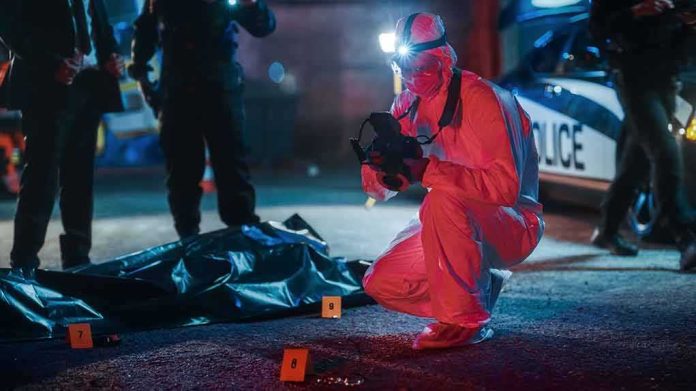
Two tracks run in parallel. The coroner or medical examiner leads the medical determination: autopsy, histology, toxicology, and synthesis into cause and manner (natural, accident, suicide, homicide, undetermined). The police lead the judicial investigation: scene documentation, witness interviews, phone and prescription record collection, and surveillance review. When potential controlled substances enter the frame, the DEA can add authority and tools — subpoena power for upstream supplier data, undercover expertise, and intelligence on distribution networks. That assistance does not transform a death into a federal case; it equips local investigators to follow a pharmaceutical or illicit supply chain beyond county lines if the evidence points there.
In this case, reporting indicates those standard steps: a thorough scene response, collection of medications, and coordination across agencies while the coroner awaits laboratory findings. None of that presupposes foul play; it preserves options so that, when toxicology is complete, investigators can match the science with the supply chain if necessary.
Common misconceptions in celebrity overdose-suspected deaths
The public often reads “DEA involvement” or “Narcan at scene” as a verdict. It is not. Narcan’s presence may reflect prior caution or emergency response rather than a confirmed opioid exposure, and agency participation simply reflects investigative prudence. Another misconception: that a lack of visible trauma means a benign death. In reality, many lethal pathologies — arrhythmias, electrolyte derangements, and drug toxicities among them — leave little anatomic signature; toxicology and medical history become decisive. Officials commonly refuse to speculate before the lab work is in, a stance repeatedly seen in past high-profile cases for good reason.
Finally, delays are not obfuscation. Toxicology labs operate under evidentiary burdens that television procedurals skip. Confirming low-concentration substances in decomposing matrices, assessing therapeutic versus toxic ranges in polypharmacy, and reconciling postmortem redistribution effects are difficult problems; getting them right prevents erroneous attributions and the cascading consequences that follow.
The Drug Enforcement Administration has joined the investigation into the sudden death of actress Hayden Panettiere, sources familiar with the matter told multiple outlets.
It was not immediately clear what role the DEA is playing in the investigation.
READ MORE:… pic.twitter.com/fBjwWQVl1M
— The National Desk (@TND) August 20, 2026
What outcomes are on the table — and how they are decided
Once toxicology is complete, the coroner will integrate results with autopsy findings and investigative context. If a specific drug or combination at toxic levels is found and no evidence supports intent to self-harm, manner often resolves to “accident.” If the levels are therapeutic and another medical cause emerges, the determination may be “natural.” If evidence indicates another party’s actions directly caused the death — for example, administration without consent or distribution practices that meet criminal thresholds — manner can be “homicide,” a medical-legal classification distinct from any particular charge. And when evidence remains insufficient, “undetermined” is an option explicitly contemplated by medicolegal standards.
Why the process serves families and public accountability
For loved ones, the waiting is brutal. But the reason professionals hold the line on “pending” is to deliver answers that endure: a certificate that will not be retracted, an investigative record that can support prosecution if warranted, and a public account that does not collapse under scrutiny. The cost of haste is high — misattributed blame, stigmatizing narratives, and, sometimes, missed opportunities to interrupt dangerous supply chains. The Panettiere investigation, as described by officials and reported by multiple outlets, is following the durable template that balances empathy with rigor: stabilize the facts, widen the investigative capability when substance sourcing is plausible, and let the science lead to a defensible conclusion.
Sources:
facebook.com, abc7ny.com, ew.com, variety.com, youtube.com, cnn.com, cdc.gov, bioworld.com, ap.org, fox10phoenix.com