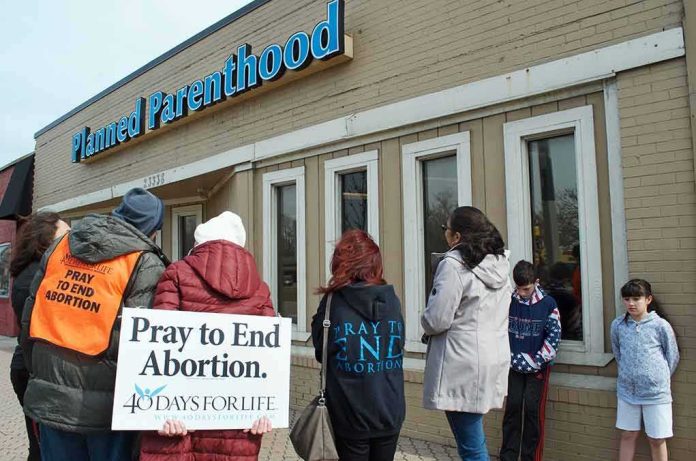
When universities pay stipends for internships at outside organizations, they are not just curating learning; they are signaling which forms of work count as part of an academic education—an issue that becomes acute when the host is an abortion provider and the funding flows through university-controlled accounts.
At a Glance
- CU Boulder’s Women and Gender Studies program advertises a stipend-supported internship—approximately $2,400 for the semester—at Boulder Valley Health Center (BVHC), listed among approved sites.
- The university frames the placement as education, outreach, research, and organizational work to advance equitable access to reproductive and sexual healthcare—not as clinical training in abortion.
- The internship carries defined academic components: roughly 10 hours per week, eligibility for Women and Gender Studies credit, and participation in a three-credit spring course.
- Funding is identified as coming from the Thomas R. Stephens Internship Endowment Fund and department funds, with the department stipend converting BVHC’s unpaid role into a paid student placement.
What the program actually offers and funds
CU Boulder’s Women and Gender Studies (WGST) internship materials set out a tight, practical arrangement: students commit about 10 hours each week over the semester, enroll in a three-credit course, and may receive department credit for approved placements. The department’s internship page explicitly lists Boulder Valley Health Center as one of the host organizations and describes the placement as stipend-supported—approximately $2,400 in monthly installments across the spring term. The listing is careful about mechanics: BVHC posts the internship as unpaid, but the department provides the stipend, “thereby making it a paid internship.” The funding sources are identified as the Thomas R. Stephens Internship Endowment Fund and department funds, which is the sort of governance detail—naming an endowment rather than a discretionary slush—that typically reflects an internal approval path and stewardship norms.
Equally central is the educational scope. CU Boulder characterizes the intern’s work as supporting community engagement, health education, research, outreach, and organizational initiatives that promote equitable access to reproductive and sexual healthcare. That language aligns with common models for public-health and nonprofit internships—students learn program design, communications, data collection, event planning, or policy-linked research under professional supervision—rather than any promise of hands-on clinical experience. It reads like a course-embedded practicum at a mission-driven healthcare nonprofit, because that is how the department has framed it.
How we got here: internships as the academic hinge for contested work
For decades, faculty have used internships to pull real-world practice into the curriculum. When the host’s mission sits in contested policy space, the arrangement often becomes a proxy battle over whether the university is neutral steward or material partner. Recent history bears this out. Texas litigation over abortion restrictions swept in questions about whether public universities could grant academic credit for placements with abortion-access organizations; the complaint filings detail how a system’s reading of state funding limits shaped credit decisions for field placements linked to abortion facilitation. In North Dakota, the governor signed a measure restricting public university partnerships tied to abortion providers in a state grant program while vetoing parts of a broader bill, illustrating how lawmakers scrutinize the boundary between academic collaboration and institutional endorsement.
Those episodes matter here because they show the levers at issue: credit, cash, and institutional imprimatur. Credit converts work into degree progress; stipends convert unpaid civic work into financially accessible learning; host approval confers the sense that the university views the work as within the legitimate ambit of academic training. CU Boulder’s materials check each box—course credit eligibility, a named stipend source, and an approved site—placing this internship squarely on that hinge.
What the Boulder placement is—and is not—designed to do
From the university’s own pages, the design is conventional for a social-impact internship: a defined hourly expectation, structured academic oversight via a three-credit course, and learning objectives rooted in community health and organizational capacity-building. The host’s profile—BVHC—has been described by advocacy outlets as an abortion provider, which is accurate in broad terms of organizational identity but not determinative of a student’s day-to-day duties in an education- and outreach-focused internship. The department’s listing does not promise clinical observation or patient-contact roles and instead emphasizes research, education, outreach, and operational initiatives under staff supervision—standard lines of work for undergraduates in healthcare-adjacent nonprofits.
Two clarifications keep the picture precise. First, the stipend amount is presented as approximate—about $2,400 across the semester—paid in monthly tranches, a practical signal that the department administers funds on an academic calendar rather than payroll, and that final disbursements follow administrative processes rather than a fixed wage schedule. Second, the listing distinguishes between BVHC’s unpaid role and the department’s stipend; the money comes from within CU Boulder, not from the host, so the financial support is a function of academic access rather than a wage relationship with the clinic.
Watchman Report: Prophecy and News to Watch>>>CU Boulder funds student internship at local abortion providerhttps://t.co/D3swWAkwDx
— Jonathan Cahn (@Jonathan_Cahn) November 20, 2026
Why the funding mechanics matter
Universities often deploy endowments and departmental funds to level the field for students who cannot afford unpaid work. That is not a cosmetic choice. In practice, stipend-backed internships diversify who can participate in nonprofit and public-interest settings, which commonly lack the budget to pay undergraduates. By naming the Thomas R. Stephens Internship Endowment Fund and department dollars as sources, the WGST program anchors the stipend in governed accounts with donor intent and faculty oversight—precisely the structures designed to manage reputational and fiduciary risk for placements that may draw public attention.
The policy consequence is straightforward: once a department defines a category of civic or public-health work as academically valid, it is hard to defend funding only some viewpoints or delivery models within that category. The legal and governance disputes in other states over credit and partnerships underscore that consistency pressure. If a university funds community-health outreach at one kind of nonprofit but bars it at another solely because of political controversy, it risks both academic-freedom challenges and viewpoint-discrimination claims—even before reaching the separate, intensely local politics of healthcare regulation.
What remains outside the four corners of the posting
The public materials provide an offer, structure, and funding pathway; they do not identify who ultimately served in the role or the exact division of tasks across education, outreach, research, and administration. They also do not quantify how much, if any, student time would intersect with abortion-specific services—an unsurprising omission for a pre-professional, non-clinical internship framed around organizational capacity and community health. The program’s educational architecture, however—credit-bearing coursework, time-on-task expectations, and supervised deliverables—tracks with university norms for placements where students build applied skills in contested domains through non-clinical workstreams.
The takeaway for readers: what this program signals
CU Boulder has done what many universities do in mission-driven fields: it matched students to a local nonprofit healthcare provider, set academic guardrails, and used departmental funds—including a named endowment—to make an unpaid role financially accessible. The institution’s own description presents the work as community health education, research, outreach, and organizational projects, not clinical abortion training; the stipend exists because the host does not pay, and the department wants students to participate regardless of personal means. That configuration is not incidental. It reflects a view that learning about reproductive and sexual healthcare systems—including, controversially, organizations that provide abortion—falls within the scope of higher education. Whether one applauds or opposes that view as a matter of policy, the program’s mechanics are clear and conventional for how universities structure applied learning in contested civic arenas.
Sources:
liveaction.org, ccv.org, colorado.edu