
Election technology fails for specific, mechanical reasons long before it fails for conspiratorial ones; the record from Maricopa County proves the distinction and shows why operational resilience, not sensationalism, is the right yardstick for judging integrity.
The Short Version
- Maricopa County’s 2022 Election Day problems were real, widespread, and traced to equipment operating at the edge of its capabilities—an engineering failure, not a fabricated controversy.
- Roughly 60–70 of 223 vote centers experienced on-site tabulation issues in 2022; affected ballots were counted later at the central facility, as designed.
- The independent McGregor investigation identified poor ballot print density on longer, heavier paper as the root cause; it concluded “equipment failure,” not misconduct.
- In 2026, two Maricopa voting centers briefly closed for power-related issues and reopened before noon—far from a countywide shutdown, and not shown to be a repeat of 2022’s printer dynamics.
What actually failed in 2022—and why that matters
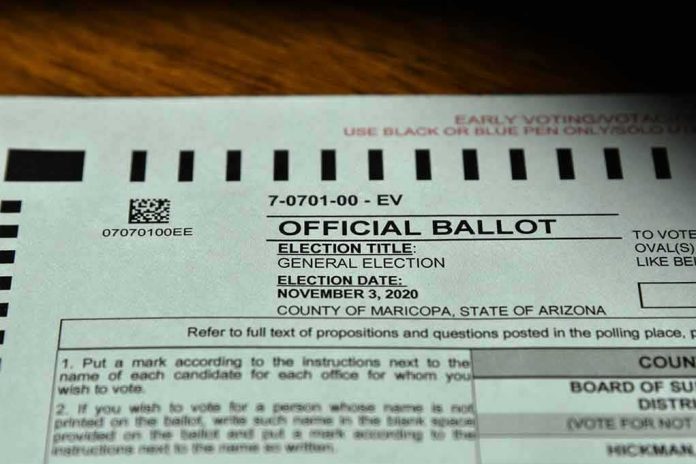
On Election Day 2022, dozens of Maricopa County vote centers reported on-site tabulation rejections, an incident pattern large enough to be felt by voters across the network but also specific enough to diagnose with evidence rather than conjecture. The county-commissioned investigation led by former Arizona Chief Justice Ruth McGregor found that some Oki B432 ballot-on-demand printers could not sustain the heat needed to fuse toner darkly on 20-inch ballots printed on 100-pound paper. That combination pushed the printers to the edge of their design envelope; scanners that rely on timing marks and contrast then rejected some ballots as unreadable on site.
The operational effects were tangible: lines grew, reprints occurred, and approximately 16,724 ballots followed the contingency pathway for later central tabulation. But the failure mode was technical—print density degradation on longer, heavier stock—not a tabulator “changing votes” or a database breach. The same report documents that affected ballots were successfully counted at the central facility, consistent with Arizona’s layered procedures for ballot recovery and reconciliation.
How redundancy contained the damage
Optical-scan systems are designed with backstops for precisely this class of failure. When an on-site scanner rejects a ballot for readability, jurisdictional practice routes the ballot into a sealed transfer container for central counting on industrial tabulators that use different optics, settings, and throughput assumptions than precinct devices. That is what occurred in Maricopa: voters could still cast a lawful ballot, and those ballots entered the official canvass after transfer and verification under observation. State and independent coverage at the time captured the core reality: frustrating delays and rerouting for thousands of ballots, yes; evidence that legal ballots were excluded from the count, no. The distinction is not rhetorical—designing for graceful degradation is the difference between an inconvenience and disenfranchisement.
None of this excuses the engineering shortfall. Running long, high-weight ballot stock through midrange printers at scale on a single high-demand day created a narrow thermal margin that should have been caught in stress testing. But the record shows a bounded failure with a functioning recovery channel, not a systemic collapse. That is how resilient election administration is supposed to work under stress.
2026: Power blips are not printer failures
Four years later, Maricopa opened most voting centers on schedule, with two—Paradise Valley Community College and Sunset Canyon Elementary School—temporarily closed for power-related issues and reopened before noon. The contemporaneous account does not report printer or tabulator malfunctions, lost ballots, or extended closure windows; it also notes a countywide footprint of 254 centers operating that day, which frames the scale correctly. Power events are operational headaches—especially for equipment that prefers clean, continuous current—but they are categorically different from the 2022 print-density issue, and the available evidence does not tie the two together.
This is precisely where disciplined analysis resists conflation. The 2022 record is unusually well-documented: model numbers, paper specs, failure mechanism, and disposition of affected ballots. The 2026 events, as publicly described, are brief outages at two sites. Treating a pair of power interruptions as proof of countywide collapse—or, conversely, ignoring their access cost to the voters on those blocks—distorts the question that matters: did redundancy and contingency plans protect the franchise while problems were resolved? The limited evidence suggests they did in 2026, as they ultimately did in 2022, though the 2022 experience imposed much heavier friction costs.
Where critics are right—and where they overreach
Serious critics of Maricopa’s 2022 administration have a firm point: the county ran a configuration that left too little thermal headroom on Election Day. That is an avoidable class of risk in ballot-on-demand environments. Stress tests should model worst-case print volumes, ambient heat load, fuser cycling, and toner density across all ballot styles. Fleet segmentation—assigning the most capable units to the heaviest ballot styles—and preemptive fuser replacements are engineering hygiene. On those specifics, the official report reads like a lesson learned that should not have needed learning in the first place.
But claims that the failures voided results or categorically disenfranchised voters are not supported by the documented chain of custody and the successful central tabulation of affected ballots. The county’s canvass and multiple independent outlets reported the same outcome: every legal ballot was included in results, and the problem lay in printing quality, not vote tabulation or manipulation. That is not a defense of the experience voters endured; it is a boundary on what the evidence shows.
Election Day in Maricopa County and right on cue… the county Republican chairman, Craig Berland, says some vote centers are completely down, ballot printers are acting up, and tabulators are spitting ballots right back out at voters. Sound familiar? It should, because we watched… https://t.co/D0MaUeMg4c pic.twitter.com/EYbznj7cGS
— Joe Oltmann (@Joeoltmann) November 3, 2026
What competent preparation looks like going forward
Election administrators who take these episodes seriously treat them as engineering and logistics problems with measurable mitigations. Concretely: inventory and retire marginal printers from heavy-stock duty; validate ballot length and paper weight against device specifications with stress-tested print queues; deploy conditioned power and uninterruptible backup to stabilize voltage; and log every rejection code, reprint, and transfer so auditors can trace effect size and disposition. Pre-election load testing should not be a demonstration—it should be a destructive test of the worst hour you expect on Election Day, with environmental variables dialed to ugly.
The public’s role is not to accept assurances on faith but to demand the records that make verification routine: incident tickets by site and timestamp, settings changes, equipment swaps, and reconciliation tallies. Maricopa’s 2022 report set a useful bar for specificity; meeting or exceeding that bar after any 2026 outage or disruption would serve voters better than dueling press statements. The integrity of an election is proved in its logs and reconciliations, not in the volume of its rhetoric.
Sources:
thegatewaypundit.com, maricopa.gov, myhsd.maricopa.gov, nbcnews.com, npr.org, axios.com, cronkitenews.azpbs.org