

Claims that Dearborn is “under Sharia law” do not withstand documentary scrutiny; what’s real—and worth understanding—is the recurring cycle in which symbolic fights over religion, policing, and identity are miscast as legal takeover despite the city’s governance remaining squarely under U.S. and Michigan law.
At a Glance
- The confrontation was real: a packed Dearborn City Council meeting, heavy police presence, and 22 arrests tied to outside demonstrations.
- The core allegation was explicit: a pastor asserted the city operates under Sharia and pressed officials to denounce it, on camera.
- The evidentiary case for Sharia governance is absent; no ordinances, directives, or legal instruments support the claim.
- Officials again rejected the narrative, affirming constitutional law as controlling in Dearborn—consistent with more than a decade of public denials.
What Actually Happened: A Civic Meeting, A Viral Claim, A Police Perimeter
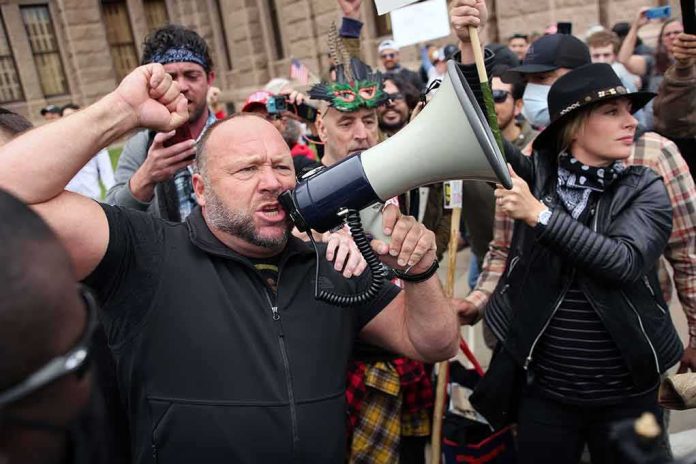
The August city council meeting at Dearborn’s Henry Ford Centennial Library unfolded amid a large, tense demonstration. Police set up barricades, deployed officers in protective gear, and ultimately made 22 arrests outside while the council meeting proceeded inside. The city’s own notice captures the split-screen nature of the evening: disruption at the perimeter, normal order inside the chamber. That setting matters. It establishes this was not an internet rumor or an edited clip; the allegation was leveled in an official forum, with a contemporaneous public safety response and journalists and cameras present.
Inside, a Christian pastor declared Dearborn was “no longer under American laws” but “under Sharia law,” demanding that council members publicly denounce Sharia. Video shows the exchange and the challenge framed repeatedly as a test of civic allegiance. Outside, a broader anti-Muslim protest—featuring incendiary rhetoric from organizers and counter-protesters’ pushback—supplied the volatile backdrop, which police managed while keeping the meeting on its agenda track.
The Evidence Test: Law Is What’s Written, Enforced, and Reviewable
Alleging that a U.S. city operates under religious law is a governance claim, not merely a cultural grievance. Governance claims rise and fall on documents, rules, and enforcement patterns that withstand external review. On that score, the record presented around the Dearborn confrontation offers no municipal ordinance, administrative directive, court filing, or official policy substituting Sharia for state and federal law. Even coverage sympathetic to the pastor’s frustration acknowledges the assertion does not trace to legislation; it rests on a perception of uneven deference rather than codified rulemaking.
Dearborn officials, for their part, responded as they have in past cycles of the same charge: by affirming the controlling law is the U.S. Constitution, the Michigan Constitution, and the city charter. On video that night, a county official reiterated the point—“the Constitution is our law”—and dismissed the Sharia-governance claim with a touch of humor, while the mayor emphasized a civic vision grounded in equal belonging rather than confessional identity. Those statements track with earlier mayoral denials when similar accusations surfaced in prior years, including explicit rejections that Sharia has any standing in city governance.
How We Got Here: Symbolic Conflicts Masquerading as Legal Takeover
Dearborn sits at the intersection of national narratives about Islam in America and local politics shaped by demographic change. In such places, symbolic accommodations—zoning for religious institutions, calls to prayer under noise ordinances, policing judgments at heated protests—become canvases onto which outsiders project a story of capture. The legal term of art that matters, however, is neutral applicability: regulations apply across faiths unless the law carves out narrow, generally available exemptions grounded in constitutional doctrine, not theological favoritism. PolitiFact’s long-running analyses on Sharia-in-America claims underscore the distinction between private adherence to religious norms (permissible) and the state enforcing religious law (impermissible); case law allows private contracts or personal observance, just as with other faith traditions, but not municipal substitution of religious code for civil law.
Seen through that lens, the pastor’s insistence that officials “denounce Sharia” is a category error. City councils do not ratify or repudiate private religious law; they legislate and oversee the enforcement of civil ordinances. The right question is narrower and testable: Are Dearborn’s written laws, enforcement actions, and adjudications neutral and constitutional? That inquiry runs through ordinances, arrest reports, prosecutorial decisions, and court outcomes—not microphone showdowns.
Where the Real Disagreement Lives: Perceived Unequal Enforcement
The only potentially falsifiable kernel in the allegation is an accusation of selective enforcement—claims that police tolerated assaults on Christians or “favored” Muslims in charging decisions. If true, that would be a serious equal-protection issue. But the incidents invoked in the meeting and subsequent commentary were anecdotal and, in the record compiled here, unaccompanied by case numbers, body-worn camera logs, or prosecutor memos that would allow external verification or comparison to similarly situated cases. By contrast, the city rapidly published a clear accounting of protest-related arrests and maintained the meeting’s continuity—conduct consistent with routine order-maintenance, not confessional partiality.
There is an appropriate method for settling such disputes: pull the documents. A neutral audit would examine incident reports, arrest data, charging patterns, and internal reviews for evidence of religiously disparate treatment. That kind of analysis, sometimes ordered by a court or undertaken by an inspector general, either finds a pattern or it doesn’t. In the absence of that record, sweeping declarations about “Sharia rule” are rhetoric, not proof.
What It Means Going Forward: Demand Receipts, Not Rhetoric
Communities with visible religious life will continue to host hard arguments about accommodation, speech, and safety. Those debates are legitimate; they are part of governing a pluralistic city. But confounding cultural friction with a change in the source of law is a category mistake with corrosive consequences: it inflames, it distracts, and it makes real oversight harder by substituting viral certainty for documentary review. Dearborn’s leadership did what the law expects—held the meeting, kept order, and restated the constitutional frame.
If critics believe enforcement is uneven, the path is clear and adult: file public records requests; gather incident numbers; compare outcomes across protected classes; if patterns emerge, take them to court. Constitutional law is capacious enough to accommodate those claims—and to reject them when the evidence isn’t there. Until such receipts surface, the charge that a U.S. city has traded its charter for religious code remains an allegation in search of a record, and the law that governs Dearborn remains exactly what its officials say it is.
‘Enough Is Enough!’: Fiery Pastor Explodes at Dearborn Council, Declares City Lost to Sharia Law https://t.co/OKtVZu7vz0
— Ric Reed (@RicVaDude) August 22, 2026
How to Read the Next Viral Clip from a City Hall
When the next city council video explodes across your feed, apply three filters. First, separate speech from law: what someone alleged at a mic is not what the city enacted. Second, ask for the paper trail: ordinances, directives, arrest logs, charging memos. Third, evaluate enforcement across cases, not anecdotes. In Dearborn, those tests all point the same way so far: loud controversy, normal law. That is not a dismissal of community concerns; it is an insistence that our arguments be settled with records, not applause lines.
Sources:
washingtontimes.com, thenationaldesk.com, thegatewaypundit.com, youtube.com, beautifulday.com.ng, news.meaww.com, dearborn.gov, freep.com, wdet.org