When Washington chooses finance over firepower, it is still choosing coercion. President Trump’s declared “economic D‑Day” against Iran signals not a pause in conflict but a pivot: the center of gravity has moved from missiles and maritime skirmishes to banks, barrels, and blacklists—where the United States historically wields the greatest leverage.
At a Glance
- President Trump has shifted the Iran campaign to a deliberately intensified economic offensive—sanctions, shipping pressure, and financial isolation—while de‑emphasizing immediate new military strikes.
- Treasury is preparing measures touted as unprecedented, extending pressure to oil, shipping, and digital-asset channels Iran uses to evade controls.
- Economic warfare against Iran is not novel; it builds on decades of U.S. sanctions infrastructure, including the post-2018 “maximum pressure” architecture.
- Sanctions reliably inflict macroeconomic pain; their record of compelling durable policy change in Iran is mixed at best, especially beyond the first year.
What the administration is doing: from missiles to money
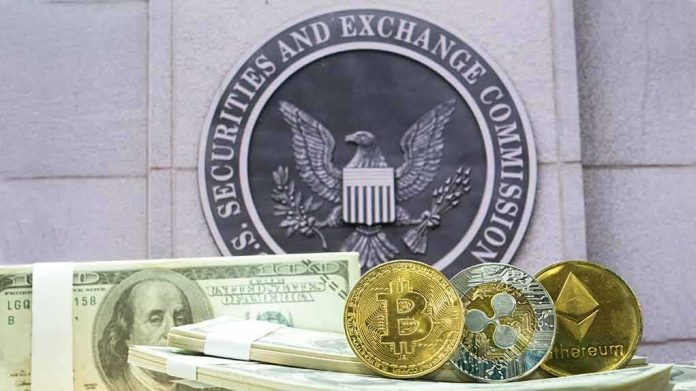
After months of kinetic exchanges and a naval blockade posture, Trump has made the strategy explicit: “We are low keying it,” he said, while emphasizing that the White House is “watching economic pressure mount on Iran” and intends to lean on Tehran’s fiscal distress rather than escalate immediately on the battlefield. The pivot is not rhetorical cover; Treasury officials previewed measures “never been seen,” the familiar prelude to designating oil lifelines, insurers, shipping facilitators, and financial intermediaries that keep Iran’s external sector breathing. In parallel, State announced sanctions on digital-asset exchanges and networks Tehran leverages to skirt the formal banking system—evidence that this iteration of pressure will chase flows across both traditional and crypto rails.
Operationally, that means three levers will dominate. First, oil export strangulation: deny tankers, insurers, and refiners the legal and financial permissions they need to touch Iranian crude. Second, banking and payments: extend secondary sanctions to foreign institutions that clear or conceal Iranian transactions, raising the cost of doing business with Tehran to prohibitive levels. Third, maritime enforcement: use interdictions and a blockade posture to make shipment risk tangible even when paperwork passes muster. This is how financial statecraft translates to concrete pressure—by weaponizing the compliance incentives of global commerce.
How we got here: a familiar playbook, sharpened tools
Sanctions are the most developed instrument in the U.S. Iran toolkit; they have been layered for decades, from President Reagan’s 1987 embargo to the sweeping reimposition of measures after the U.S. exited the JCPOA in 2018. OFAC, the Treasury office that administers these controls, has built a dense legal lattice: statutory authorities that define prohibited sectors, executive orders that target individuals and entities, and implementing directives that translate policy into bank-screening rules and ship-insurance exclusions. The “maximum pressure” phase after 2018 tested the outer edge of this machine—OFAC at one point called a 700‑plus‑name action its largest single-day sanctions move—illustrating the scale at which U.S. financial coercion can operate.
The present campaign inherits that architecture. What is newer is the breadth of evasion channels that sanctions must now address—ship-to-ship transfers to mask crude origin, shell firms that cycle through registries, and cryptocurrency exchanges providing offshore liquidity. The State Department’s focus on digital-asset nodes shows the learning curve: today’s pressure must be omnivorous, treating any ledger that clears value as a battlefield.
Does economic warfare work on Iran?
Two propositions are simultaneously true. First, sanctions can hit Iran’s macroeconomy hard—shrinking oil exports, pressuring the exchange rate, driving inflation, and depressing growth; empirical surveys and time-series analyses consistently find statistically significant impacts on these indicators. Second, converting macroeconomic pain into the specific political concessions Washington seeks has proven inconsistent. Reviews of Iran’s sanction history, including work synthesized by Brookings and others, argue that while pressure can extract tactical pauses or negotiations, the regime’s adaptive capacity and countermeasures limit strategic outcomes over time.
Duration matters. Classic work on sanctions efficacy suggests the steepest leverage arrives early and decays as targets rewire trade, shift to gray markets, or mobilize domestic control to absorb costs; success rates fall off after the first one to two years. Iran exemplifies this pattern: tightening sanctions often deliver a shock, but the system learns—reflagged tankers, front companies, barter trades with aligned partners, and, now, crypto rails. That does not make sanctions futile; it means their potency is perishable unless accompanied by diplomacy that offers a credible off‑ramp at the moment of maximum pressure.
Mechanics of coercion: where pressure bites
Sanctions work not by choking Tehran directly but by conscripting third parties—the ship insurer in London, the trader in Singapore, the bank compliance officer in Dubai—into Washington’s enforcement chain. Secondary sanctions transform a foreign firm’s risk calculus: touch Iranian crude or a designated bank, and you jeopardize your own dollar access and U.S. market share. For oil, the linchpin is maritime services—classification societies, insurers, port state control—without which tankers struggle to sail or discharge. For finance, the choke point is dollar clearing and correspondent banking, which remain the circulatory system of global trade even when transactions appear in other currencies.
Two vulnerabilities are particularly acute for Iran. Hydrocarbon exports are the fiscal backbone; throttling barrels deprives the state of budgetary oxygen. And the rial’s credibility is tethered to export receipts and reserves—pressure there translates quickly into inflation and social strain. The administration’s emphasis on both maritime interdiction and financial isolation aims squarely at these pressure points.
Limits, lessons, and the path to outcomes
The evidence record counsels discipline. Sanctions are a means, not an end. Studies chronicling Iran’s experience conclude that pressure alone rarely compels lasting nuclear or regional policy change; when it has contributed to negotiations, it did so in tandem with credible diplomatic pathways and security assurances. Conversely, indiscriminate escalation can entrench hardliners, spur technological workarounds, and impose humanitarian costs without moving the strategic dial—patterns documented across multiple Iran sanction episodes and in broader cross-country analyses.
What follows for this “economic D‑Day”? Three implications. First, design matters more than volume. Targeting genuine revenue nodes and evasion logistics—rather than recycling names for headline count—maximizes early leverage. The State Department’s turn to crypto infrastructure is a promising example of precision, not just magnitude. Second, timing is strategy: if the administration seeks negotiated outcomes, the window to trade sanctions relief for verifiable steps is at the front end of the pain curve, before adaptation blunts impact. Third, coalition depth beats unilateral speed; aligned enforcement by key maritime and financial jurisdictions multiplies effect, while gaps become Tehran’s escape valves. The 2018–2020 architecture showed both the power and the leakage points of a largely U.S.-led regime.
🌍 WORLD NEWS DIGEST
📅 August 20, 2026 · Past 12 Hours🔥 GEOPOLITICS
• HEADLINE: Trump threatens “tremendous economic consequences” for countries helping Iran. The warning adds pressure as tensions rise. (BBC)
• HEADLINE: Trump and Canada’s Carney signal progress toward a… pic.twitter.com/u7KBBMxT8p— 0xzx • Crypto & AI News (@0xzxcom) August 20, 2026
What to watch next
Expect rapid-fire Treasury designations across oil, shipping, insurance, and payments, paired with maritime actions that raise operational risk for Iran-linked cargoes. Watch for how aggressively Washington wields secondary sanctions against major third-country refiners and banks; that choice determines whether pressure pinches at the margins or bites into Tehran’s core revenue stream. And measure success not by slogans or sanction counts, but by two hard metrics: sustained export suppression and the emergence—public or quiet—of a diplomatic track calibrated to use that leverage before it dissipates.
Sources:
aljazeera.com, cnn.com, reuters.com, cnbc.com, fortune.com, npr.org, finance.yahoo.com, state.gov, wsj.com