

The most consequential number in American mining right now isn’t the tonnage of lithium or rare earth oxide sitting in the ground — it’s the headcount of people trained to get it out. The United States graduates fewer than 170 mining engineers a year, against more than 3,000 in China, and roughly half of the current domestic mining workforce is expected to retire within three years. Reserves without engineers are just rocks. That gap, more than any single deposit or deal, is why the Trump administration’s latest funding push is aimed squarely at classrooms and training programs rather than at another mine permit.
The Short Version
- President Trump announced more than $180 million in grants at a State Department mining roundtable attended by nearly 200 industry and academic leaders, aimed at expanding mining education and trade programs.
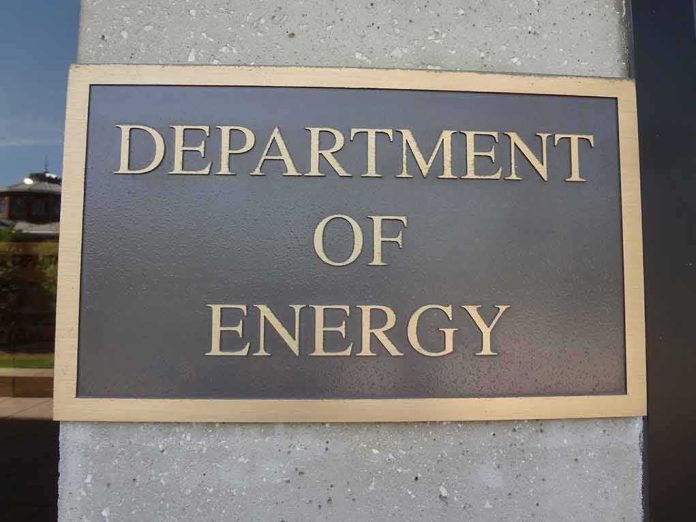
- The package includes roughly $100 million in Department of Energy funding for mining schools and about $80 million from the Department of War for schools of mines and metallurgy, including Colorado School of Mines.
- The underlying justification is a looming labor crisis: a graduation rate far below China’s and a retirement wave set to remove half the current mining workforce within three years.
- The grants sit inside a much larger critical-minerals strategy that includes faster permitting, direct federal equity stakes, and new international mineral agreements — meaning the education money is a bet on future capacity, not an immediate output increase.
What Was Actually Announced
On Friday, President Trump used a roundtable at the State Department — flanked by mining executives, university presidents, and members of his cabinet — to unveil more than $180 million in grants directed at mining education and trade programs. The centerpiece is roughly $100 million channeled through the Department of Energy, spread across universities, community colleges, and trade schools to expand programs in mining engineering and metallurgy. Layered on top of that, the Department of War separately announced over $80 million in direct investment in schools of mines, naming institutions including the Colorado School of Mines and the South Dakota School of Mines as recipients. A third, smaller stream — $10.5 million from the Department of Labor’s Mine Safety and Health Administration — continues a longstanding, separate program funding federally mandated safety and health training across 45 states and territories.
That layering matters for understanding the number. The headline $180 million is not a single check from a single agency; it is an aggregation of at least three funding streams with different purposes, timelines, and legal authorities. The Energy Department money is explicitly framed around expanding academic capacity. The War Department’s contribution is framed around defense-relevant mineral supply chains — the same logic that has the Pentagon investing directly in companies like MP Materials. The Labor Department grant is a routine, recurring safety-compliance program that predates this administration and would likely continue regardless of the critical-minerals push. Conflating them into one round figure makes for a cleaner headline than it does a clean accounting.
The Workforce Crisis Behind the Money
American mining education has been shrinking for decades, tracking the broader decline of domestic extraction. The United States has lost more than 3,400 mines over the past thirty years, and university mining-engineering programs contracted along with the industry that once fed them. Colorado School of Mines president Paul Johnson has been vocal about the resulting bottleneck: the country now trains a fraction of the engineers it needs, at a moment when demand for lithium, graphite, copper, and rare earth elements is climbing sharply for batteries, semiconductors, and defense systems. Nevada’s flagship mining school, the Mackay School of Mines at the University of Nevada, Reno, called the new funding a “massive benefit,” with former governor Brian Sandoval noting it may represent the first sustained White House engagement with mining education in a century.
The retirement math compounds the shortage. An aging workforce, entering its final working years just as the country tries to reshore mineral processing, creates a two-sided squeeze: fewer new engineers entering the pipeline and a mass exit of experienced ones leaving it. Grant money for tuition, lab equipment, and expanded enrollment addresses the input side of that equation. It does nothing, on its own, to speed up the years-long process of actually producing a credentialed mining engineer or metallurgist — a structural lag that no funding announcement, however large, can compress.
How the Education Push Fits the Larger Minerals Strategy
This announcement did not arrive in isolation. It is the latest layer in an industrial policy the administration has been building since taking office: an approved run of more than 160 mineral-related deals worth nearly $40 billion, a reduction in federal permitting timelines that officials say now run as short as 25 days rather than three to five years, and direct federal equity positions in companies such as MP Materials. Secretary of State Marco Rubio has pointed to more than two dozen critical-minerals agreements signed with partner nations and the creation of an international coordination effort branded FORGE, designed to diversify supply chains away from Chinese-dominated processing. Section 232 tariffs on imported copper, aluminum, and steel have been positioned as the enforcement mechanism protecting the domestic producers this whole strategy is meant to create.
Seen against that backdrop, the education grants are the workforce leg of a three-legged stool: capital for mines and processing facilities, faster permitting to get projects moving, and now trained people to staff them once permits and financing clear. It is a coherent policy logic, and it addresses a real and well-documented gap. Resolution Copper’s Vicki Peacy has described a permitting process that dragged on for roughly two decades before recent approval, and a project of that scale — projected at $3 billion in investment and thousands of jobs — will need engineers the current pipeline cannot yet supply.
🚨BREAKING 🇺🇸 President Trump announce $180 million in grants to boost mining Education pic.twitter.com/NB8MgdybDN
— Michelle (@Michelled0mr) August 8, 2026
What the Announcement Does and Doesn’t Prove
Federal workforce grants for mining are not a new instrument; the Labor Department’s mine-safety training program has operated for years, and education subsidies have long been a low-controversy way for Washington to signal support for an industry without the political friction of a new mine or pipeline. What distinguishes this round is scale and visibility — a State Department roundtable with nearly 200 attendees is not a routine grant notice. Still, the leap from funding schools to raising domestic mineral output is an inference, not a documented outcome. Enrollment growth, curriculum expansion, and graduation-rate increases take years to materialize and longer to show up in mine production statistics. The money announced is real and substantially confirmed across federal releases and multiple outlets; whether it closes the engineer gap in time to matter for the current wave of mineral projects is a question only the next several graduating classes will answer.
Sources:
youtube.com, fox17.com, war.gov, coloradopolitics.com, x.com, thehill.com, michiganadvance.com