
A top Democratic senator just got caught misunderstanding his own state’s voter ID rules on national TV, feeding the feeling that the people running the system do not really know — or clearly explain — how our elections work.
Story Snapshot
- Virginia lets voters use many kinds of ID or sign a statement instead of showing any ID.
- Senator Mark Warner said Virginia requires photo ID, which current state rules do not.
- ABC’s Jonathan Karl, a Virginia voter, corrected Warner on air, sparking online backlash.
- Confusing and outdated state materials about “photo ID” help fuel public distrust on both sides.
What Virginia Law Really Says About Voter ID
Virginia’s current rules say in-person voters must either show an acceptable ID or sign an Identification Confirmation Statement at the polls. The official voter identification chart lists many non-photo items as valid ID, including a current utility bill, bank statement, government check, paycheck, or other government document that shows the voter’s name and address. These documents can be physical or electronic, and none require a picture. If a voter has no ID, they can still cast a regular ballot by signing the confirmation statement under penalty of perjury.
Virginia law also treats first-time voters in federal elections differently. Local guidance explains that anyone who registered by mail and is voting for the first time in a federal race must provide an acceptable ID whether voting in person or by mail. Still, the list of acceptable IDs is broad and includes both photo and non-photo documents. National groups that track election law, such as the National Conference of State Legislatures, classify Virginia as a state that accepts non-photo ID and allows voters without ID to sign a sworn statement and vote a regular ballot.
Warner’s Statement And The On-Air Fact Check
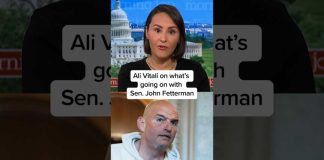
During a July 19, 2026 segment on ABC’s “This Week,” Senator Mark Warner argued for stricter ID rules in other states and said that in Virginia he has to show his photo ID to vote. That claim does not match the state’s own guidance, which clearly allows non-photo ID and the Identification Confirmation Statement option. ABC host Jonathan Karl, who lives and votes in Virginia, pushed back immediately, saying you do not need photo ID there and noting the affidavit-style statement that lets voters without ID cast a regular ballot.
Conservative media and commentators swiftly seized on this moment. Townhall and several YouTube channels framed Warner’s remarks as a “massive lie” or “election lie,” highlighting the clip of Karl’s correction as proof that a senior Democrat either did not know or misrepresented basic election rules in his own state. Headlines used language like “BUSTED!” and “FACT-CHECKED for LYING,” which shifts the focus from the technical details of Virginia law to Warner’s character and trustworthiness. For many viewers already suspicious of Washington elites, the episode reinforced the idea that politicians talk confidently about election security without mastering the facts.
Why The Rules Are So Confusing For Voters
Part of the confusion comes from the state’s own mixed signals. Virginia’s voter identification chart, updated in 2025, clearly lists non-photo documents and the signed confirmation statement as valid ways to satisfy the ID requirement. Yet a still-circulating brochure produced with the Virginia Department of Motor Vehicles is titled “YOUR PHOTO ID. YOUR VOTE. YOUR VOICE.” and strongly implies that voters must bring a photo ID to the polls. Earlier local documents tied to an older photo ID law also stress that “ONLY ONE valid photo ID is required at the polls,” language that no longer reflects the current statute.
Sen. Mark Warner got corrected on live television by ABC's Jon Karl after the Virginia Democrat botched his own state's voter ID laws while arguing against the SAVE Act.
Warner claimed he has to show photo ID to vote in Virginia — but Karl, himself a Virginia voter, cut in to… pic.twitter.com/6nfo4FvAt8
— Fox News Politics (@foxnewspolitics) July 21, 2026
These overlapping and outdated materials make it easy for both voters and politicians to default to “photo ID” as the simple answer, even after the legislature rolled back that strict requirement and replaced it with broader options. National legal summaries and the Virginia Department of Elections site now stress that non-photo documents are fine and that a signed statement works if a voter lacks ID. But unless busy citizens dig into the latest rules, they may rely on old brochures, media talking points, or partisan messaging — all of which can be out of date. That gap between technical law and public understanding feeds frustration on both the left and the right.
What This Episode Shows About The Bigger System
The fight over Warner’s comment taps into a much wider debate about voter ID and trust in elections. Research from groups like the Brennan Center has found that proven cases of in-person voter impersonation are extremely rare, far below even one in ten thousand votes. Supporters of strict ID rules say they help prevent fraud and reassure the public. Critics say they can make voting harder for some citizens who lack up-to-date documents and may not understand alternatives like sworn statements. Both sides agree that clear, honest information matters.
When a long-time senator appears to misstate his own state’s rules, and a major network host has to correct him in real time, it feeds the sense that the people running the system are not straight with voters or are simply not paying attention. Ordinary Americans see conflicting state documents, shifting laws, and political spin layered on top. Many already worry that a distant “deep state” of lawyers, consultants, and bureaucrats makes rules normal people cannot easily follow. Episodes like this deepen that distrust, even when the underlying law — in Virginia’s case, allowing broad ID options plus a sworn statement — is meant to balance security and access.
Sources:
townhall.com, elections.virginia.gov, roanokecountyva.gov, yesjamescitycountyva.com, dlcv.org, ballotpedia.org, ncsl.org, brennancenter.org, americanimmigrationcouncil.org, orgs.law.harvard.edu