
As Democrats flirt with a “Blue MAGA” rebrand built on bigger government and new spending, conservatives are watching a shaky copycat of Trump’s worker-first movement take shape inside the left.
Story Snapshot
- Rep. Ro Khanna is pitching “Blue MAGA” and “economic patriotism” as a Democratic answer to Trump’s Make America Great Again agenda.
- His plan depends on massive federal investment, new taxes on the wealthy, and shifting money from defense to domestic industry.
- Critics on the left and right say “Blue MAGA” looks more like cult-like party loyalty than a real working-class movement.
- So far, Democrats have no hard proof that this branding has actually won back Trump’s working-class voters.
Khanna’s ‘Blue MAGA’ Pitch: Copying the Brand, Not the Substance
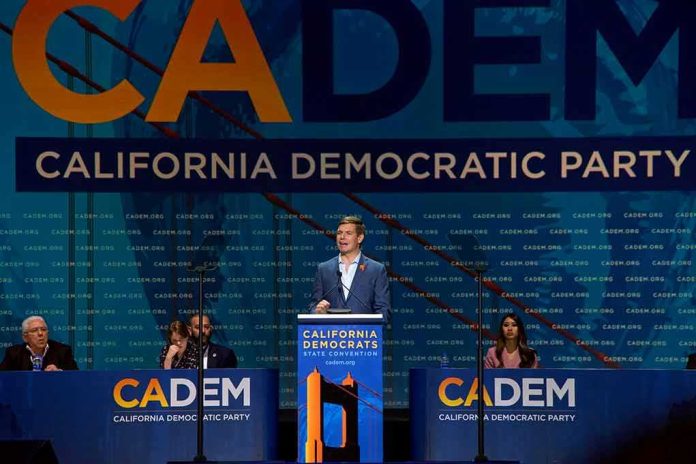
California Representative Ro Khanna has openly tried to borrow Donald Trump’s Make America Great Again branding by coining his own version, “Blue MAGA.” He says this idea is aimed at working and middle-class voters who left Democrats to support Trump, and now he wants them back. Khanna used to call his approach “progressive capitalism,” but now brands it as “economic patriotism,” sometimes jokingly using the “Blue MAGA” label. Even Trump adviser Steve Bannon has noted Khanna is trying to take MAGA and wrap it in more stars and stripes, showing just how directly Democrats are copying Trump’s language.
Khanna’s message centers on a promise to “make things in America again” by reindustrializing the country through a kind of “Marshall Plan for America.” He talks about a thousand new trade schools, more domestic factories, and a renewed focus on blue-collar towns that were gutted by offshoring and bad trade deals. On paper, those goals sound similar to Trump’s focus on American workers and manufacturing strength. But Khanna’s path to get there relies heavily on federal programs, complex industrial policy, and expanded social spending, not on cutting red tape, lowering energy costs, and keeping government out of the way.
Big-Government ‘Economic Patriotism’ Built on Taxes and Federal Control
Khanna’s “economic patriotism” would put Washington at the center of the economy, with the federal government steering investment into factories, steel mills, universities, and hospitals. He has floated a national industrial bank that would hand out capital to favored industries like steel, autos, and energy, backed by billions taken from the defense budget. He pairs this with calls for national health insurance, universal childcare, and a higher minimum wage, all funded in part by new taxes on billionaires and higher corporate tax rates. For conservatives, this is the classic progressive formula: promise help for workers, then grow government power, punish success, and weaken America’s military edge to pay for it.
Khanna argues that trade policy should focus on rebuilding domestic manufacturing and cutting trade imbalances through targeted tariffs and industrial planning. He blames past trade liberalization with China for hollowing out American industry and says “economic patriotism” can fix it. Many Trump backers share the concern about China and lost factories, but they reject the cure Khanna offers. A Washington-led “Marshall Plan” financed by shifting money away from defense and soaking the rich raises serious questions about national security, economic freedom, and the long-run health of the private sector. It risks locking key industries to political decisions in Washington instead of market demand and innovation.
Is ‘Blue MAGA’ Really About Workers—or Party Loyalty?
While Khanna insists his goal is to win back disaffected Trump voters, there is still no hard data showing “Blue MAGA” has actually moved the working-class vote. There are no public voter surveys, election results, or serious studies tying his branding to new support in factory towns or rural counties. At the same time, other voices on the left have used “Blue MAGA” very differently, as a nickname for online Democrats who defend party leaders no matter what and attack anyone who questions them. In this usage, “Blue MAGA” is about cult-like loyalty to the Democratic Party’s image built by consultants and lobbyists, not about a serious economic plan.
Major outlets have begun to describe “Blue MAGA” as a broader trend of unwavering loyalty to President Joe Biden and the “vote blue no matter who” mindset. The Guardian warned that this shift risks turning the party into a bubble driven by groupthink and social media pressure. A report from The Jerusalem Post defined “Blue MAGA” as left-wing supporters whose loyalty to their leaders mirrors Trump’s base. Put together, these accounts paint a picture that should concern conservatives: a Democratic Party that is not only copying MAGA branding, but also drifting toward a hardened, media-fueled tribe, while still pushing big-government solutions and culture-war policies that many working Americans reject.
Why Conservatives Should Pay Attention to ‘Blue MAGA’ Experiments
Khanna’s rhetoric shows that Democrats know they have a problem with working and middle-class voters, especially in regions that once powered American industry. He admits his party has become trapped in purity tests and grown too sanctimonious and elitist, lecturing instead of listening. His answer, however, is not to shrink government or defend constitutional limits, but to create new national missions run from Washington and funded by higher taxes and cuts to defense. That model threatens both fiscal sanity and the strong military posture that keeps America safe.
For Trump supporters and constitutional conservatives, “Blue MAGA” is a warning sign, not a solution. It shows Democrats see the power of patriotic language and working-class anger, but they still want to channel it into central planning, redistribution, and activist government. There is no clear evidence that this rebrand has delivered real jobs, cheaper energy, secure borders, or lower inflation for families who have borne the cost of past globalist policies. As “Blue MAGA” enters the political vocabulary, conservatives should keep pressing the basic question: will it protect American workers and freedom, or simply give the left a new label for the same old big-government agenda?
Sources:
en.wikipedia.org, deseret.com, telegraph.co.uk, newsmax.com, yahoo.com, theguardian.com, nytimes.com, foxnews.com, fastcompany.com, newsweek.com, thehill.com, cnn.com