Israel’s plan to ring Palestinian prisons with crocodile-filled moats is not a joke headline but a revealing clash between hardline security politics, wildlife law, and human rights norms in the modern carceral state.
At a Glance
- Israel’s National Security Minister Itamar Ben-Gvir has formally pushed a scheme for high-security Palestinian prisons encircled by crocodile-filled moats as an escape deterrent.
- Environmental Protection Minister Idit Silman has reclassified Nile crocodiles as “tended” or “managed” wild animals, clearing a key legal obstacle to their use in detention facilities.
- The Israel Prison Service has begun feasibility work, including site visits to a crocodile farm, but has issued no formal commitment, timeline, or detailed plan.
- Israel’s Nature and Parks Authority, ministry legal advisers, and environmental groups oppose the move, citing lack of professional evidence, wildlife protection conflicts, and significant welfare and safety risks.
- The proposal sits within a broader, rare pattern of using predatory animals as psychological deterrents in prisons, raising sharp ethical questions about cruelty and intimidation in carceral design.
From Political Gesture to Policy: What Has Actually Been Proposed?
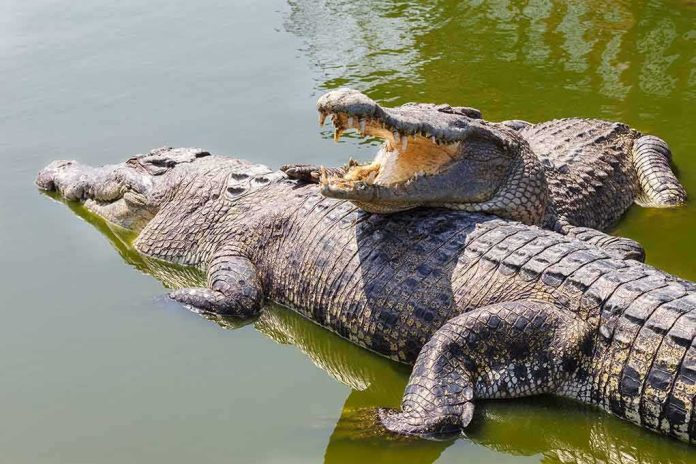
The crocodile-moat idea emerges from Israel’s far-right National Security Minister Itamar Ben-Gvir, who has framed it as a way to deter escapes by “terrorist” or Palestinian security prisoners while lowering staffing costs. According to Hebrew media accounts, Ben-Gvir first presented the concept in a meeting with Israel Prison Service (IPS) chief commissioner Kobi Yaakobi in late 2025, describing a high-security facility literally surrounded by crocodiles so that any escape attempt would encounter a ring of predatory animals rather than human guards or concrete.
Several outlets report that the envisioned pilot would involve Ketziot Prison in southern Israel, a maximum-security facility primarily holding Palestinian security inmates. In parallel, Channel 13 and Channel 7 coverage describe a second strand of the plan: constructing a new detention facility near Hamat Gader, a crocodile farm and zoo in northern Israel that houses roughly 250 crocodiles, from which animals could be sourced to form the living barrier. The policy logic is straightforward, if stark: make escape attempts so obviously suicidal that they simply do not happen, and simultaneously save “millions of shekels annually in personnel costs” by substituting a biological moat for part of the human guard perimeter.
The Legal Switch: Reclassifying Nile Crocodiles
Until mid-2026, the main barrier to this scheme was not engineering or logistics but the legal status of crocodiles. Nile crocodiles in Israel had been classified as protected wild animals, which meant they could be kept only in licensed zoos and wildlife sanctuaries under strict conditions. Any move to deploy them in prisons, even behind fences, ran headlong into wildlife protection statutes and the regulatory authority of the Israel Nature and Parks Authority (INPA).
That changed when Environmental Protection Minister Idit Silman signed an order reclassifying the Nile crocodile as a “tended” or “managed” wild animal. This new category permits state agencies, including the IPS, to keep crocodiles in facilities beyond traditional zoological parks, provided they are held under conditions determined by regulators. Silman’s decision, made despite explicit objections from INPA legal advisers, effectively removed the core legal obstacle that had previously rendered Ben-Gvir’s proposal unfeasible. It also allowed her ministry, in practice, to authorize crocodiles in detention facilities “in conditions determined by the Nature and Parks Authority director,” a formulation that keeps INPA in the loop but sidelines its opposition.
Hebrew outlets and international summaries have described Silman’s move as legally questionable and politically driven, because it overrides the counsel of her own ministry’s legal adviser, Neta Drori, who warned that there was inadequate professional and factual evidence to support the plans and no modern precedent for using crocodiles in security roles. That tension—between a ministerial decree and the advisory apparatus built to guard environmental law—is central to understanding why the proposal remains contested rather than settled policy.
Feasibility Work and the Prison Service’s Quiet Role
Once legal status changed, the IPS began taking the proposal seriously enough to conduct preliminary feasibility work. Reports describe senior IPS officers visiting the Hamat Gader crocodile farm to receive briefings on crocodile behavior, handling protocols, associated risks, and the practicalities of acquiring roughly 60 crocodiles to encircle a facility. Officials have reportedly explored the cost of purchasing juvenile crocodiles—quoted at about $8,000 for a small animal and up to $20,000 for an adult—with the expectation that younger animals would grow into imposing deterrents over time inside the compound.
At the same time, IPS has been notably cautious in public. It has issued no formal confirmation of where, or even whether, crocodile moats will be implemented, and no official timeline for construction or introduction exists in the public record. Hebrew media have framed the current stage as “examining feasibility” or “preparing the initiative in advance of any formal decision,” language that suggests detailed planning but stops short of institutional commitment. This ambiguity is not incidental; it allows Ben-Gvir to claim progress on a hardline security vision while IPS and other state actors retain room to retreat if legal, ethical, or practical obstacles prove insurmountable.
Security Logic and Cost Claims: What Evidence Exists?
Supporters of the crocodile moat concept advance two main arguments: deterrence and cost. On deterrence, they posit that a ring of large predators presents a qualitatively different psychological barrier than walls, cameras, and guards. Any escape attempt would entail crossing water patrolled by crocodiles, which, in their view, would be enough to dissuade even highly motivated prisoners. On cost, they argue that once the moat is built and animals acquired, ongoing expenses for feeding and veterinary care would be lower than the salaries and benefits required to maintain dense human guard coverage 24 hours a day, yielding substantial savings to the state budget.
What is missing is empirical backing. Israel’s own environmental legal apparatus has stated plainly that there is “no sufficient professional basis” and “inadequate professional and factual evidence” for using crocodiles as security devices. There are no comparative studies demonstrating that predatory animals reduce escape attempts or violence more effectively than conventional perimeter fortifications, nor published cost-benefit analyses that weigh crocodile maintenance against upgrades such as additional surveillance, reinforced walls, or electronic monitoring. The Florida “Alligator Alcatraz” immigration detention center—the closest modern precedent invoked by media coverage—was closed after controversies, not held up as a model of efficient and humane security.
In that sense, the crocodile moat proposal fits a broader pattern seen in other carceral innovations: an attention-grabbing concept is advanced on intuitive, political grounds, while data, if it exists at all, trails behind. If serious assessment proceeds, it will likely require precisely the kind of forensic analysis and audits that both critics and proponents have, to date, only gestured toward—studies of escape rates, violence, staff injuries, and long-term costs across different prison designs.
Wildlife Law, Animal Welfare, and Institutional Opposition
Opposition from environmental and wildlife authorities is not a side note; it strikes at the proposal’s legal and operational core. INPA legal advisers have argued that the crocodile moat plan lacks professional justification, has no modern precedent, and may conflict with existing wildlife protection legislation governing how and where crocodiles may be held. Their warnings go beyond formal classification. They highlight “significant risks” to both the animals and public safety and question whether the prison service can realistically provide appropriate care in a high-security environment built for punishment and control rather than husbandry.
Environmental organizations have added an ethical layer, issuing joint statements that they “strongly object to the use of animals as a means of guarding and deterrence.” For these groups, using sentient creatures as instruments of fear in prisons crosses a line from standard captivity into purposeful exploitation for psychological intimidation. Their objection echoes long-standing criticism by human rights organizations of attack-dog deployment in U.S. prisons and immigration detention centers, where dogs have been used to terrorize and even bite prisoners during cell extractions. The core claim is that turning animals into tools of coercion both harms the animals and erodes fundamental norms of human dignity.
The Environmental Protection Ministry’s own legal adviser, Neta Drori, has, according to reporting, explicitly warned that there is no precedent for crocodiles as security guards and insufficient factual basis to justify such a shift. Silman’s decision to override that advice signals a willingness to stretch, if not break, the ordinary relationship between ministerial discretion and legal counsel—an example of what critics describe as regulatory capture, where political objectives pull a regulatory body away from its protective mandate.
Israel changes the status of Nile crocodile to bring Ben Gvir's outlandish "Alligator Alcatraz" closer to reality.
The National Security ministry was to build a high-security prison surrounded by a moat filled with crocodiles. pic.twitter.com/Xbv1qvityX
— HatsOff (@HatsOffff) July 17, 2026
Human Rights, Psychological Intimidation, and the Carceral Imagination
Human rights advocates have framed the crocodile moat as a form of psychological intimidation rather than neutral security engineering. Surrounding Palestinian detainees with predatory animals is read as an extension of what they describe as Israel’s broader campaign of cruelty in detention—using fear, uncertainty, and dehumanization to exert control over a population already subject to harsh conditions, solitary confinement, and alleged abuse. In this narrative, crocodile moats are not about preventing escapes; they are about sending a message to prisoners and their communities that the state is prepared to weaponize even nature itself against them.
That framing aligns with international concern about “cruel, inhuman or degrading treatment or punishment,” categories into which practices like attack dogs and deliberately terror-inducing conditions often fall. It also resonates with the history of Alligator Alcatraz, where the surrounding Everglades, alligators, and isolation contributed to a climate in which detainees became harder to locate, access, and represent legally, culminating in what critics call “administrative disappearances.” In both cases, the environment is not neutral; it becomes part of the machinery of control.
For a 40-plus audience accustomed to seeing prison as a closed world of concrete, wire, and human guards, the crocodile moat proposal forces a deeper question: where are the limits of acceptable coercion in carceral design? If fear is an acknowledged tool of deterrence, how far can states go in cultivating that fear—through architecture, sensory deprivation, or, in this case, the presence of predators—before they cross into practices that society should not tolerate, regardless of marginal gains in security metrics or budget savings?
Why This Unusual Proposal Matters Beyond Israel
Taken together, the evidence shows a proposal that is real, formally advanced, and now legally enabled, but still contested and not yet implemented. Ben-Gvir and Silman have used ministerial power to push the boundaries of both security policy and wildlife law; IPS has cautiously engaged in feasibility work; environmental and human rights institutions have raised serious objections grounded in law, welfare, and ethics.
This matters beyond Israel’s borders for three reasons. First, it illustrates how far-right security politics can translate symbolic toughness into concrete, if extreme, policy proposals—testing the resilience of legal and ethical constraints built over decades. Second, it shows how animal classification, a seemingly technocratic domain, can become a lever for transforming carceral practice, with crocodiles moving from protected wildlife to managed instruments of state coercion through a single ministerial order. Third, it adds another data point to the rare but consequential pattern of using animals as tools of intimidation in prisons and detention centers, from attack dogs in U.S. facilities to alligators in the Everglades and now potentially crocodiles in Israeli moats.
Whether crocodile-filled moats ever surround Ketziot Prison or a new facility near Hamat Gader, the debate itself exposes the competing logics that will shape the future of incarceration: security maximization, cost containment, legal protection of wildlife, and the human rights demand that punishment never descend into cruelty. For readers tracking the evolution of the carceral state, this is not a curiosity; it is a case study in how quickly the boundary between the imaginable and the implementable can shift once politics, law, and institutional resistance collide.
Sources:
zerohedge.com, wset.com, turkiyetoday.com, youtube.com, echr-cpt.com, en.yenisafak.com, iol.co.za, aa.com.tr