

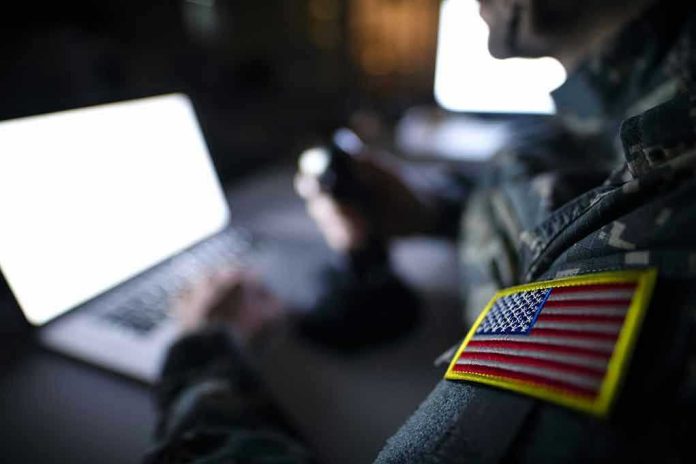
A new AI strategy promises to erase bureaucratic barriers, ensuring military dominance and sparking optimism among defense advocates.
Story Highlights
- The Pentagon unveils an “AI-first” strategy to transform the military with cutting-edge technology.
- This initiative aims to outpace adversaries like China and Iran, emphasizing quick adaptation and innovation.
- Elon Musk’s Grok chatbot is integrated, symbolizing a shift towards commercial tech in defense.
- Critics argue the move raises ethical concerns and potential arms race escalation.
Pentagon’s Bold AI Strategy for Military Dominance
On January 13, 2026, U.S. Defense Secretary Pete Hegseth announced a groundbreaking “AI Acceleration Strategy” at a SpaceX facility in Texas. This initiative, driven by President Donald Trump’s directive, marks a significant shift in military operations towards an “AI-first warfighting force.” By removing bureaucratic constraints, the strategy aims to fast-track AI integration across various military domains, ensuring the U.S. stays ahead in the global race against adversaries like China and Iran.
This strategy is unique in its approach, explicitly integrating commercial tools such as Elon Musk’s Grok chatbot. By rejecting “woke” ideological constraints, it emphasizes a focus on performance and innovation. The plan includes seven key projects with designated leaders and aggressive timelines, designed to accelerate the U.S. military’s capabilities and deter potential threats from state adversaries. This approach has garnered significant attention for its potential to transform military operations.
Public-Private Partnerships and Their Role
The announcement at a SpaceX facility highlights the importance of public-private partnerships in this new strategy. Elon Musk’s involvement symbolizes a shift towards leveraging commercial technology to enhance military capabilities. The integration of Grok and other AI tools underscores a commitment to adopting the latest innovations from the tech industry. The strategy’s proponents argue that such partnerships are crucial for maintaining U.S. military superiority, as they allow for rapid prototyping and deployment of cutting-edge technologies.
Despite its promising aspects, the strategy has faced criticism for potential ethical implications. The integration of AI in military operations raises concerns about the unpredictability of AI behaviors and the potential for an arms race. Critics caution that, while the strategy aims to outpace rivals, it also risks escalating tensions on a global scale.
Implications for National Security and Global Dynamics
In the short term, the AI Acceleration Strategy is expected to enhance U.S. military logistics, intelligence, and combat capabilities, significantly boosting deterrence against adversaries. In the long term, the strategy aims to secure “decision superiority” for the U.S., positioning it as a leader in AI-driven military operations. However, this ambition could lead to increased competition and potential conflicts with nations like China, who are also advancing their military AI capabilities.
As the strategy unfolds, it will be critical to monitor its impact on both U.S. national security and global military dynamics. The successful integration of AI in defense operations could redefine warfare and set new standards for military engagements worldwide. However, balancing innovation with ethical considerations remains a challenge that the Pentagon must navigate carefully.
Sources:
US Defense Secretary Announces Major Push for Military AI Dominance
Must Ensure America’s Military AI Dominance
Pentagon Chief Unveils AI Acceleration Strategy
Hegseth Announces Push to Make US Leader in AI