When an adversary frees a detained American without a named swap, the real question isn’t whether “nothing” changed hands; it’s what form the price took. In Stephen Hubbard’s case, the public record supports a unilateral release triggered by high-level outreach — and leaves open whether parallel U.S. policy moves, especially on sanctions, supplied the leverage that made it possible.
At a Glance
- Russia released U.S. citizen Stephen Hubbard without a named prisoner exchange; the announcement came as President Putin met U.S. special envoy Steve Witkoff in St. Petersburg.
- President Trump said he personally asked Putin to free Hubbard and that “no swap” or quid pro quo was required; Kremlin spokesman Dmitry Peskov linked the decision to Trump’s request and Hubbard’s health.
- Major outlets characterized the action as a unilateral release, even as commentary tied it to recent U.S. sanctions decisions that benefited Moscow.
- The evidentiary record is strongest on the “no prisoner-for-prisoner swap” claim; whether broader concessions mattered remains unresolved in public sources.
What actually happened: a unilateral release announced at a high-profile meeting
The core facts are unusually consistent across outlets that rarely agree on the contours of U.S.–Russia detainee cases. Vladimir Putin publicly announced Stephen Hubbard’s release as he sat down with U.S. special envoy Steve Witkoff in St. Petersburg, with reporting placing Hubbard at Pulkovo Airport for transfer out of Russian custody. That pairing — a concrete diplomatic moment and verifiable movement of the detainee — gives the event a definable anchor in time and place rather than a vague claim of progress behind closed doors. Multiple reports describe the release as unilateral rather than the product of a formal prisoner swap, and none identifies a named Russian counterpart returned by the United States. The through-line is clear: there was no one-for-one exchange on a tarmac this time.
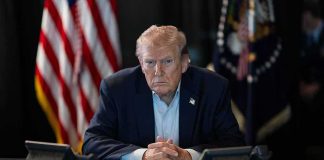
President Trump, for his part, asserted that he directly asked Putin to free Hubbard and that “no swap” or payment was necessary. On the Russian side, Kremlin spokesman Dmitry Peskov attributed the decision to Trump’s request and humanitarian considerations tied to Hubbard’s health — a framing that signals responsiveness to the ask while avoiding the optics of a bargain. Importantly, Peskov did not announce or even hint at a reciprocal handover, and he described ongoing exchange-related contacts as a separate, standing channel, not the mechanism for this case.
How we got here: leverage, channels, and the grammar of detainee diplomacy
To understand why a release can be real yet hard to classify, separate three layers that usually operate at once. First is the personal ask: leaders sometimes cut through bureaucratic layers to make a direct request, and both sides now place Trump’s outreach in that category. Second is the working channel: intelligence and diplomatic services keep an always-on line for exchanges and humanitarian discussions; Peskov underscored that context even as he cast Hubbard’s release as a goodwill gesture. Third is the leverage environment: sanctions decisions, export waivers, and rhetorical posture toward Moscow shape the cost-benefit calculus inside the Kremlin, whether or not anyone utters the word “deal.” In prior high-profile U.S.–Russia cases, formal swaps with named lists, locations, and choreography were the rule; here, the choreography was missing, but the larger environment still mattered.
That environment is precisely why analysts caution against binary thinking. “No prisoner swap” can be accurate while leaving open whether policy moves — especially those affecting energy and finance — softened the ground. In this case, commentary emphasized that the release coincided with recent U.S. sanctions decisions favorable to Russia. Trump himself said Hubbard would not have been freed had the White House allowed new, severe sanctions to take effect — a public statement that, if taken at face value, links the outcome to sanctions restraint even as he maintained that nothing was traded. The strongest reading of the record is therefore twofold: no swap occurred; the broader leverage context likely helped enable the Kremlin’s “humanitarian” decision.
Where the evidence is strong, and where it is thin
Three claims rest on solid ground. First, that Hubbard was released without a named counterpart; no credible report identifies any American handover of a Russian prisoner. Second, that Putin announced the decision in a meeting with Witkoff, who thanked him. Third, that both Washington and Moscow publicly tied the decision to Trump’s request — a rare instance of aligned messaging across adversaries on the precipitating ask. These points are corroborated by mainstream and Russian sources and do not depend on a leak or anonymous official.
Two other claims demand more caution. The first is causation: did Trump’s request cause the release, or was it one factor among several, including Hubbard’s health and the diplomatic backdrop? Peskov’s dual attribution suggests multiple inputs; disentangling their relative weight would require call records or sworn testimony that are not public. The second is the “nothing in exchange” formula; it is watertight if defined narrowly as no prisoner-for-prisoner swap, but it becomes contestable if “nothing” encompasses sanctions posture or other policy choices. Here, the public record contains an internal tension: the same statements that deny a swap also connect the outcome to sanctions restraint. That is not a contradiction on the facts; it is a definition problem on the word “nothing”.
The mechanism in practice: how a unilateral release can still be negotiated
Unilateral releases are not accidents; they are decisions made easier or harder by the perceived payoffs. In cases like Hubbard’s, the mechanism typically unfolds in four steps. First, a credible personal appeal signals political value for the release. Second, the adversary tests the environment — sanctions trajectories, energy policy room, and diplomatic optics — to ensure a release does not undercut other objectives. Third, an in-person set piece creates a public stage to announce the outcome; here, the Witkoff–Putin meeting provided it. Fourth, each side crafts a narrative that sustains domestic legitimacy: Moscow emphasizes humanitarian motives and goodwill; Washington emphasizes effective leadership without concessions. This sequencing matches the public record in Hubbard’s case and explains why the absence of a swap does not mean the absence of negotiation.
Why this matters beyond one man’s freedom
Hubbard’s return is a human success — and a policy data point in a broader pattern often described as hostage diplomacy, in which authoritarian states convert detained foreigners into negotiating leverage. The United States has, in recent years, alternated between formal multilateral swaps and bespoke arrangements that ride on shifting leverage. The practical lesson for policymakers is consistent: build multiple lanes of influence — personal, institutional, and economic — so there is always a path to a yes that does not require trading another human being. The practical lesson for readers is similar: when officials say “no swap,” ask a second question — what changed in the leverage environment around the same time? The answer, not the label, reveals the real cost.
UPDATE: Russia Releases American Stephen Hubbard After More Than Four Years in Prison
Russia released American Stephen Hubbard on Wednesday during a meeting between U.S. special envoy Steve Witkoff and Russian President Vladimir Putin in St. Petersburg. Hubbard, a 74-year-old… pic.twitter.com/jRCgHJuyff— American Voice Rising (@amvoicerising) October 21, 2026
What would settle the remaining ambiguities
Two disclosures would harden today’s inferences into history. First, an official record of the Trump–Putin call — a readout or transcript excerpt that captures the request and any conditions raised. Second, a clear timeline of U.S. sanctions decisions mapped against Russian internal deliberations on the case. Either could confirm that a unilateral, humanitarian release was made possible by a permissive policy backdrop rather than by a discrete quid pro quo. Until then, the durable takeaway stands: no identified swap occurred; a leader’s direct ask coincided with a favorable leverage climate; and that combination proved sufficient to bring an American home.
Sources:
reuters.com, nytimes.com, uk.news.yahoo.com, interfax.ru, gazeta.ru