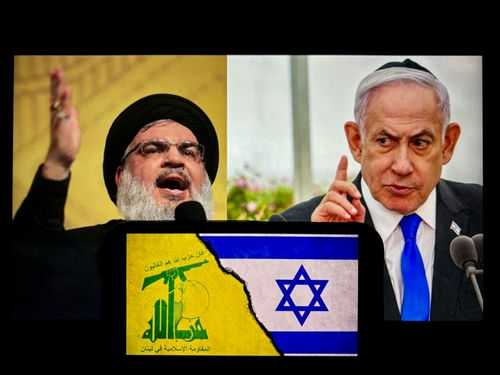
Israel’s precision strike on Hezbollah command hubs in Beirut exposes a clandestine bomb network while testing a fragile ceasefire—and Tehran is rattling sabers.
Story Snapshot
- Israeli forces hit Hezbollah command centers in Beirut’s Dahiyeh after rocket fire into northern Israel [6].
- Reports describe the action as the first Beirut strike since ceasefire understandings; critics call it escalation [3][10].
- Lebanon’s state outlet reported two dead and 11 wounded, underscoring urban-civilian risk where Hezbollah embeds assets [6].
- Iran warned of a “painful response,” highlighting regional stakes as the United States seeks to deter a wider war [9][10].
Targeted Retaliation After Rocket Fire Into Northern Israel
Israeli defense officials said the air force targeted Hezbollah command centers in Beirut’s Dahiyeh district after the group launched rockets toward northern Israel, framing the operation as a direct retaliation against active aggression [6]. Reporting identifies the sites as nodes inside Hezbollah’s urban stronghold, consistent with prior conflicts where the group embeds military infrastructure among civilians [6][5]. Analysts noted this marked a return to striking the capital’s suburbs following months of cross-border fire, signaling that red lines remain enforced despite ceasefire efforts [3][5].
Israeli statements emphasized limited, precise targeting of command infrastructure rather than area bombing, underscoring an intent to degrade control nodes that direct rocket and drone attacks [6]. The Council on Foreign Relations brief underscored the timing: the strike was the first in Beirut since ceasefire understandings were announced, reflecting a pattern where Israel responds when deterrence erodes [3]. This pattern reflects broader urban counterterrorism dynamics, where nonstate groups operate from dense neighborhoods, complicating civilian risk and operational necessity [5][3].
Ceasefire Tensions, Civilian Risk, and Claims of Escalation
Critics argued the Beirut strike undercut ceasefire momentum and risked widening the conflict, pointing to the symbolic weight of hitting a capital’s suburbs and the possibility of civilian harm [3][10]. Lebanon’s National News Agency reported two fatalities and at least eleven wounded, consistent with the hazards of military targets placed amid apartment blocks and shops [6]. Israel’s push to contain strikes to command hubs seeks to balance legal and strategic imperatives, but Hezbollah’s urban embedding ensures even precise operations can produce tragic spillover [6][5].
Regional observers warned that each exchange challenges international mediation and strains de-escalation channels that Washington and partners try to preserve [10]. The Council on Foreign Relations analysis highlighted that renewed strikes in Beirut after ceasefire understandings will draw scrutiny from allies and adversaries alike, with messaging wars running parallel to kinetic ones [3]. For Americans watching energy prices and global shipping lanes, any Lebanon–Israel surge risks wider instability that can flow into higher costs at home and fresh pressure on United States deterrence posture [10][3].
Iran’s Threats and the Stakes for U.S. Policy and Security
Iran issued a “decisive, painful response” warning after the Beirut operation, signaling intent to raise costs if Hezbollah’s core infrastructure remains under sustained pressure [9]. Axios reporting framed the episode as a potential trigger for broader confrontation if spirals continue, a scenario the United States seeks to avoid while backing Israel’s right to self-defense against rocket attacks [10]. These threats echo a familiar playbook: leverage proxy sanctuaries, escalate rhetorically, and test resolve without inviting full-scale war [9][10].
The war with Hezbollah has been going for months.
Iran's strike only came after Israel struck Beirut, Lebanon's capital.
— Rania (@RanMah10) June 7, 2026
For conservative readers, two principles are clear. First, sovereign nations must retain the right to neutralize terror command nodes directing fire at their civilians; precision retaliation aligns with self-defense and international norms when aimed at operational control centers [6][3]. Second, American policy must deter Iran’s proxy warfare without open-ended entanglements or blank checks—supporting targeted counterterror actions, keeping energy routes secure, and rejecting pressure campaigns that hand wins to Tehran or its clients [10][9]. That balance protects U.S. interests, allies, and wallets.
Sources:
[3] YouTube – Israel strikes Hezbollah targets in Beirut
[5] YouTube – Multiple explosions rock southern Beirut as Israel launches new …
[6] Web – Hezbollah–Israel conflict (2023–present) – Wikipedia
[9] Web – Israel says it will renew strikes on Hezbollah in Beirut after …
[10] Web – After Beirut strike, Iran warns Israel to ‘watch the skies’ for …