
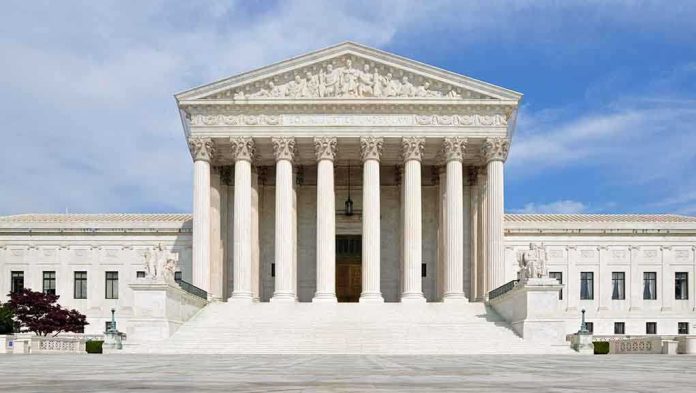
The Supreme Court’s birthright citizenship ruling in Trump v. Barbara did not invent a new right; it reaffirmed a constitutional commitment that has resisted political pressure for more than a century, and Donald Trump’s “too bad” reaction underscores how hard it is to bend that commitment to contemporary immigration fears.
Key Points
- The Court struck down Executive Order 14160 in a 6–3 decision, holding that children born in the United States to parents who are unlawfully or temporarily present are citizens at birth under the 14th Amendment.
- Chief Justice John Roberts’ majority opinion anchors its reasoning in the text of the Citizenship Clause and in longstanding precedent, especially United States v. Wong Kim Ark (1898).
- Dissenting justices, echoing Trump’s arguments, insist the 14th Amendment was designed for freed slaves and warn of immigration and national security risks, but they do not displace the controlling constitutional framework.
- Trump has accepted the ruling formally while calling it “too bad for our country” and urging Congress to “end expensive and unfair birthright citizenship,” a path that, in practice, would require a constitutional amendment or a radical break with precedent.
The Core Holding: Birthright Citizenship Still Means What It Has Meant Since 1868
The decisive fact about Trump v. Barbara is not that Donald Trump lost, but that the Court declined to narrow the basic rule that has governed American citizenship since the 14th Amendment was ratified: if you are born on U.S. soil and subject to U.S. law, you are a citizen. The majority in Trump v. Barbara held that children born in the United States to parents who are here unlawfully or only temporarily are nonetheless “born in the United States” and “subject to the jurisdiction thereof,” and therefore citizens at birth. Executive Order 14160, which attempted to deny citizenship to those children, was struck down.
This outcome did not emerge from doctrinal novelty. Roberts’ opinion reads as an exercise in constitutional continuity. He treats the Citizenship Clause’s first sentence—“All persons born or naturalized in the United States, and subject to the jurisdiction thereof, are citizens of the United States”—as a straightforward grant, limited only by narrow, historically recognized exceptions for children of foreign diplomats, hostile occupying soldiers, and certain tribal members. That understanding traces directly to United States v. Wong Kim Ark (1898), where the Court held that a man born in San Francisco to Chinese parents was a citizen, despite federal statutes excluding Chinese from naturalization and intense anti-Chinese sentiment.
Roberts’ framing of the decision as a “promise” kept to the Framers of the 14th Amendment is significant. It signals that, in his view, the Clause is not a policy choice for present-day officials but a constraint they must obey. The Court’s message is blunt: presidents cannot redefine citizenship by executive order, and Congress cannot do so by ordinary statute alone.
Trump’s Executive Order and Why It Failed
Executive Order 14160, signed at the outset of Trump’s second term, attempted something no prior administration had tried: using unilateral executive authority to carve whole categories of U.S.-born children out of the Citizenship Clause. Under the order, a child born in the United States would not automatically be recognized as a citizen if the mother was present unlawfully and the father lacked citizenship or lawful permanent residence, or if the mother’s presence was lawful but temporary (tourist, student, work, or waiver visas) and the father likewise lacked permanent status.
In practical terms, this meant that babies born every day in American hospitals to undocumented parents, seasonal workers, students, and short-term visitors could be denied citizenship, even though they would grow up under American law and, often, spend their entire lives in the United States. Federal courts reacted swiftly. A nationwide class action filed by immigrants’ rights advocates led a district court in New Hampshire to preliminarily block the order and certify a class of all affected babies, calling the order a “blatant violation of the U.S. Constitution.” Parallel commentary from institutions like the Brennan Center argued that the order contradicted the text of the 14th Amendment, the Civil Rights Act of 1866, Wong Kim Ark, and congressional intent, and would invite discriminatory scrutiny of people’s citizenship in daily life.
Before Trump v. Barbara reached final judgment, the Supreme Court had already touched the order indirectly, narrowing nationwide injunctions but conspicuously declining to bless the order’s substance. When the Court finally addressed the merits, it did what lower courts and mainstream constitutional scholarship had predicted for years: it aligned with the 1898 precedent and affirmed that birthright citizenship cannot be undone by executive fiat.
The Majority’s Constitutional Logic: Text, History, and Jurisdiction
The majority’s reasoning rests on three pillars: the plain text of the Citizenship Clause, its Reconstruction-era purpose, and the Court’s own precedents. First, the text speaks in inclusive terms—“all persons born or naturalized”—and attaches the jurisdiction requirement to the person born, not to their parents. Jurisdiction, in this context, is understood as being subject to U.S. law: if the government can arrest, prosecute, and punish you, you are “subject to the jurisdiction.” That has long encompassed undocumented immigrants and temporary visitors, who can be prosecuted and deported and whose children attend public schools, pay taxes through consumption, and live under local and federal regulation.
Second, the historical record of the 14th Amendment’s adoption, and the Civil Rights Act of 1866 before it, shows Congress grappling with the status of freed slaves and their descendants but deliberately drafting language broad enough to cover everyone born on U.S. soil, with limited exceptions. Legislators debated whether to exclude particular groups; they did not insert text excluding children of immigrants, and subsequent congressional practice assumed that such children were citizens.
Third, the Court had already interpreted “subject to the jurisdiction thereof” in Wong Kim Ark to affirm the “ancient and fundamental rule of citizenship by birth within the territory,” applying it to “all children here born of resident aliens,” save the narrow exceptions for diplomats and enemies. Later decisions, such as Elk v. Wilkins and Plyler v. Doe, addressed special categories (tribal affiliation, education rights of undocumented children) but consistently treated non-citizens and their children as within U.S. legal jurisdiction.
In Trump v. Barbara, Roberts explicitly rejected the administration’s attempt to redefine “jurisdiction” as “full political jurisdiction” or “direct and immediate allegiance,” arguments advanced by Trump’s solicitor general, D. John Sauer. He criticized their reliance on “quirky” examples—children of ambassadors, enemies, and warships—to justify excluding a broad class of undocumented and temporary migrants, questioning how narrow, idiosyncratic exceptions could logically be stretched into a wholesale redefinition of citizenship. His response to Sauer’s claim that “a billion people can easily travel to the U.S. and give birth” captured the Court’s stance: “It’s a new world, but it’s the same Constitution.”
The Dissenting View: Freed Slaves, Birth Tourism, and Security Anxiety
The dissenters—Justices Thomas, Alito, and Gorsuch—did not attempt to deny the text of the 14th Amendment; instead, they contested its scope and historical intention. Thomas, writing separately, stressed that the Amendment was “specifically designed to secure rights for formerly enslaved people,” and accused the majority of “repurposing” it to confer citizenship on children of illegal immigrants and “birth tourists.” This line of argument draws on an originalist tradition that emphasizes purpose and “allegiance” as limiting concepts and cites early commentary suggesting that “subject to the jurisdiction” implies complete political membership.
Alito’s dissent pushed a different concern: national security. He posited scenarios in which a woman from an adversarial country enters the United States briefly, gives birth, and leaves, thereby giving her child U.S. citizenship and passport access that might be exploited against American interests. He warned that the ruling could “incentivize illegal immigration” and “seriously affect the country’s future,” framing the decision as one of the most important—and gravely mistaken—in the Court’s history.
These arguments resonate with Trump’s own rhetoric. He has long claimed that birthright citizenship “degrades the meaning and value of American citizenship” and is “tremendously destructive” and “extremely costly,” and he has asserted, inaccurately, that the United States is the only country that grants it. But neither the dissent nor Trump’s statements grapple in detail with Wong Kim Ark’s analysis or with modern empirical evidence on passport misuse and security threats. The security scenarios remain hypothetical; the legal history weighs heavily in favor of broad citizenship.
Trump’s Response: “Too Bad for Our Country” and the Limits of Congressional Fixes
After the ruling, Trump publicly described the decision as “too bad for our country” and urged Congress to “start today to work on ending expensive and unfair birthright citizenship,” insisting that “no long unwilling constitutional amendment is necessary.”[WCNC/CBS summaries] He promised “complete and total support” for legislative efforts and emphasized that he would respect the Court’s authority even while condemning the outcome.
Here, law and politics diverge. From a constitutional perspective, serious research and mainstream legal advocacy agree: ending or significantly narrowing birthplace-based birthright citizenship would require either a new constitutional amendment or an extraordinary departure from more than a century of Supreme Court precedent. Congress can regulate naturalization and some aspects of derivative citizenship; it cannot rewrite the Citizenship Clause by statute. Any attempt to deny citizenship to U.S.-born children based solely on parental status would collide head-on with Trump v. Barbara, Wong Kim Ark, and the 14th Amendment’s text.
Politically, Trump’s call functions as a rallying point for those who view immigration as a threat and citizenship as a privilege to be tightened. Social media reaction from aligned commentators portrays the ruling as a defeat for “the people” and laments that “we now have those here illegally deciding who is a citizen.” Grassroots responses talk about shutting down borders, “nullification” of federal decisions, and creative workarounds—all indications that, for many, the decision will not settle the argument.[USER social summaries] But the institutional reality is that the Court’s 6–3 judgment defines the law; dissenting opinions and political critique cannot alter its binding force.
A Long-Running Pattern: Attempts to Narrow “Subject to the Jurisdiction”
Trump v. Barbara is best understood not as a one-off clash between a particular president and a particular Court, but as a chapter in a recurrent story: political actors attempt to reinterpret “subject to the jurisdiction thereof” to exclude disfavored immigrant groups, and the judiciary, citing text and precedent, refuses. After Reconstruction, that struggle began with Chinese immigrants; despite statutes excluding them from naturalization, Wong Kim Ark confirmed their U.S.-born children were citizens. Later disputes concerned Native American tribal members, certain categories of nonresidents, and, in modern times, undocumented immigrants and “birth tourists.”
In each major case, courts have held that if the United States exercises legal authority over you—if you can be prosecuted, taxed, or deported—then you are “subject to its jurisdiction,” regardless of your parents’ paperwork. That logic preserves a simple, administrable rule: citizenship at birth attaches to place, not to genealogy. It also avoids the practical nightmare of statelessness for children whose parents may lack any other citizenship to confer.[CBS summary] In Trump v. Barbara, advocates warned that hundreds of thousands of children per year—roughly 250,000 by one estimate—could grow up without a country if the executive order were upheld. The Court chose continuity over experiment.
What This Means Going Forward
The ruling leaves three durable lessons. First, birthright citizenship under the 14th Amendment is not a policy lever; it is a structural feature of the constitutional order. Presidents and Congress can argue about immigration levels, enforcement priorities, and naturalization pathways, but they cannot, without altering the Constitution, strip citizenship from children born under U.S. law.
Second, the Court’s insistence on textual fidelity—“It’s a new world, but it’s the same Constitution”—signals a broader resistance to contemporary panic as a basis for reinterpreting core rights. Demographic change, fears of “birth tourism,” and genuine security concerns will continue, but they must be addressed through measures compatible with the Constitution’s basic guarantees.
Third, Trump’s reaction illustrates the enduring political tension around citizenship. Calling the ruling “too bad for our country” speaks to a constituency that sees broad birthright citizenship as unfair to native-born citizens or as a magnet for unauthorized migration. Yet his pledge to respect the Court’s authority and seek change through Congress implicitly concedes the legal ground: in the United States, the meaning of citizenship is ultimately set by constitutional text and judicial interpretation, not by executive will.
For readers who have watched arguments over immigration intensify over decades, Trump v. Barbara confirms something fundamental. The United States can and will argue about who should be allowed to enter and stay. But once a child is born here under our jurisdiction, the Constitution has already made a choice. That child is American.
BREAKING NEW:🇺🇲US Supreme Court rejects Trump Executive Order to end birthright citizenship Children born in the US, including those born to foreign nationals who are in the country illegally or temporarily remain American citizens under the 14th Amendment. pic.twitter.com/GywBSX6hmr
— Faisal Aziz 🇵🇰 (@FaisalAziz770) July 1, 2026
Sources:
cbsnews.com, ogletree.com, en.wikipedia.org, americanimmigrationcouncil.org, brennancenter.org, aclu-nh.org, courthousenews.com, youtube.com, fam.state.gov, camden.rutgers.edu, constitutioncenter.org, lettersandsciencemag.ucdavis.edu