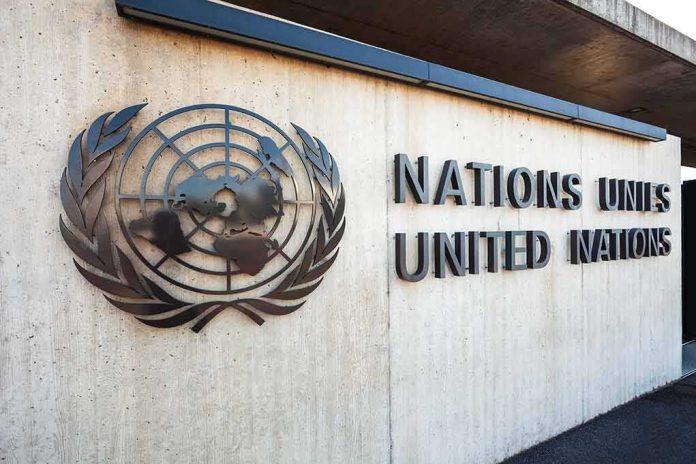
House Republicans moved to trigger a federal review after New York City officials tried to set a meeting with Iran’s United Nations ambassador on July 7, and the State Department shut it down.
Story Snapshot
- House Republicans asked the Department of Justice (DOJ) to investigate a possible Logan Act violation.
- The planned July 7 meeting with Iran’s United Nations envoy was canceled after federal intervention.
- Mayor Zohran Mamdani’s team called the meeting an error and is revising internal protocols.
- The Logan Act is rarely enforced, but its threat shapes political battles over foreign contact.
What Sparked The Investigation
Rep. Addison McDowell and a group of House Republicans sent a letter to the DOJ urging an investigation of Mayor Zohran Mamdani’s administration. They cited a scheduled July 7 sit-down between New York City’s international affairs commissioner and Iran’s United Nations ambassador in Manhattan. The lawmakers framed the attempt as possible unauthorized diplomacy, which the Logan Act forbids. They want prosecutors to decide if city officials crossed a legal line.
City Hall says the meeting never happened. The State Department found out and stepped in. The engagement was then called off. Mayor Mamdani later said the plan was “arranged in error,” and aides began building a new screening process for foreign meeting requests to avoid repeats. That sequence—plan, federal pushback, cancellation—now drives legal and political fallout that could stretch for months, even if no charges follow.
The Law In The Crosshairs
The Logan Act bans citizens from starting talks with foreign governments without approval from the United States. It dates to 1799 and has almost never led to prosecutions in modern times. Still, its shadow looms when officials outside Washington message or meet with foreign powers. Iran adds heat. Tehran’s actions and threats keep it at the center of U.S. security debates. Any contact, even routine, becomes a high-risk act that invites federal scrutiny and partisan fire.
Republicans argue the facts are simple: a meeting with Iran’s envoy was scheduled and required federal intervention to stop it. That, they say, is enough to examine intent, authority, and any backchannel signals that could undercut U.S. policy. On the merits, their case rests on the schedule, the federal block, and the mayor’s own admission that a mistake occurred. Those points line up with common sense: foreign policy is federal first, not city hall turf.
City Diplomacy Meets Federal Walls
Big-city leaders run global schools, ports, and trade shows. They meet foreign officials often, from culture to climate to commerce. But without a clear federal blueprint for subnational diplomacy, staff can drift into gray zones, especially with adversary nations. The Mamdani case fits that pattern. The State Department’s hard stop shows how Washington draws a bright line when the other party is Iran. That federal veto power is not new, but it is getting more visible as cities expand their global reach.
House Republicans Push Logan Act Probe Into Mamdani Administration's Iran Outreach https://t.co/vN9Ci0oCGL
Why in the hell does Congress waste taxpayers’ time with their impotent “probes”?
Why aren’t suspected criminals’ investigations being handled by the Justice Department ??— Mike King (@MikeKing1350149) July 18, 2026
Political incentives also shape the clash. Republicans see a chance to enforce boundaries and deter future city-level skirmishes with hostile regimes. Democrats in the city argue no meeting occurred and fixes are underway. Both can be true: no harm done this time, but a warning shot fired. The wise path is clear. Cities should pre-clear any contact with sanctioned or hostile states and log every outreach. That protects national policy and keeps local leaders out of legal traps.
What Comes Next
The DOJ will decide whether to open a formal probe or request more facts. The odds of a Logan Act prosecution remain low based on history, but the political and policy effects are real. Expect tighter city protocols, faster calls to the State Department, and more paper trails before any meeting moves ahead. That is good governance. It respects federal primacy, reduces confusion, and stops adversaries from fishing for mixed signals inside America’s own house.
Sources:
thegatewaypundit.com, youtube.com, scored.co, facebook.com, newsmax.com, justice.gov, buffalo.edu