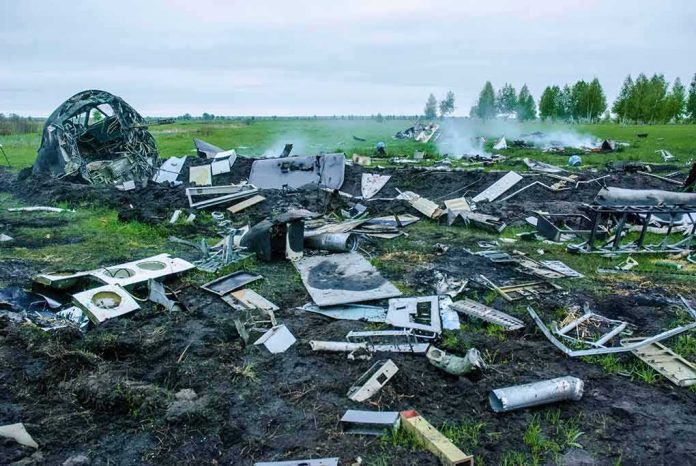
A B-52 crash at Edwards Air Force Base has put military transparency and air safety under a microscope.
Quick Take
- A United States Air Force B-52 Stratofortress crashed shortly after takeoff at Edwards Air Force Base in Kern County, California.[2]
- Reports say the crash happened at about 11:20 a.m. local time, and emergency crews rushed to the scene.[2][1]
- Officials said the situation was still under investigation, and early reports did not confirm injuries or fatalities.[2]
- The event unfolded at one of the military’s key flight test sites, where public details often come out slowly.[2][3]
Crash Confirmed Shortly After Takeoff
Officials said a B-52 Stratofortress crashed shortly after takeoff at Edwards Air Force Base in Kern County on Monday.[1] Public reporting placed the crash at about 11:20 a.m. local time, and the base said emergency crews immediately responded to the scene.[2] The available record shows a confirmed aircraft accident, not a rumor or a disputed claim.
The aircraft was identified as a United States Air Force B-52 Stratofortress, the long-serving heavy bomber that remains a central part of the Air Force fleet.[2][3] Edwards Air Force Base is a major flight test installation in the Mojave Desert northeast of Los Angeles, so any crash there draws fast public attention.[2] That location matters because test and ferry flights often involve complex operations and limited early details.
What Officials Said, and What They Did Not Say
The early reporting said the situation remained under investigation, and officials said more details would be released after initial assessments.[2] That means the public still does not have the basic answers most readers want first: crew status, cause, and the condition of the aircraft after impact. In a military crash, those facts often come later, after commanders clear what can be shared.
The lack of immediate casualty confirmation leaves room for speculation, especially when dramatic footage spreads faster than official updates. Available reports describe an ongoing response, but they do not give a final account of injuries or deaths.[2] For readers who want straight answers, that delay is frustrating. Still, the record so far supports only the crash itself and the fact that the Air Force was handling it.
Why the Story Matters Beyond One Crash
Edwards Air Force Base is not a small local runway. It is a key military site where aircraft testing and flight work are routine.[2][3] When a B-52 goes down there, the event raises larger concerns about maintenance, mission planning, crew safety, and how much the public gets to know in real time. That is especially true when officials release only a short statement at first.
Receipts
1. Edwards AFB confirms B-52 crash shortly after takeoffhttps://t.co/b30sTRpG1J
2. Live aerial footage showing debris field and emergency responsehttps://t.co/rt620gaiKv
3. Additional crash scene footagehttps://t.co/DSC5IjZU06
4. B-52 modernization program…
— P a u l ◉ (@SkylineReport) June 15, 2026
This kind of incident also highlights a broader pattern in military aviation reporting. Early coverage often comes from live broadcasts and paraphrases of official remarks, while the fuller explanation arrives later, if at all.[2][3] For Americans who expect accountability from federal institutions, that slower flow of facts can feel thin. It also shows why careful reporting matters more than online noise after a crash.
Sources:
[1] Web – Breaking: B-52 Stratofortress Crashes After Takeoff From Edwards AFB, …
[2] YouTube – LIVE: B-52 crashes at Edwards Air Force Base
[3] Web – Boeing B-52 Stratofortress | Bureau of Aircraft Accidents Archives