When elected officials borrow the reach of polarizing online personalities, they inherit both the megaphone and the baggage. The Ilhan Omar–Hasan Piker forum is a case study in that trade: a routine piece of digital-age outreach executed under the glare of an active federal probe, with the politics of association threatening to eclipse the substance.
At a Glance
- The Omar–Piker appearance was a publicly promoted forum aimed at younger, online audiences, not a concealed alliance.
- Federal agents had executed a judge-approved search in a criminal investigation; Omar had not been charged at the time.
- Omar and allies framed the probe as politically motivated; the investigation’s scope and durability complicate that claim.
- Prominent Minnesota Democrats condemned the event because of Piker’s rhetoric, turning the association into the story.
What the event actually was: ordinary outreach, unusually combustible timing
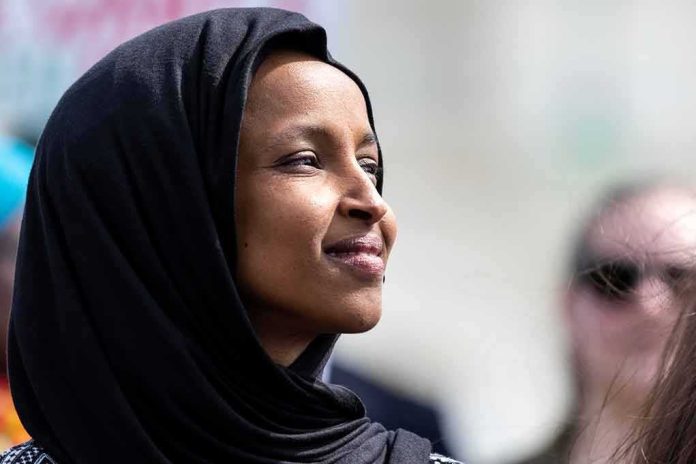
The Minneapolis forum that featured Rep. Ilhan Omar and state Sen. Omar Fateh with Hasan Piker was not a backroom dalliance; it was the inaugural installment of a public series billed as “I’m The Host Now,” organized by local progressive groups and announced in advance to discuss Minneapolis, politics, and community. Coverage emphasized Piker’s vast online following and the event’s election-season intent: mobilizing an audience that consumes politics through livestreams more than broadsheets. In that narrow sense—reach the unreachable where they already are—the appearance fits a decade-long shift in political communications toward creator platforms. The complication was context: the forum landed days after federal agents, acting under a judicially authorized warrant, searched Omar’s home as part of a criminal investigation—a fact that made any on-camera quip fodder for critics and blurred the line between outreach and optics.
Within the event, Omar reportedly joked with Piker about why the media fixates on them—“We just look really good on their screens”—a throwaway line treated by detractors as minimization rather than levity. The record of the evening shows no extended legal rebuttal to the investigation; it was a political conversation in a political venue, not a press conference. That choice matters because it clarifies intent—audience engagement over legal argument—but invites the familiar criticism that tone can trivialize stakes when law enforcement is involved.
The legal posture: a live investigation without charges
To understand the heat, separate three things that often get conflated: what investigators did, what they have alleged, and what they have charged. According to the Department of Justice, Homeland Security Investigations executed a judicially authorized search warrant at Omar’s residence as part of an “ongoing federal criminal investigation”. That tells us a magistrate found probable cause to believe evidence relevant to a crime would be found; it does not establish that Omar committed a crime. As of the forum’s date, major reporting identified no criminal charges against her. Omar denied wrongdoing and characterized the probe as political targeting by the Trump administration, a claim echoed by allies who framed DOJ as weaponized against a prominent critic.
Two countervailing facts keep the politics-of-retaliation thesis from standing alone. First, the investigation appears to be years in the making and reportedly involves whistleblowers, documents, and witness testimony across multiple DOJ components, including the U.S. attorney’s office in Minneapolis—scope and duration not easily squared with a baseless fishing expedition, even if political actors exploit its existence. Second, limited official disclosure—typical in active probes—creates an information vacuum in which partisanship thrives. In that void, Omar’s critics can invoke seriousness by pointing to the warrant itself; her defenders can point to the absence of charges and DOJ norms about election-season restraint. Both statements are true, and neither resolves the merits.
The politics of association: why allies condemned the booking
The backlash within Minnesota Democratic circles was concrete and on the record. Rep. Angie Craig labeled Piker’s rhetoric “polarizing and dangerous,” arguing that embracing him as a political figure was a mistake. Sen. Amy Klobuchar’s campaign called several of his statements “reckless and unacceptable,” and the state party chair underscored that the event was not DFL-sanctioned while condemning divisive comments inconsistent with party values of respect and inclusion. The DFL Jewish Caucus and the region’s Jewish Community Relations Council went further, casting the decision to share a stage with Piker as a betrayal of Jewish Minnesotans and urging Democratic officials to reject his brand outright.
Those criticisms do not prove Omar endorsed Piker’s most inflammatory statements; the record supplied does not show her doing so. They do, however, explain the reputational calculus: in a week thick with early voting and an open investigation, choosing a guest whose catalog of past remarks includes lines like “America deserved 9/11” all but guaranteed that association would dominate headlines and social feeds, regardless of any policy discussion at the event. In contemporary media markets, the clip rules. Campaigns know this; critics assume intent.
Why these forums happen anyway: the influencer era’s structural incentives
Political campaigns are not merely adopting social platforms; they are internalizing influencer logic—fewer gatekeepers, more parasocial ties, and distribution dynamics that reward personality-led conversation. Academic work on “political relational influencers” finds that large creators are often not paid directly for political posts; they trade in access and relevance while campaigns gain reach into communities not served by legacy media. That reciprocal economy is especially potent for younger voters, where streamers function as both pundits and party-switchboards. It also carries distinct risks. The looser the editorial control and the more provocative the guest’s back catalog, the more likely a single line will define the event. And disclosure norms for paid or coordinated political content remain inconsistent across jurisdictions and platforms, making optics harder to manage when an investigation or controversy is already in frame.
How to evaluate Omar’s choice on the merits
Judging the wisdom of the appearance requires holding two truths at once. First, meeting younger voters where they actually gather is normal politics now, and Piker’s audience is among the largest in that ecosystem; there is nothing inherently suspect about a public, announced forum with a high-reach host. Second, association is its own message. When an ally ecosystem—mayors, members of Congress, party chairs, and Jewish community leaders—publicly argues that a host’s prior rhetoric violates core standards, the decision to proceed a week before an election, amidst an active federal probe and sparse official information, predictably reframes the night from outreach to endorsement in the public mind, whether or not that was intended.
The unresolved legal process should constrain categorical claims about guilt or exoneration. A judge approved a warrant; that is serious. No charges were filed at the time; that matters, too. The investigation’s reported depth complicates the pure-retaliation narrative; DOJ’s opacity in active cases leaves space for competing constructions of reality. Against that backdrop, Omar’s strategic problem was never only legal. It was narrative: who gets to define what the event meant.
Practical lessons for campaigns navigating influencer politics under legal scrutiny
Three discipline points emerge. One, separate audience strategy from messenger controversy: if the goal is youth mobilization, pair high-reach hosts with formats that constrain the risk of platforming past incendiary statements—pre-taped segments, multi-guest panels, or moderated town halls with clear codes of conduct. Two, when legal matters hang over the event, offer a substantive, lawyer-vetted statement once, in full, and then pivot; joking through the cloud may play with core fans but typically backfires with persuadables. Three, map the intra-coalition response in advance; when credible allies are poised to condemn the booking, the marginal distribution gains rarely justify the associative cost in the final week before voting.
Sources:
nypost.com, cbsnews.com, powerlineblog.com, readtangle.com, foxnews.com, algemeiner.com, brennancenter.org, frontiersin.org, oig.justice.gov