Political celebrity now trades not just in airtime and book deals but in liquid tokens: a meme coin can turn notoriety into a ticker, while a presidential pardon can reset a protagonist’s legal and reputational balance sheet in an afternoon. Devon Archer’s recent public comments sit squarely at that junction—where brand, speculation, and executive clemency converge.
The Short Version
- Devon Archer publicly framed Hunter Biden’s $LAPTOP meme coin as a political-culture branding play and said the idea could plausibly “work” as a product of attention, not utility.
- President Trump pardoned Archer, a onetime Hunter Biden business partner; Archer has described being told in person that clemency was coming and has cast the pardon as personal vindication and a path back to normalcy.
- Hunter Biden’s $LAPTOP token launched as an overtly self-referential brand asset in the PolitiFi niche; its early trading was violently volatile, collapsing intraday before stabilizing in thin liquidity.
- PolitiFi tokens function as identity assets—price is driven by attention, alignment, and spectacle more than cash flows, a dynamic documented across political meme coins and relevant to $LAPTOP’s trajectory.
What Archer Actually Said—and Why It Matters
Archer has spoken on the record about Hunter Biden’s foray into meme coins, describing the $LAPTOP token as a recognizable brand wrapper that could resonate in the political-culture marketplace. This is not an endorsement of fundamentals; it is an acknowledgement of how these instruments trade—on virality, narrative, and in-group signaling. Archer’s posture is consistent with his broader portrait of Hunter Biden as a figure who leans into media cycles and reframes controversies through spectacle and counter-narrative. Against that backdrop, a self-referential token is not a finance project in the old sense; it is reputation arbitrage with a ticker.
Archer speaks with the authority—and baggage—of proximity. He is not speculating from the cheap seats; he worked alongside Hunter Biden and then testified to Congress about those years, before becoming the beneficiary of presidential clemency. His comments therefore carry two distinct weights: firsthand familiarity with the persona the token monetizes, and an acute awareness of how narrative shapes legal and public outcomes in an era when both can pivot overnight.
Executive Clemency as Narrative Reset
The pardon itself is uncontested fact. The White House published the Executive Grant of Clemency for Archer, invoking the president’s constitutional power to extinguish the legal consequences of a conviction. Archer has described learning of the planned pardon directly from President Trump at the NCAA wrestling championships and later called the moment “remarkable,” language that underscores the public theater surrounding modern clemency even as the instrument remains a sober constitutional act. Major outlets reported the pardon’s issuance and its practical effect: Archer’s legal exposure was removed; the reputational ledger, at least formally, was cleared.
In this case, clemency does more than erase a sentence; it reconfigures the narrative terrain. Archer’s post-pardon statements emphasize return to normal life and vindication. Whether one reads that as moral exoneration or simply legal relief, it changes his platform. He is now a primary actor recounting his proximity to Hunter Biden’s business choices and offering interpretations of those choices through the lens of political branding—and he does so unencumbered by the gravitational pull of an active sentence.
How PolitiFi Works: Attention as the Asset
To understand $LAPTOP, strip away the mystique of crypto and see the mechanism. PolitiFi tokens are identity assets: instruments whose value proposition is alignment and spectacle rather than discounted cash flows. In academic and industry analyses, politically themed meme coins consistently move on catalysts that spike attention—rallies, media events, endorsements—and then mean revert when the narrative quiets. Official profiles of high-profile political tokens explicitly disclaim utility and financial rights; they are cultural collectibles with liquid secondary markets.
That design creates a feedback loop. Controversy drives attention; attention drives price; price action regenerates controversy. The loop is not accidental—it is the product. As with any market organized around attention, liquidity pockets can vanish as quickly as they appear. Empirically, such tokens exhibit sharp, transient surges and deep drawdowns, especially when initial demand is fueled by social virality rather than durable communities or clear use cases.
$LAPTOP’s Launch and Early Trading
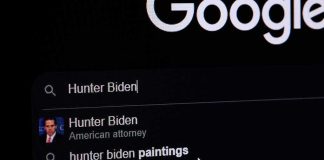
Hunter Biden announced a meme coin literally named for the controversy that has surrounded him since 2020. Multiple outlets covered the launch, noting its explicit bid to reclaim the narrative through a branded ticker symbol: LAPTOP. The token’s first trading sessions fit the PolitiFi profile: a violent initial spike followed by a precipitous collapse of roughly 98 percent amid thin liquidity and bot-saturated order flow, according to market coverage and the project’s own messaging, which denied “scam” accusations and blamed mechanics over malice. In a later interview, Hunter Biden himself described both an interest in the technology and the desire to make money, a candid statement that aligns with the identity-commerce lens rather than any promised utility build-out.
None of this is anomalous for the category. In PolitiFi, the brand is the use case. The economic question is not whether $LAPTOP will throw off yield; it is whether its sponsor can sustainably fuel attention at a cadence that keeps a community engaged and liquid. That is a high bar even for seasoned entertainers; it is higher still when politics is the animating story and the audience is bifurcated by design.
“[Hunter Biden] probably at some point is going to put his hat in the ring for some office, I think he will run eventually.”
American entrepreneur Devon Archer speculates on whether Hunter Biden will follow his father’s footsteps and run for public office as speculation swirls… pic.twitter.com/n445DKYREK
— One America News (@OANN) September 11, 2026
Archer’s Pardon and the Market for Political Narrative
Archer’s clemency belongs in the same story because executive power and identity markets now intermingle in plain view. A presidential pardon is not a price catalyst in the technical sense; it is a narrative catalyst. It shifts who is legible as a protagonist, who commands media oxygen, and which interpretations of events gain traction. When Archer argues that $LAPTOP is a brand play that could “work,” he is mapping the logic of PolitiFi onto a figure he knows well: a public persona capable of minting attention, then tokenizing it.
For investors and observers, the lesson is not new but it is clarifying. In political markets—whether votes, viewership, or viral tokens—attention is convertible currency. But its exchange rate is unstable, and the bridge between attention and durable value widens as projects lean further into spectacle. If you participate, you are trading narratives under liquidity risk. If you analyze, judge success by storytelling stamina, not white papers.
What Endures
Three elements outlast the news cycle. First, executive clemency remains a formidable constitutional instrument; it can instantaneously reframe a participant’s role in public debates, as Archer’s experience shows. Second, politically branded tokens are here as long as attention can be financialized; they are not investments in businesses so much as wagers on the half-life of a storyline. Third, the people most effective at navigating this terrain are those who understand that in an attention economy, controversy is a feature, not a bug—and that every spectacle, from an arena-side pardon encounter to a ticker named after a scandal, is potential fuel for the next trade.
Sources:
youtube.com, newsmax.com, nypost.com, washingtontimes.com, cbsnews.com, finance.yahoo.com, whitehouse.gov, plataformamedia.com, ainvest.com, slideshare.net, coinmarketcap.com