
Charlie Kirk’s widow stood up in court and demanded the world watch every moment of her husband’s murder trial — and a Utah judge just agreed with her.
Story Snapshot
- Judge Tony Graf denied the defense’s request to ban cameras from the Tyler Robinson preliminary hearing, ruling that media access supports public accountability.
- Erika Kirk publicly demanded full transparency, saying she wants no doubt about what happened to her husband.
- Prosecutors released new surveillance video tracing Robinson’s movements on the day of the alleged shooting.
- The defense argued that media coverage has already poisoned the jury pool, with a survey showing 64% of Utah County residents believed Robinson was guilty before trial.
The Judge’s Ruling Puts the Case in the Public Eye
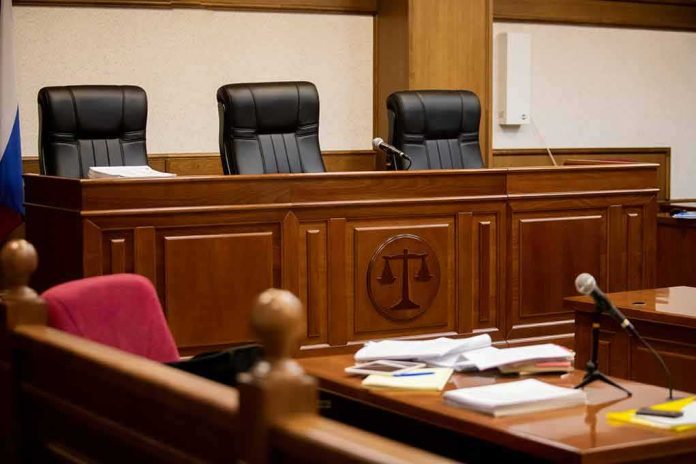
Judge Tony Graf of Utah’s Fourth District Court in Provo ruled clearly and directly. He denied the defense’s motion to ban cameras, microphones, and photographers from the courtroom. His reasoning was simple: electronic media coverage helps the public access court proceedings and holds government accountable. Utah law backs him up. It presumes media access is allowed when the main purpose is journalism, and the defense gave the judge no reason strong enough to override that presumption.
Prosecutor Rebecca Rose made the case for cameras in plain terms. She argued that letting the public watch the daily presentation of facts and evidence is the best way to stop conspiracy theories from taking root. That is a reasonable position. When people can see a trial unfold in real time, wild speculation has less room to grow. Erika Kirk said it herself: “We deserve to have cameras. I want there to be no hesitation in understanding what happened to my husband that day.”
New Video Evidence Lands Hard in Open Court
Prosecutors did not just argue for transparency — they demonstrated it. A video of Tyler Robinson turning himself in at the Washington County Sheriff’s Office was played in open court. Prosecutors also released new surveillance footage tracing Robinson’s movements on the day of the alleged shooting. That kind of evidence, shown publicly, is exactly what Erika Kirk and the prosecution say will cut through the noise and show the facts clearly.
Legal scholar John Yoo called the prosecution’s case strong, pointing to video footage and DNA evidence linking Robinson to the crime. The defense has not presented a forensic rebuttal to the video evidence or a direct challenge to the DNA findings. What they have done is file motions — to seal evidence, to disqualify prosecutors, and to limit media access. Courts and commentators have widely described these moves as delay tactics rather than genuine constitutional defenses.
The Defense Raises a Real Concern the Court Took Seriously
The defense is not without a legitimate argument, and it deserves a fair hearing. Trial consultant Dr. Brian Edelman surveyed 200 Utah County residents and found that 99% recognized the case and 64% already believed Robinson was guilty. Cognitive psychologist Dr. Christine Ruva testified that pre-trial media exposure creates emotional biases that jurors struggle to shake, even when trial evidence points the other way. These are named experts making specific, sourced claims — not just noise.
Yeah ok except for all the evidence 👇
Here is a compilation of the main publicized evidence against Robinson, drawn from court proceedings, FBI updates, surveillance, forensics, witness statements, and communications reported in credible sources (as of the latest available…— Rich (@rad67) July 9, 2026
The defense also accused prosecutor Ballard of violating Utah ethical rules by giving media interviews about forensic evidence and guilt before trial. They cited a Fox and Friends appearance and emails sent to TMZ. If those claims are accurate, that is a serious breach. The judge denied the motion to disqualify the prosecution team, finding no factual basis for a conflict of interest, but the ethical conduct question is not fully settled and bears watching as the trial moves forward.
Why the Transparency Fight Matters Beyond This Case
This battle over cameras and sealed evidence is not unique to the Kirk case. High-profile trials almost always produce this clash between the public’s right to know and the defendant’s right to a fair trial. The tension is real and neither side is wrong to raise it. What makes this case different is the scale of public attention and the grief of a widow demanding answers in plain sight. Erika Kirk’s demand for transparency is not a legal strategy — it is a human one, and it is hard to argue against.
Judge Graf’s framework does add one procedural wrinkle worth noting. Media outlets must now submit access requests 14 days before hearings, with written submissions capped at four pages and no oral arguments allowed. That structure limits last-minute access but does not close the courtroom. The public will still see this trial. Whether that transparency delivers the clarity Erika Kirk is asking for depends on what the evidence actually shows — and so far, prosecutors appear confident it will.
Sources:
pjmedia.com, apnews.com, pbs.org, youtube.com, facebook.com, atty.utahcounty.gov, fox4news.com, washingtontimes.com, livenowfox.com, 6abc.com, abc7chicago.com, fjc.gov, amu.apus.edu, vbarronlawoffice.com, nij.ojp.gov, anthemeap.com, pmc.ncbi.nlm.nih.gov, ncsc.org