

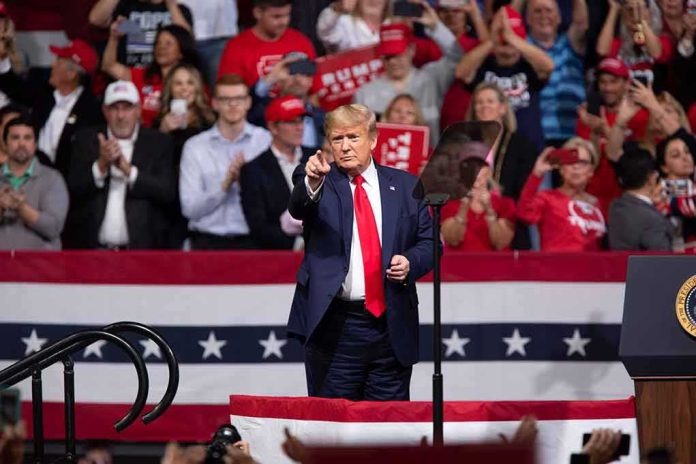
Claims that a politician tops a foreign adversary’s “kill list” are inherently dramatic; the sober truth is that such rankings rarely exist in any verifiable form, and the right test is not rhetoric but evidence, incentives, and the way state-directed targeting actually works.
At a Glance
- Donald Trump repeatedly said he is “number one on the kill list for Iran,” but no independent documentation of such a ranked list has surfaced.
- U.S. law enforcement has charged Iranian-linked actors in plots against specific U.S. figures, showing Tehran’s interest in retribution—yet that record still falls short of confirming a formal, ranked “kill list.”
- Several of Trump’s related factual assertions (from Iranian leadership “decimation” to dramatic claims about border flows and strikes) are unverified or contradicted by reliable reporting, which weakens the probative value of his kill-list framing.
- Historically, foreign regimes target former officials associated with policies they resent; this pattern is real, but concrete proof—not maximalist language—should anchor our assessments.
What Trump Said—and What It Would Take to Verify It
Donald Trump has asserted on multiple occasions that he is “number one on the kill list for Iran,” including in NATO-adjacent press appearances and media interviews. The phrasing suggests a formal, ranked roster maintained by Tehran’s security apparatus. To validate a claim like this, analysts would look for one of four classes of proof: a primary-source Iranian document or directive; U.S. or allied intelligence reporting with specific sourcing that a court or Congress can reference publicly; intercepts with corroborated context; or testimony by operatives with access to the targeting process. None of those have surfaced for a ranked list with Trump at the top. What we have are public statements by Trump and media amplifications of those statements.
By contrast, the U.S. government has occasionally exposed and prosecuted discrete Iranian-linked plots on American soil—more limited claims that rest on evidence rather than rhetoric. That difference matters. Demonstrating that a state actor is pursuing retribution is not the same as proving the existence of a formal top-target list with a specific rank order.
What We Do Know About Iranian Targeting of U.S. Figures
The U.S. Justice Department has brought cases alleging Iranian-directed or Iranian-linked murder-for-hire schemes against Americans, including former officials publicly associated with maximum-pressure policies and with the 2020 strike that killed IRGC-Quds Force commander Qassem Soleimani. Federal affidavits and indictments outline payments, intermediaries, and taskings that law enforcement intercepted or disrupted—credible evidence of intent focused on specific people. That record substantiates a narrower, more defensible proposition: elements tied to Iran have sought to target high-profile U.S. figures on a case-by-case basis, often for retaliation, and sometimes via cut-outs instead of overt IRGC operators. It does not, on its face, authenticate a formalized, ranked “kill list” naming Trump as number one.
Open-source reporting has also described Tehran’s appetite for revenge against former officials linked to the Soleimani strike and broader sanctions strategy, which comports with the regime’s doctrine of “resistance” and calibrated retaliation. Strategically, deterrence-by-threat is part of the script: the regime cultivates fear through public messaging, while operational arms probe for opportunistic, deniable avenues. That is a far more fluid and opportunistic system than a static league table of enemies.
When Language Outruns Evidence
Trump’s presentations around the kill-list claim are entangled with other high-consequence statements—some unverifiable, others contradicted by reliable coverage. In the same settings where he declares himself Iran’s top target, he has referenced sweeping battlefield effects, mass leadership “decimation,” or covert strikes without corroboration. For instance, claims about Iran’s supreme leader being killed were contradicted by subsequent reporting from established outlets, which documented his continued leadership at the time; this discrepancy undercuts the credibility of closely adjacent assertions packaged in the same narrative stream.
That does not prove the kill-list claim false; it highlights a credibility problem. When a speaker commingles grave, specific allegations with demonstrably incorrect or unsubstantiated ones, prudent readers and analysts discount the bundle until independent confirmation emerges. In intelligence analysis, this is source vetting 101—separate what you can validate from what you cannot, and never let the unverified hitchhike on the verified.
How State Targeting Actually Works
States do target enemies, but the operational reality is more dynamic than a laminated list. Targeting priorities evolve with opportunity, deniability, and diplomatic context. Iran’s security ecosystem—IRGC-Quds Force, intelligence ministry actors, proxy networks—assigns value to targets along axes such as symbolic payoff, feasibility, attribution risk, and escalation management. The same system is adept at information operations: threatening rhetoric, posters in processions, and media theatrics shape perceptions of reach and resolve, regardless of actual kill-chain readiness.
That logic favors modular tasking rather than static rankings. If a target travels with a hardened detail, sits inside a layered protective envelope, and triggers intolerable escalation risks, tasking migrates down the list to softer but still meaningful substitutes: former officials, dissidents, or private citizens engaged in adversarial activism. The result is an elastic set of potential victims rather than a cleanly numbered roll.
The Baseline Risk for Prominent U.S. Political Figures
It is also true that high-profile American politicians—especially former presidents and senior national-security principals—live with persistent threat. The United States has a long record of political violence, and every modern president has faced credible plots or attempts. That background risk, well established across decades, explains why protective details and interagency counterintelligence remain vigilant regardless of public rhetoric. The base rate of threat is high; what demands evidence is any claim that a particular figure occupies a uniquely elevated rung on an adversary’s targeting ladder.
In practice, that means distinguishing between three tiers of assertion: general threat environment (widely supported), specific adversary interest in certain individuals (supported by prosecutions and intelligence disclosures), and the existence of a formal, ranked kill list with a declared “number one” (unsupported absent documentary or intercept proof). The first two warrant vigilance and resources; the third requires proof before it should shape public understanding or policy.
What Would Count as Proof
Four evidentiary pathways could either substantiate or debunk the “number one on Iran’s kill list” claim decisively:
First, documentary leakage or declassification: an Iranian directive, targeting worksheet, or internal memo that names and ranks foreign targets—ideally with provenance established by chain-of-custody and forensic analysis. Second, intercepts: authenticated communications among IRGC or intelligence officials explicitly referencing a ranked list and Trump’s placement. Third, sworn testimony: depositions from arrested facilitators or operatives with first-hand access to tasking orders. Fourth, corroborated intelligence assessments: a declassified, sourced U.S. or allied product that attributes a ranking to specific Iranian organs, with enough detail for outside scrutiny. Short of that, claims of top billing remain assertions rather than evidence-backed facts.
Why the Distinction Matters
This is not a semantic dispute. Precision in public claims about foreign targeting impacts deterrence, alliance politics, and domestic trust in counterintelligence. Overstating with unverified superlatives can create perverse incentives—escalatory rhetoric in Tehran, fatigue among allies, and confusion for audiences trying to sort serious security issues from campaign-trail flourish. Understating, conversely, risks complacency. The right line is straightforward: treat threats as real when prosecutions, intelligence, or security reporting justify it; avoid converting that justified vigilance into grandiose claims without corroboration.
There is another practical reason to insist on proof. U.S. prosecutors and security services already demonstrate a capacity to surface plots, indict actors, and lay out evidence without disclosing sensitive sources and methods in full. That record—carefully curated, but real—gives citizens a touchstone. Where it exists, it earns trust. Where it doesn’t, caution is warranted in elevating rhetoric to fact.
President Trump discusses not going home on the new AF1… and how he is #1 on the Iran “Kill List”
Feels like seeding… I don’t like it. Keep POTUS In your prayers. pic.twitter.com/0oSSRs2uI9
— Trumpusa1 (@Trumpusa1A1) July 8, 2026
The Bottom Line
Iran or Iran-linked operatives have pursued retribution against Americans they view as responsible for humiliations and strategic setbacks; that threat is credible and persistent, and it has occasionally been documented in court. But a formal, ranked “kill list” naming Donald Trump as “number one” has not been independently verified. Until documentary evidence, intercepts, declassified assessments, or sworn insider testimony surface, the strongest, most defensible statement is narrower: Tehran’s ecosystem has motive, intent, and a track record of targeting high-profile U.S. figures—yet the specific ranking claim remains an assertion, not an established fact. Responsible analysis can hold both ideas at once: vigilance about real threats and discipline about what the evidence can actually bear.
Sources:
instagram.com, youtube.com, ussc.edu.au