

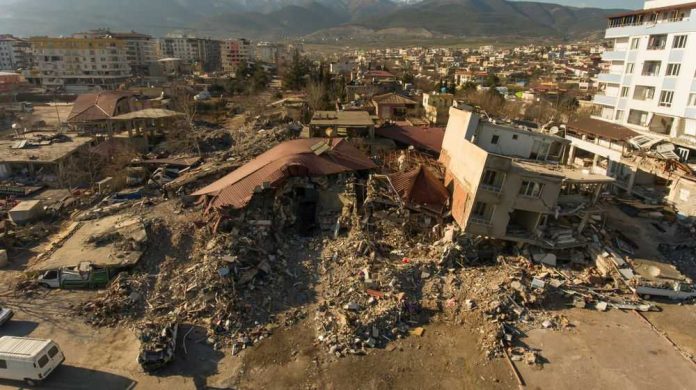
A deadly strike that killed more than 100 Iranian schoolchildren is now raising hard questions about truth, accountability, and how much power Washington should ever have to make “mistakes” with Tomahawk missiles.
Story Snapshot
- Trump says the bombing of an Iranian girls’ school was “done by Iran,” while his own Pentagon keeps saying the case is still under investigation.
- Media and rights groups cite preliminary U.S. military findings and missile evidence that point back to an American Tomahawk strike near an Iranian Guard base.[11]
- Senator Tammy Baldwin and others are pressing the Defense Department to release hard facts, but no full report or targeting data has been published yet.[5]
- Conservatives face a tough balance: demand real accountability for a possible U.S. error without feeding Iran’s propaganda or the globalist media’s anti‑America spin.[10]
What We Know About The Minab School Tragedy
On February 28, a girls’ elementary school in Minab, southern Iran, was hit during the opening hours of the U.S.–Iran war, killing more than 100 children and staff.[10] Major outlets, including the New York Times, report that a preliminary U.S. military inquiry found American forces likely at fault, due to outdated targeting data that sent a Tomahawk missile into the school area instead of a nearby Iranian Guard naval compound.[11] Amnesty International’s review of images and missile remnants also points to a U.S‑made Tomahawk as the weapon used.[10]
Pentagon briefings linked U.S. Navy Tomahawk launches to that same day and region, as part of early strikes against Iranian military sites.[11] Human Rights Watch and other analysts say the school sat next to an Islamic Revolutionary Guard Corps compound that appears to have been a valid military target, which fits a tragic “wrong building” or “bad data” scenario more than an Iranian self‑attack.[12] So far, however, no full Defense Department investigation report, launch telemetry, or serial‑number records have been made public to let citizens judge the evidence directly.[5]
Trump’s Shifting Message And The “Mistake” Debate
President Trump has pushed back hard on claims of U.S. guilt, often in heated back‑and‑forth exchanges with reporters.[6] Aboard Air Force One, he said that based on what he had seen, the bombing was “done by Iran,” and added that Iranian forces are the ones who target civilians.[1] Later, when pressed about a New York Times story saying U.S. forces were at fault, he answered that he did not know about the report, and said he would “live with” whatever the Pentagon investigation ultimately found.[2] This mix of blame on Iran and talk of an open probe has fed media attacks on his credibility.[2]
Trump’s off‑the‑cuff claim that Iran has Tomahawk missiles has also drawn fire, because Tomahawks are U.S.‑made and sold only to close allies, not to Tehran.[2] That factual slip gave critics an easy opening to paint his Iran‑did‑it argument as guesswork instead of a case built on evidence. Senator John Kennedy, a Republican from Louisiana, has taken a different tack, saying the United States was responsible but describing the incident as a “dreadful, dreadful error” rather than an intentional attack.[2] His framing tries to admit a likely mistake while pushing back against claims that Americans deliberately targeted children.
Inside The Pentagon’s “Still Investigating” Line
Defense Secretary Pete Hegseth has stayed on a narrow message: the Defense Department is investigating and will not give a final answer until the review is complete.[1] On Air Force One, as Trump blamed Iran, Hegseth repeated that “we’re certainly investigating” and stressed that the U.S. does not target civilians, in contrast with the Iranian regime.[1] White House Press Secretary Karoline Leavitt told reporters the same week that “not that we know of” did U.S. airstrikes hit the school, again pointing back to the ongoing Pentagon probe and warning against accepting Iranian propaganda about the war.[1]
At the same time, anonymous U.S. officials have told reporters that internal assessments point to likely U.S. responsibility, and outside groups say the physical evidence lines up with that story.[7][10] This gap between public caution and private leaks looks familiar to anyone who has watched past conflicts. Military planners often talk about “attribution advantage,” the idea that controlling who gets blamed, and when, can shape the whole war narrative.[22] For many conservatives, that raises a basic question: is the slow, careful language about “investigating” meant to find the truth, or to buy time and manage political fallout?
Congressional Pressure And The Battle Over Transparency
Democratic Senator Tammy Baldwin is leading a push in the Senate to force more answers from the administration.[5] She has demanded the full preliminary investigation, audits of the targeting database used on February 28, and details like missile serial numbers and launch coordinates tied to the Minab strike.[5] Her office frames this as a fight against stonewalling, arguing that the White House is hiding behind “under investigation” language to avoid accountability for a mass‑casualty event involving children. Left‑leaning outlets and activists are echoing that line, saying anything short of a public report is a cover‑up.[4]
When asked about the bombing of a school during the Iran War, that President Trump started, Trump said he has no plans to hold anyone accountable for the strike on the school that killed more than 150 people.
Subscribe to the Lincoln Square Substack.#BreakingNews #IranWar pic.twitter.com/7HKZoH1UZ6
— Lincoln Square (@LincolnSquareHQ) June 17, 2026
For conservatives, the politics cut in more than one direction. On one hand, our core values demand honesty, especially about the lawful use of force in our name. If U.S. operators, using delegated strike authority, relied on bad data and killed over 100 kids, citizens deserve the truth and reforms that stop it from happening again.[10][16] On the other hand, Iran and globalist media would love to use any U.S. error to smear the entire mission, weaken American resolve, and push new limits on presidential war‑fighting powers that could tie the country’s hands in future crises.[18][17]
What Conservative Voters Should Watch For Next
Going forward, two facts can be true at once. First, war is ugly, and even the most careful military on earth will sometimes cause civilian casualties, especially when enemy forces hide near schools and homes. Second, the United States must never accept a culture where “mistakes are made” becomes an easy excuse instead of a trigger for hard reform. The Pentagon’s final report, the release of targeting and launch data, and testimony from investigators will tell us whether leaders respect that line or hope the story fades.[11][5]
Conservative voters should insist on three things. One, clear evidence before blame, whether that points to Iran, to a U.S. error, or to some mix of both. Two, protection of our troops from witch hunts driven by foreign propaganda or partisan activists. Three, firm rules of engagement that defend American lives and vital interests while honoring the basic moral truth we all share: no free nation should shrug when children die in a blast that its own weapons may have caused.[10][15]
Sources:
[1] YouTube – Trump on Iranian school bombing: “Mistakes are made”
[2] Web – Trump says Iran at fault for strike on girls school – POLITICO
[4] Web – WATCH: White House says Trump will accept outcome of … – PBS
[5] Web – Report Says U.S. Struck Iran School | Council on Foreign Relations
[6] Web – Baldwin Presses Trump Admin for Answers on the School Bombing …
[7] YouTube – Trump says Iran has Tomahawk missiles when asked about girls …
[10] Web – US President Trump denied responsibility for an air strike on a girls …
[11] Web – USA/Iran: Those responsible for deadly and unlawful US strike on …
[12] Web – U.S. at Fault in Strike on School in Iran, Preliminary Inquiry Says
[15] Web – Questions mount for Hegseth over possible US involvement in strike …
[16] Web – 2026 Minab school attack – Wikipedia
[17] YouTube – US Avoids Taking Responsibility For Attack on Iran School
[18] Web – The U.S. was responsible for a missile strike on an Iranian …
[22] Web – Findings and Analysis | War Powers Resolution Reporting Project