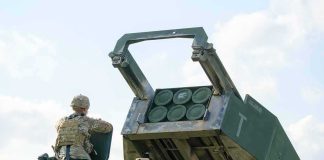
While America and Israel trade strikes with Tehran, Moscow is quietly positioned to profit—selling weapons, gaining leverage, and watching U.S. attention get pulled away from bigger strategic priorities.
Story Highlights
- Russia’s “big winner” narrative is interpretive, but documented arms deals and growing Russia-Iran ties give Moscow clear upside with limited direct risk.
- Iran sought Russian air-defense help after its 12-day 2025 war with Israel, leading to a reported €495 million Verba MANPADS deal with deliveries slated for 2027–2029.
- Reports also describe Russian Mi-28NE helicopter deliveries and alleged intelligence/logistical assistance during the 2026 Iran war, though key claims remain unconfirmed.
- Russia publicly denies expanding cooperation, and available reporting suggests Moscow aims to benefit without being dragged into open combat.
Russia’s Low-Risk Play: Influence Without Owning the War
Russia’s advantage in the 2026 Iran war comes from staying just close enough to gain leverage without paying the price of direct combat. Reporting describes Moscow as a supplier and partner to Tehran while maintaining public distance, with the Kremlin signaling the conflict is “not our war.” That posture matters because it preserves Russian flexibility: it can profit from weapons sales and diplomacy while limiting exposure to U.S. retaliation or a wider regional escalation.
The “Russia is the big winner” line is not a single verified headline from one definitive report. It is a synthesis that depends on how much weight one puts on arms deals, intelligence claims, and strategic distraction. The strongest factual pieces in the record involve procurement and logistics—items that can be tracked through contracts, deliveries, and flight activity—while the most consequential claims, like real-time targeting intelligence, are less conclusively documented.
Arms Sales Tell the Clearest Story: Verba MANPADS and Iran’s Re-Armament
Iran’s battlefield losses in mid-2025 created a straightforward opening for Russia: sell replacements. After the 12-day 2025 war with Israel damaged Iranian air defenses, Iran reportedly requested Russian Verba shoulder-fired air-defense systems. Subsequent reporting describes a €495 million deal for roughly 500 launchers and 2,500 missiles with deliveries scheduled for 2027 through 2029, with indications that some deliveries could have begun earlier than the formal timeline.
Those systems are not a magic shield against U.S. and Israeli airpower, and analysis in the research acknowledges limitations—especially against high-end aircraft, standoff weapons, and modern countermeasures. Still, the strategic point for Moscow is simpler: the contract locks in revenue and binds Iran closer to Russian supply chains, training, and maintenance pipelines. That kind of dependency can outlast a single phase of fighting and can be leveraged in later negotiations.
Drone and Missile Cooperation: Ukraine’s Shadow Over the Middle East
Russia’s relationship with Iran did not begin with the 2026 war; it accelerated after Russia’s invasion of Ukraine, when Iran supplied Shahed drones and other munitions. The research notes that Russia has localized drone production and benefited from Iranian know-how, including at scale. That creates a mutually reinforcing loop: Iran helps Russia sustain pressure in Ukraine, and Russia helps Iran rebuild defenses for its own regional fights, even if Moscow avoids a formal mutual-defense commitment.
A May 2025 comprehensive partnership treaty is described as covering defense and energy while stopping short of a mutual defense pact. That detail is crucial because it explains why Russia can pursue the benefits of an anti-Western alignment without being legally forced to fight for Tehran. For Americans concerned about globalist entanglements, this is the inverse problem: adversarial states are building durable ties designed to complicate U.S. strategy without meeting U.S. power head-on.
Intelligence Claims and Denials: What’s Confirmed, What Isn’t
The most explosive allegations involve intelligence and operational support—claims that Russia provided satellite data or other targeting-relevant information during the war, potentially including data about U.S. assets. The research also references reports of Russian Il-76 flights to Iran and mentions Mi-28NE helicopter deliveries beginning around January 2026. These logistics indicators suggest cooperation could be active even when Moscow insists it is not expanding involvement.
Russia has denied key intelligence-sharing claims, calling related reporting “fake news,” and U.S. confirmation is described as lacking. That leaves an important limitation for readers: the public record supports the existence of arms deals and deepening ties, but it does not conclusively prove the most operationally decisive claims. A responsible takeaway is that Moscow can still gain from the conflict through sales, positioning, and distraction even if the intelligence allegations remain disputed.
Russia Is the Big Winner in the Iran Warhttps://t.co/CBGCxAhKAC
— 19FortyFive (@19_forty_five) March 22, 2026
For the United States under President Trump, the strategic lesson is that adversaries look for asymmetric wins. Russia does not need to “win” militarily inside Iran to benefit; it needs prolonged tension that increases demand for Russian kit, strengthens the Russia-Iran axis, and consumes Western bandwidth. The available reporting does not show Russia taking on the costs of direct intervention—only the benefits of being a partner that can help Tehran endure and rearm over time.
Sources:
Russia to Supply Iran With Shoulder-Fired Air Defense System
Iran turned to Russia, China for missiles after 12-day war