
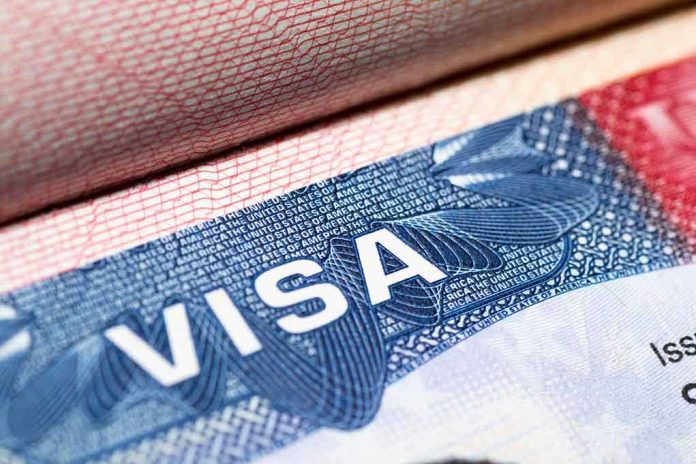
A so‑called “diversity” visa program just helped put American students in the crosshairs, and the Trump administration is finally slamming on the brakes.
Story Snapshot
- A foreign national accused in the Brown University shooting reportedly entered the U.S. through the State Department’s “diversity” visa lottery.
- The Trump administration has paused that visa program, calling it a disastrous policy that puts ideology over American security.
- Supporters argue the pause restores common-sense immigration controls after years of Biden-era lax enforcement.
- The debate underscores a larger clash between border security, national sovereignty, and globalist diversity agendas.
How a ‘Diversity’ Visa Became a Gateway to Violence
Reports surrounding the Brown University shooting indicate the accused gunman first entered the United States using a State Department “diversity” visa, a program designed to bring in immigrants from underrepresented countries rather than fill specific economic or security needs. For many Americans, especially parents sending their kids to college, the idea that a random lottery, not rigorous vetting tied to American interests, opened the door to a campus shooting feels like a direct and preventable betrayal of common sense.
Under the diversity visa system, applicants from countries with historically low immigration to the United States can win a pathway to permanent residency through an annual lottery. Supporters claim it promotes global fairness and multiculturalism, but critics have long warned it prioritizes abstract diversity goals over clear, measurable benefits to U.S. citizens. When a recipient is later accused in a high-profile crime, those concerns shift from theoretical to painfully real, especially for families who see campus safety as nonnegotiable.
Trump Administration Moves to Pause the ‘Disastrous’ Program
In response to the Brown University case and broader security concerns, the Trump administration has now paused the diversity visa program, branding it a “disastrous” holdover from earlier, ideology-driven immigration policies. Officials frame the pause as part of a larger commitment to close loopholes that allow foreign nationals into the country without strong ties to American economic needs or cultural assimilation. The move aligns with Trump’s longstanding promise to replace random admissions with merit-based criteria that emphasize safety and contribution.
Trump’s team is presenting the pause as a necessary corrective to the Biden-era mindset that treated immigration as a symbolic virtue project instead of a sober security responsibility. The administration has already tightened the border, acted against cartels, and limited benefits for illegal immigrants, arguing that any program importing people by lottery undermines those gains. For conservatives who watched years of border chaos and campus unrest, sidelining a visa track labeled “diversity” looks like a direct defense of both physical safety and constitutional order at home.
Security, Sovereignty, and the Clash with Globalist Diversity Agendas
For many right-leaning Americans, the Brown University case confirms a pattern: when Washington chases abstract diversity metrics, everyday citizens pay the price. A visa system that selects winners by national origin quotas, instead of alignment with American laws and values, feels like globalism by another name. The alleged shooter’s path from lottery winner to campus suspect underscores why critics say U.S. immigration must never be treated as a moral trophy case for diplomats or activists, but as a hard-nosed security and labor policy.
Conservatives also see a deeper constitutional concern in programs that elevate “diversity” as an overriding goal. When the federal government constructs whole pipelines around identity categories, it invites the same mindset that produced racial preferences, campus speech policing, and DEI hiring quotas. Those trends clash with equal protection principles and erode a culture that once expected newcomers to embrace American norms, not import foreign conflicts or resentments. The Brown incident, in this view, is not an isolated failure but a symptom of value-blind admissions.
What This Means for Immigration Policy Going Forward
The pause on the diversity visa program signals that, at least under Trump, Washington is re-centering immigration around American interests rather than symbolic diversity benchmarks. Policymakers now face a choice: either retire the lottery permanently in favor of vetting that emphasizes skills, cultural fit, and security, or risk restarting a program that critics will forever tie to campus bloodshed. For readers who watched the Biden years expand visas, loosen enforcement, and elevate DEI, the current reset feels like long-delayed accountability.
Families who value secure borders, safe campuses, and a culture that honors law-abiding citizens over ideological experiments will be watching what comes next. If Congress and the courts back the administration’s move, the diversity visa pause could become a broader template for dismantling policies that treat America as a social laboratory instead of a sovereign nation. If resistance from globalist and progressive factions succeeds, the Brown University shooting will remain a warning many believe Washington chose to ignore.