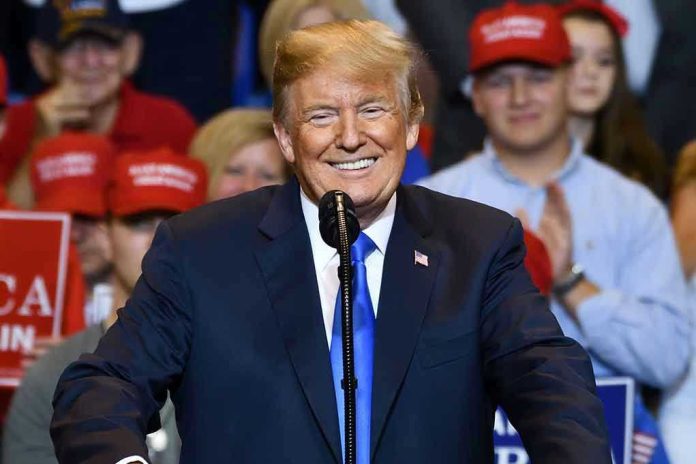
President Trump’s ‘Peace Through Strength’ doctrine promises to restore American power while creating a new global order.
Story Highlights
- President Trump’s second term emphasizes “Peace Through Strength” as a core doctrine.
- Transactional alliances demand more from allies, focusing on American interests.
- Hostage releases and military actions reinforce the administration’s tough stance.
- Critics argue the approach might destabilize global institutions and alliances.
Trump’s Doctrine: Peace Through Strength
President Trump has reintroduced “Peace Through Strength” as the central tenet of his foreign policy, a concept rooted in Reagan-era policies. The 2025 National Security Strategy formalizes this approach, emphasizing military power, coercive diplomacy, and assertive bargaining to protect American interests and deter adversaries. Trump’s administration highlights successful hostage releases and targeted strikes as evidence of this strategy’s effectiveness, aiming to avoid new large-scale wars.
Transactional alliances have become the norm under Trump’s strategy, where countries must contribute more significantly to their defense through financial, military, or resource commitments to receive U.S. protection. This shift from “Pax Americana” to “Pact Americana” reflects a more hard-edged, transactional approach, prioritizing narrowly defined U.S. interests over global liberal norms.
Impacts on Global and Domestic Policy
The administration’s tough stance extends to Iran, where “maximum pressure” sanctions are reinstated, targeting oil shipments to China and redesignating the Iran-backed Houthis as a terrorist organization. On the Israeli front, Trump cuts funding to UNRWA and sanctions the International Criminal Court over its investigations, solidifying his hard-line support for Israel.
Domestically, Trump has reversed previous “woke” policies, reinstating service members discharged over vaccine refusal and halting taxpayer-funded gender-affirming surgeries. He also focuses on strengthening national defenses, ordering the development of a next-generation missile defense shield and restoring traditional military base names.
Criticism and Analysis
While the administration touts these moves as restoring U.S. power, critics argue that the strategy may destabilize international institutions and incentivize arms races. The transactional nature of alliances pressures European and other regional partners to increase defense spending or risk diminished U.S. protection, prompting tensions within NATO and EU circles. Nonetheless, Trump’s doctrine promises a recalibrated U.S. role that emphasizes deterrence through strength and prioritizes core national interests.
However, the long-term viability of such an approach remains in question. Critics warn that while immediate escalation risks might be reduced, the approach could entrench adversaries’ gains and raise concerns about U.S. reliability among allies. Domestically, the reversal of social policies energizes Trump’s political base but may deepen divisions within the military and society.
Sources:
President Trump Is Leading With Peace Through Strength
Trump’s National Security Strategy: From Pax Americana to Pact Americana
Achieving Peace Through Strength in the 2020s
2025 National Security Strategy