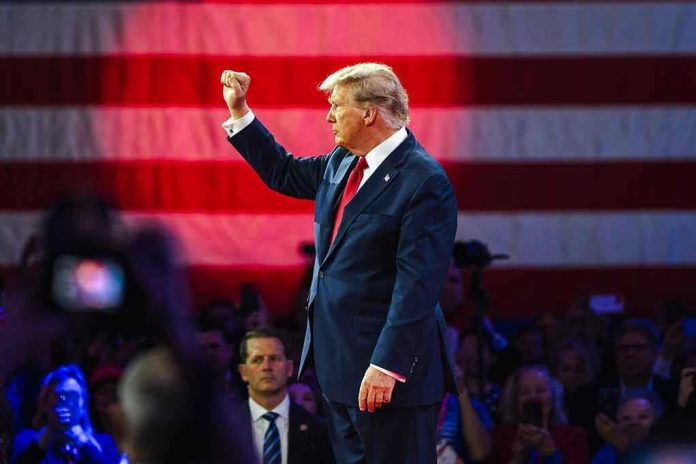
A once-smug media narrative predicting Trump’s downfall and GOP “collapse” now looks like one of the biggest political misreads of the century.
Story Highlights
- Legacy hit pieces claimed Trump would sink Republicans, yet voters brought him back to the White House in 2024.
- Media stories about Trump’s “political collapse” ignored his economic, border, and national security record.
- Trump’s second term is rapidly dismantling Biden-era agendas on immigration, DEI, and federal overreach.
- Conservatives see corporate media attacks as assaults on their values, not serious analysis.
How Media Predictions of Trump’s ‘Collapse’ Aged Poorly
Corporate media outlets once insisted that Donald Trump’s presidency would trigger a “political collapse” of the GOP, seizing on cherry-picked polls and anonymous whispers while ignoring the base that actually votes. Those narratives treated Trump as a fading figure rather than the leader of a movement focused on borders, jobs, and sovereignty. By portraying Republicans as running for the exits, pundits tried to create a self-fulfilling prophecy that never matched what grassroots conservatives experienced.
The same commentary class framed every Trump rally gaffe, every off-script moment, as proof he was “struggling to remain conscious” or mentally unfit, instead of acknowledging hostile coverage and constant pressure unique to his presidency. That framing conveniently distracted from his first-term record on jobs, deregulation, and national security. Many conservatives saw this as another attempt to delegitimize a president who challenged globalist priorities and media influence rather than a serious, fact-based assessment.
Trump’s First-Term Record vs. ‘Collapse’ Narratives
During Trump’s first term, the administration delivered sweeping tax cuts, a roaring pre-pandemic economy, record-low unemployment, and a historic regulatory rollback that lifted pressure off small businesses and working families. The White House documented millions of new jobs, higher middle-class incomes, and surging optimism among manufacturers and entrepreneurs. Those achievements undercut claims that Trump was destroying the party; instead, they showed a Republican agenda centered on growth, energy independence, and American workers.
On foreign policy and border security, Trump’s record contrasted sharply with the collapse storyline. His team hammered ISIS, tightened immigration enforcement, pushed for serious border barriers, and took a harder line on unfair trade deals that had hollowed out American manufacturing. Supporters viewed these moves as long-delayed corrections to bipartisan neglect. Rather than shrinking, the GOP base rallied around a president finally willing to confront China, defend national sovereignty, and put working-class Americans ahead of Washington think-tank orthodoxies.
The Biden Interlude and Why Voters Wanted Trump Back
The Biden years that followed gave conservatives a front-row seat to the policies they had feared: expansive spending, inflation that ravaged savings, a porous border, and cultural agendas pushed through federal agencies and schools. Many Trump supporters watched their energy bills, grocery costs, and housing expenses climb while being told the economy was “booming.” That disconnect deepened frustration with establishment experts who had once claimed Trump was the problem, even as everyday life became more expensive and less secure.
Border chaos, sanctuary city meltdowns, and a flood of illegal immigration cemented the sense that Biden’s Washington prioritized global narratives over American communities. Municipal budgets strained, local crime debates sharpened, and working-class neighborhoods bore consequences coastal commentators rarely discussed. Those realities made earlier predictions of “political collapse” for the GOP seem detached from real-world conditions. Instead, many voters concluded that unchecked progressive policies were unsustainable and that Trump’s tougher approach to enforcement and sovereignty had been vindicated.
Trump’s Second Term: Reversing Biden and Re-Centering Conservative Priorities
Trump’s return to the presidency in 2025 opened a second chapter focused on reversing Biden-era decisions and reasserting conservative priorities inside the federal government. New executive orders moved to close the border, end taxpayer support for benefits going to illegal immigrants, and restore respect for biological reality in sports and health policy. The administration also targeted ideological DEI bureaucracies and classroom indoctrination that many parents saw as hostile to traditional values and merit-based standards.
Alongside cultural course corrections, Trump’s second-term team pushed economic and national security initiatives designed to rebuild strength without surrendering sovereignty. Efforts to unleash American energy, protect U.S. technological leadership, and tighten scrutiny on hostile foreign regimes signaled a return to an America First framework. For conservatives who endured years of media stories predicting a Republican wipeout, the reality of a second Trump presidency underscored a different lesson: when voters face real-world pain from leftist policies, they will often choose borders, order, and constitutional limits over elite narratives.