
Presidential assurances and blacklist actions can coexist in Washington; understanding what that means for testimony under oath is the crux of the Jensen Huang episode, not a contradiction to be memed away.
The Short Version
- President Trump publicly urged Nvidia’s Jensen Huang not to invoke the Fifth Amendment before Congress and signaled openness to a pardon.
- Huang’s reinstatement followed assurances reported to have come from senior U.S. officials that he posed no national‑security threat, even as Commerce blacklisted Megaspeed.
- No public record shows Huang has been charged or formally designated a threat; investigations into alleged chip diversion and counterintelligence risks continue.
- Executive confidence, legal prudence, and export‑control enforcement pull in different directions; Congress will test where those lines actually lie.
What happened and why it matters
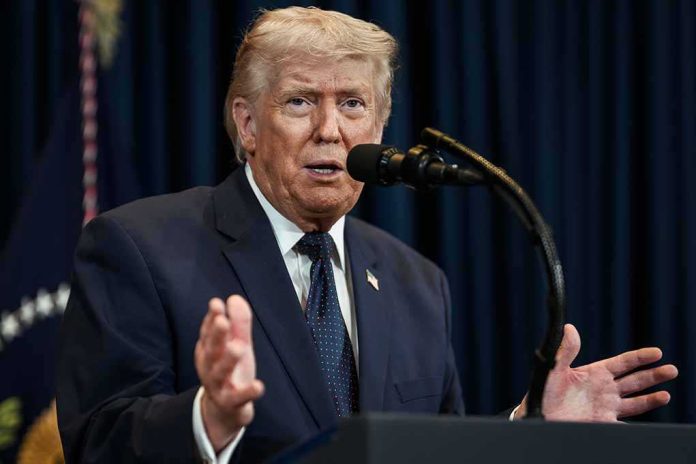
Within days of Nvidia reinstating Jensen Huang as CEO, President Trump said Huang “doesn’t need to take the Fifth” before Congress and indicated he would consider a pardon if necessary. The same week, the Commerce Department added Megaspeed—the Singapore-based firm at the center of the controversy over alleged diversion of advanced Nvidia chips to China—to the Entity List, describing a significant risk of unlawful reexport. The juxtaposition is striking but not inexplicable: institutional actors can clear an individual for reinstatement while simultaneously choking risk in the surrounding transaction network. The stakes are high because Nvidia sits at the heart of AI compute, where export controls, counterintelligence vigilance, and trillion-dollar market consequences collide.
Nvidia’s board moved after receiving what The New York Times described as confirmations from senior U.S. officials that Huang himself posed no national-security threat; Trump also conveyed strong support for Huang’s return and economic importance. Those assurances are consequential precisely because no public charging instrument names Huang, and no formal threat designation has been disclosed. At the same time, they are not a substitute for the investigative record, which remains partially classified and still active around Megaspeed and related entities.
The legal mechanics: Fifth Amendment, pardons, and testimony
Whether a witness should invoke the Fifth Amendment turns on exposure to criminal liability—not on optics, confidence, or even presidential support. The privilege exists where testimony carries a real risk of self-incrimination; courts, not commentators, police the boundary. Congress can displace that risk, for example, through statutory immunity or other protections, in which case the privilege recedes. A presidential pardon can also affect the risk calculus, but it is not a magic eraser from the gallery: acceptance matters, and the Supreme Court has recognized that a witness may still refuse to testify if the offered clemency does not fully eliminate danger across potentially implicated offenses. The practical upshot is simple: executive assurances do not extinguish a witness’s legal rights or duties; careful counsel does.
Trump’s dual message—don’t plead the Fifth, and a pardon is on the table—exposes the tension. If there is truly no legal exposure, a pardon is superfluous; if there is exposure, the Fifth may be appropriate unless neutralized by valid immunity. For Congress, the cleanest path to truthful testimony is targeted questioning anchored in documentary records, paired with formal immunity where the institutional interest in facts outweighs the interest in potential prosecution.
What is known versus what is being inferred
On the record, the Commerce Department placed Megaspeed and affiliates on the Entity List, citing diversion risk of advanced-computing items. Reporting indicates Megaspeed has been under investigation since at least 2024 for alleged chip smuggling to China. These actions and investigations are about networks and behaviors around restricted technology flows; they do not, by themselves, establish that Jensen Huang directed, knew of, or benefitted from unlawful diversion. Nor do they erase the legitimate counterintelligence and compliance concerns that arise when a core supplier’s products show up where the rules say they should not. Both realities can be, and are, true at once.
Critics have pressed the intelligence angle surrounding Alice Huang and Megaspeed, citing reporting that she maintained contact with a Chinese Ministry of State Security officer during the period of her relationship with Jensen Huang, and that some chips acquired by her company were suspected of being smuggled into China. Intelligence coverage to date is mixed on intent and tasking—CNN’s account stressed that agencies had not proven she knowingly spied—while lawmakers across committees continue to demand testimony and records. The counter-case therefore asserts risk and possibility rather than adjudicated fact; it warrants scrutiny, not shortcuts to guilt.
Why executive assurances and blacklist actions can align
Export controls are designed to manage risk at the level of entities, end users, and end uses; compliance regimes throttle chokepoints—licensing, reexports, and transshipment hubs—rather than making binary judgments about every executive who touches a supply chain. Blacklisting Megaspeed is consistent with a risk-based posture toward diversion via Southeast Asian intermediaries, particularly for high-value accelerators sought by Chinese state-linked firms. Assuring a board that a specific executive, at a specific moment, does not pose a national-security threat can be consistent with that broader enforcement posture, especially absent charges or a formal threat designation. The problem arises when political messaging treats this alignment as exculpation writ large or as proof that concerns are overblown; it is neither.
For multinational vendors, the operational antidote is boring but effective: rigorous end-user and end-location verification, audited reseller channels, and continuous anomaly detection on orders, shipments, and RMA flows. The policy community is already experimenting with location verification and chip-tracking approaches that could harden compliance without flattening legitimate commerce. Corporate governance reforms—dedicated export-control committees, empowered chief compliance officers, and escalation rights when geopolitical risk intersects with sales incentives—move this from headline management to durable practice.
Trump Opens Door to Pardoning Nvidia CEO Jensen Huang: A Defining Test for AI Leadership
In a remarkable development at the intersection of politics, technology, and national security, President Donald Trump has indicated that he would consider pardoning Nvidia CEO Jensen Huang… pic.twitter.com/bEAw7SsnAl
— Kamran Shah (@Shahjees) November 25, 2026
What credible oversight looks like next
Congress should seek sworn testimony on discrete, documentable questions: the scope of Nvidia’s relationship with Megaspeed and affiliates; internal due diligence and end-user certifications; any internal alerts or audit findings from 2023 onward; and Huang’s communications, calendars, and approvals touching export controls. Where necessary, committees can accept classified briefings from the Commerce, Justice, and intelligence communities and press for declassified summaries that frame the public record without burning sources or methods. If facts crucial to public confidence remain locked behind classification, inspector-general reviews or sanitized administrative records supporting the Entity List designations can fill the gap.
If Trump’s assurances rest on specific interagency conclusions, naming the agencies and process—without disclosing sensitive substance—would help reconcile the public story. Conversely, if ongoing investigations are robust, avoidable political theatrics around pardons and blunt exhortations about the Fifth will not improve compliance outcomes or market stability. The system already provides a path: evidence, process, and, where risk remains after honest testimony, the formal tools of immunity and, if appropriate at the end of the line, clemency.
Bottom line
The strongest claims in this saga are the narrowest: Commerce has treated Megaspeed as a diversion risk; no public charge names Jensen Huang; Nvidia’s board acted after receiving government assurances about his personal status; and Congress is right to keep pulling documents and testimony until the compliance picture is complete. Treating the Fifth Amendment as a loyalty test and dangling a pardon as a conversation-starter is bad lawyering by proxy. The durable resolution will come from records, rules, and verifiable controls on where advanced chips go—and from testimony grounded in legal reality, not political bravado.
Sources:
mediaite.com, techcrunch.com, aljazeera.com, politico.com, theverge.com, thehill.com, bbc.com, nytimes.com, cnbc.com