The fight over Abdul El-Sayed’s “doctor” label isn’t about one man’s résumé; it’s a textbook case of how American law, medical training, and public rhetoric collide—where an MD degree, a physician’s license, and the authority to practice medicine are three distinct things that campaigns habitually mash together.
The Short Version
- Holding an MD makes someone a doctor; a state license is what makes someone a physician authorized to treat patients independently.
- Reporting and fact-checks agree: El-Sayed earned an MD from Columbia, did not complete residency, and has not held a medical license—meaning he does not practice medicine.
- Supporters defend the “doctor” title based on his MD and public-health work, while critics stress the lack of licensure and clinical authority.
- State law governs who may practice medicine or use the title “physician”; conflating that with the academic degree creates public confusion.
What the credentials actually mean: degree, training, and license are not interchangeable
American medicine is built on a three-step scaffold. First, a university confers the MD or DO degree, which—by itself—properly entitles the graduate to the academic title “doctor.” Second, graduates pursue supervised postgraduate training (residency) to develop specialty competence and meet board and hospital credentialing expectations. Third, a state medical board grants a license, the legal authorization to practice medicine independently and to prescribe, diagnose, and treat. These are different gates with different purposes: education, formation, and legal authority. Licensure turns on state law and usually requires postgraduate training and passing standardized examinations such as the USMLE; residency is the pathway by which most graduates attain the clinical depth states and hospitals require.
That separation is why two statements can simultaneously be true: a person can be a doctor by virtue of holding an MD and also be unlicensed—and therefore unable to practice medicine as a physician. New York law, for example, codifies this distinction explicitly: only a person “licensed or otherwise authorized” may practice medicine or use the title “physician.” The statute treats the MD as an educational prerequisite; it is not, on its own, permission to practice.
What is established about Abdul El-Sayed’s path
On the record, independent profiles and fact checks converge on a few uncontroversial points. El-Sayed earned an MD from Columbia University and later a doctorate in public health from Oxford. He did not pursue residency and has never held a medical license; he has stated plainly that he does not practice medicine. Those facts clarify the center of gravity in the debate: he is a doctor by degree but not a licensed physician. Put concretely, he is not legally authorized to diagnose, prescribe, or independently treat patients in clinical settings.
Where the rhetoric overheats is in compressing these distinctions into absolutist claims. Calling him a “fake” doctor collapses an academic title into a licensing dispute; announcing that he is “a physician” without clarifying the lack of licensure invites the opposite misunderstanding. The narrow legal question—may he practice medicine?—turns on licensure and is answered no. The academic question—did he earn the degree of doctor of medicine?—is answered yes. Those two sentences, held together, describe the case without spin.
Why campaigns keep getting this wrong
Political language rewards shorthand; medical regulation demands precision. In common speech, “doctor” is a proxy for medical authority. In law, the authority resides in a license, not the diploma. Add a third domain—public health leadership—and you get more room for cross-talk. Population-level health work often harnesses epidemiology, policy design, and program management rather than individual patient care. Advocates cast that as “medicine at scale,” emphasizing the training and the mission. Critics counter that absent a license and residency, it is not clinical medicine and should not be framed as such. Both impulses are understandable; only one aligns with the statutory meaning of physician.
The result is a rhetorical tug-of-war. Supporters cite university and institutional bios that style El-Sayed as “Dr.” and as a medical doctor, which is consistent with the MD degree. Detractors emphasize that licensing databases do not list him and that he has not completed residency, which are the conditions under which states entrust physicians with independent practice. The first set of statements stakes a claim in the academic and public-health domains; the second enforces the clinical and legal boundary. The public, meanwhile, hears one word—doctor—and infers the rest.
How the law draws the bright lines
State medical practice acts exist to protect patients by specifying who can provide diagnosis and treatment. They are designed to be bright lines because ambiguity at the bedside is dangerous. Statutes typically bar unlicensed practice and reserve the title “physician” for licensees; they also define criminal or administrative penalties for violations. While details vary by state, the structure is consistent: degree plus exams plus postgraduate training equals eligibility for license; license plus good standing equals legal authority to practice. Importantly, nothing in these laws erases the academic title “doctor” earned from an accredited medical school; they simply cabin what the degree holder may legally do with patients until licensed.
This framework also explains why hospitals, malpractice carriers, and credentialing committees lean so heavily on residency completion and board eligibility. Postgraduate training is where clinical judgment is stress-tested, procedural competence is documented, and supervised responsibility scales to independence. It is the crucible by which “MD” becomes “attending physician.” Regulators, insurers, and health systems align around that standard because the stakes—patient safety, liability, quality—are concrete.
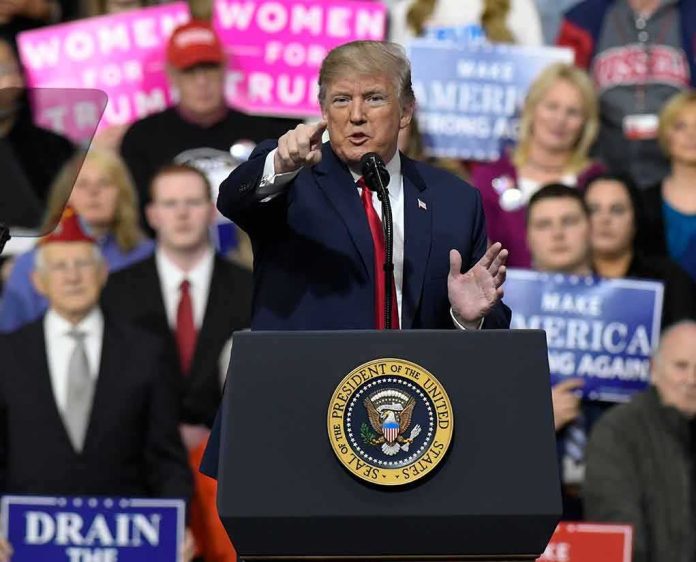
President Trump targets Democrat Abdul El-Sayed over questions surrounding his medical credentials before heading to a rally in Port Huron, Michigan. pic.twitter.com/MRdsSbikta
— Dr. Charlie Quantum (@Drcharliewad) October 25, 2026
Where the genuine disagreement lies—and where it does not
There is no real dispute over the core facts: degree earned, residency not pursued, license not held, clinical practice not undertaken. The conflict is about language and implication. Critics argue that using “physician” or presenting oneself in a way that implies clinical authority is misleading absent a license. Supporters argue that an MD plus public-health leadership justifies the “doctor” styling and that voters care more about a candidate’s health-policy competence than about their licensure status.
The productive way through is disciplined specificity. If the claim concerns bedside authority—prescribing, diagnosing, operating—licensure is dispositive. If the claim concerns academic training or public-health credentials, the MD and doctoral work are relevant. Confusion spikes when those planes are mixed, either to inflate authority or to delegitimize expertise wholesale. The clean, durable formulation in this case is: El-Sayed is a doctor of medicine; he is not a licensed physician and does not practice clinical medicine. That statement tracks the evidence and the law, and it gives the public the information it actually needs.
Why this distinction matters beyond one campaign
Voters routinely evaluate leaders on health policy, pandemic preparedness, mental health, addiction, and hospital finance. Those domains require literate translation between clinical evidence, public-health strategy, and statutory authority. Precision about credentials helps citizens infer what kind of expertise a candidate brings to that work. It also upholds a norm that protects patients: reserving clinical authority for those who have completed the training and licensing that modern medicine demands, while respecting the academic achievements of those who contribute in non-clinical roles.
In short, separate the title from the license. That single act of clarity lowers the political temperature, honors the pathway that safeguards patients, and lets voters judge a candidate’s qualifications on the merits of the role they seek rather than on a caricature of the role they do not claim to perform.
Sources:
x.com, dc.alumni.columbia.edu, detroitnews.com, pdsoros.org, yahoo.com, politics.uchicago.edu, vagelos.columbia.edu, fordschool.umich.edu, aamc.org, ncbi.nlm.nih.gov, pmc.ncbi.nlm.nih.gov