
When police report a dozen casualties within minutes of gunfire outside a packed stadium, precision matters: what happened, to whom, where, and what investigators actually know—no more, no less.
At a Glance
- Twelve people were injured near Perry and Manatee streets in Tallahassee; 11 sustained gunshot wounds.
- The incident unfolded just before 8 p.m. in the vicinity of Florida A&M University’s Bragg Memorial Stadium.
- Victims included six adults and six juveniles; the youngest was 11. Several were seriously hurt, with one reported in critical condition.
- Police described the episode as stemming from an altercation among two or three people; no arrests were immediately announced.
What Happened: The established facts from police and on-scene briefings
Shortly before 8 p.m., Tallahassee police were called to the area of Perry and Manatee streets—just outside the flow of Florida A&M University’s homecoming crowd—after gunfire left multiple people wounded. The Tallahassee Police Department (TPD) confirmed a total of 12 injured: 11 with gunshot wounds and one additional person hurt while fleeing. That split accounting explains headline variations that alternately cite “11 shot” or “12 injured”; the department’s casualty ledger includes both categories, which is standard practice in major incident reporting.
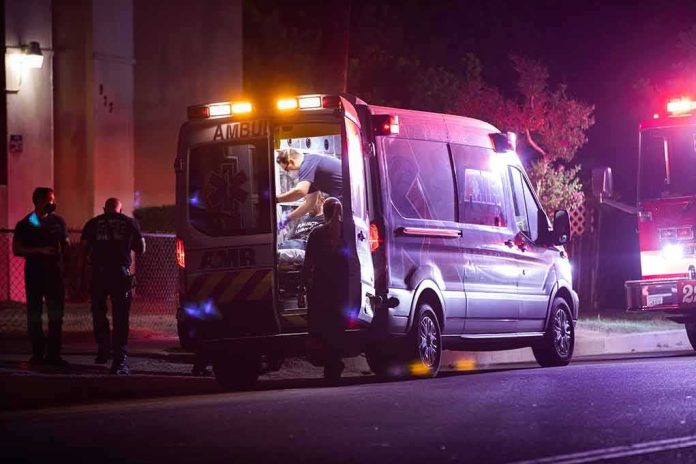
At a late-night briefing, Chief Lawrence Revell detailed the injury profile: six adults and six juveniles among the injured, including an 11-year-old; three victims were described as having serious injuries, and at least one was in critical condition. He emphasized that the scene was chaotic and that officers already in the area moved victims to immediate care, handing them to EMS and transporting several themselves when seconds mattered. The intersection’s proximity to Bragg Memorial Stadium contextualizes the crowd size and police presence; it does not, by itself, establish that the football game caused the violence.
Location and timing: why “near the stadium” is context, not causation
The geography is straightforward: Perry and Manatee sit by Bragg Memorial Stadium, where homecoming events draw heavy foot traffic, vendors, and heightened police staffing. Law enforcement placed the call for service just before 8:00 p.m., as fans and families were still in the vicinity. That proximity explains both the rapid response and the volume of witnesses. It also illustrates a broader pattern in coverage of shootings near schools or campuses: the brand of the institution becomes the headline frame even when the incident may be a localized dispute. Research on campus firearm incidents shows wide variation, and “active shooter” dynamics represent a distinct subset, not a catchall for every episode of gun violence that happens to occur near university property.
In Tallahassee, police have been careful with that distinction. Initial language pointed to a confrontation among two or three individuals as the likely ignition point for the gunfire, a provisional assessment consistent with the physical evidence processing underway on Perry Street. The department’s violent crimes and forensic teams were still documenting the scene and collecting video and witness accounts in the hours after the shooting; Chief Revell said no arrests had yet been made and no person of interest identified at that stage.
The injury count and why early numbers differ across headlines
Discrepancies across early coverage often reflect two different counting conventions: victims struck by bullets versus all individuals injured in the incident. TPD’s statement and briefings separated the 11 gunshot victims from a twelfth person injured while fleeing. Several outlets led with “11 shot,” others with “12 injured.” Both are accurate within their frame; the department’s combined total is the operative figure for the incident as a whole.
Medical condition summaries also shift as hospitals update triage categories from “serious” to “critical” or “stable.” In this case, officials described three serious injuries and at least one patient in critical condition in the first hours, while identifying the age spread and the mix of adult and juvenile patients. Without hospital-by-hospital rosters—which are restricted—police treat the combined condition snapshot as the public baseline until definitive updates are available.
What investigators said they were working: video, witnesses, and the altercation theory
From the outset, the investigative priorities were routine for a multi-victim shooting: lock down the perimeter; identify victims and witnesses; collect shell casings and map positions; canvass for surveillance and cellphone video; and stabilize an initial narrative capable of focusing tips. The “altercation among two or three people” framing functions as that kind of investigative anchor—an avenue, not a verdict. Detectives typically test such a theory against physical evidence (cartridge counts, calibers, impact patterns), video timelines, and corroborated witness statements before upgrading it from preliminary language to a firmer conclusion.
Chief Revell asked the public to channel information through Crime Stoppers or the department’s tip lines, a standard appeal when many potential witnesses are present. The presence of juveniles among the wounded—down to 11 years old—raises public concern, but it also complicates victim and witness interviews forensically and legally; investigators must coordinate with guardians and, in many jurisdictions, specialized interviewers. In the immediate aftermath, Revell noted no arrests and no named suspects; that status often changes as evidence matures.
12 injured, including several minors, in mass shooting near Florida A&M stadium – NBC News
https://t.co/BKR9Ho6weJ— Tyler Fallon (@tjmakiboi) October 25, 2026
How to read this episode alongside campus-violence research
As a matter of categorization, this event is best understood as a multi-victim shooting adjacent to a university venue during a high-attendance event. That is distinct from an “active shooter” attack targeting a campus population. Analyses of gun violence at colleges and universities observe that mass shootings—defined as four or more people shot—constitute a small share of campus-related firearm incidents; more common are disputes and interpersonal violence that surface where large crowds intersect with prior conflicts.
This distinction is not semantic. It governs what prevention looks like. For a targeted attack, drills, access control, and rapid interdiction protocols dominate. For altercation-driven shootings, the leverage points are different: conflict interdiction in crowd perimeters, video coverage and lighting in egress corridors, vendor-zone management, and pre- and post-game patrol patterns that focus on known friction points. When police already have a substantial presence—as they did here—that visibility can shorten response and improve survivability, even if it cannot always preempt the first shots.
Where the facts stand—and what the public should expect next
The non-negotiables are clear. Twelve people were injured near Perry and Manatee streets, 11 by gunfire. The youngest victim was 11. The timing was just before 8 p.m., in the footprint of FAMU’s homecoming weekend. Police characterized the shooting as a dispute involving two or three individuals and said the investigation was active, with no arrests announced in the initial hours.
From here, the evidence cadence is predictable: surveillance footage synchronized with 911 timestamps; ballistics linking casings to firearms and, if recovered, to possessors; witness accounts filtered for reliability; and medical updates from treating hospitals. Public agencies typically release incremental updates as these pieces harden. One brief caveat applies in any early investigation: initial statements summarize what is known at that time and can be refined as evidence is tested and new witnesses come forward.
Sources:
tallahassee.com, cnn.com, greatergood.berkeley.edu