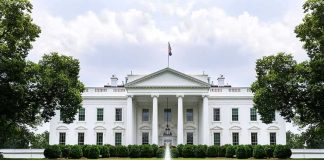


Voluntary industry accords can move faster than legislation, but in AI they only work when paired with credible verification and the live threat of enforcement; today’s reality is exactly that hybrid, with President Trump championing self-policing while the Federal Trade Commission signals it will punish deception and privacy abuses in the meantime.
At a Glance
- Six leading AI firms signed a voluntary White House accord committing to internal controls, external audits, and board-level oversight of “frontier” models.
- The accord is not legally binding; its power hinges on firms’ follow-through and the credibility of outside evaluators.
- The FTC has already built an AI enforcement lane, targeting deceptive claims, unfair practices, and broken privacy promises.
- The durable path forward is a dual system: rapid voluntary standards plus active consumer protection enforcement where firms mislead or harm users.
What the self-policing accord actually requires
The White House accord, signed by President Trump and executives at Google, Anthropic, Meta, OpenAI, xAI, and Nvidia, is short by design and focused on governance mechanics rather than rhetoric: “robust internal processes and controls” to keep models within intended bounds, partnerships with independent external auditors or evaluators, and creation of board-level structures to receive and oversee risk reporting from those teams. The value proposition is speed and proximity: the companies building the most capable systems pledge to wire disciplined testing and monitoring into their own development cycles, then let independent assessors probe whether those safeguards perform as advertised. That is the essential promise—operational controls, not press releases—made visible by the signatures of the leaders who actually allocate compute, talent, and budget to make it real.
The accord’s nonbinding nature is intentional. It avoids the drag of statutory drafting and rulemaking, which can take years, and leans on professional norms, reputation, and investor scrutiny to create pressure for compliance. But it also leaves obvious gaps: Who qualifies as an “independent” auditor? What test suites count as adequate for systems that change under continual training? How are results surfaced to customers, researchers, and the public? These are solvable design questions—but only with incentives strong enough to keep auditing from becoming a box-checking exercise.
Why the FTC is not waiting
Parallel to the accord, the FTC has constructed a straightforward enforcement posture: if you market or deploy AI and deceive users, violate your privacy promises, or engage in unfair practices, you are already within the agency’s jurisdiction. The commission has warned model-as-a-service providers that breaking confidentiality or privacy commitments can be actionable under existing law. It has brought actions and organized an AI-focused sweep—Operation AI Comply—aimed at deceptive AI claims and AI-powered scams, underscoring that “AI” on the label does not excuse consumer harm or marketing puffery about accuracy and capability. In one matter, the FTC required a firm selling AI-detection tools to substantiate accuracy claims with competent and reliable evidence—a clear signal that quantifiable assertions about model performance must be testable and truthful.
Enforcement interest reaches the frontier, too. Reporting indicates the FTC has intensified its probe of OpenAI and Anthropic using civil investigative demands—powerful information-gathering tools akin to subpoenas—examining whether conduct amounts to “unfair or deceptive” practices under the FTC Act. That framing matters: it keeps the focus on harms the law already recognizes—deception, unfairness, and privacy violations—rather than on open-ended debates about speculative AI risks.
The real tradeoff: speed, verification, and credible deterrence
Voluntary standards are attractive in high-velocity sectors because they can iterate with the technology; they are suspect when verification is weak or conflicts of interest loom. The history of tech self-regulation in the U.S. is consistent: voluntary commitments earn trust when they bake in independent testing, disclose meaningful results, and operate under the shadow of real enforcement if firms lie or harm users. That is the logic of the current arrangement. The White House accord names the internal and external scaffolding; the FTC supplies the deterrent if claims about that scaffolding turn out to be spin. Properly aligned, the two are complements, not substitutes.
Critics from both left and right argue self-regulation alone is insufficient—some call it a “recipe for disaster,” and others float criminal liability if AI “agents” break laws—reflecting a bipartisan instinct to harden accountability for powerful systems. Those instincts will eventually be channeled into legislation if voluntary architectures stall or repeat old patterns of under-disclosure and over-claiming. But the existence of a credible, already-active enforcement backstop makes it harder for bad-faith actors to hide behind the word “voluntary” today.
Mechanics that separate real safety programs from theater
In AI governance, details are destiny. A functional self-policing regime includes, at minimum: (1) pre-deployment evaluation with red-team methods that reflect the model’s plausible misuse cases; (2) post-deployment monitoring that tracks model drift and emergent behavior; (3) incident response that can throttle, patch, or roll back problematic features; (4) independent evaluation with access to artifacts—eval design, datasets, prompts, and failure logs—sufficient to replicate or challenge company claims; (5) board-level oversight with authority over go/no-go decisions for higher-risk releases. The accord gestures at this stack; the critical test is whether independent auditors are sufficiently empowered and whether summary results are disclosed in ways customers and researchers can interrogate.
The FTC’s posture forces discipline around the edges: marketing claims about “robust safeguards,” accuracy rates, or privacy protections must be grounded in evidence. If a company touts an external audit, the scope and findings should be real and reviewable; otherwise, the claim risks crossing the line into deception. This is not theoretical—AI-adjacent enforcement actions have already compelled companies to back their numbers or stop saying them.
What to watch as the hybrid model matures
Three signals will reveal whether the accord is maturing into substance. First, the caliber of independent evaluators: Are they technically capable, conflict-managed, and granted access that goes beyond marketing demos? Second, the quality of disclosure: Do companies publish evaluation methodologies, salient failure modes, and mitigations in a form customers can use to make risk decisions? Third, the bite of enforcement: When firms over-claim or under-deliver on privacy and safety, do they face consequences swiftly enough to deter repetition? The FTC’s toolset—civil investigative demands, unfairness and deception authority, and remedial orders—can supply that bite while Congress debates longer-term frameworks.
The accord’s upside is speed and proximity to where engineering choices are made; the FTC’s upside is legitimacy and deterrence rooted in law. Neither on its own is sufficient for an enduring AI governance regime. Together, they can stabilize the present: voluntary controls that evolve with the tech, audited by parties capable of testing what matters, policed by an agency prepared to intervene when promises and performance diverge. If that alignment holds, the United States can continue to ship useful AI while reducing the predictable harms that make backlash and blunt regulation inevitable.
Trump Rejects AI Regulation as Tech CEOs Sign Voluntary “Self-Policing” Accord. Critics warn that self-regulation isn’t enough to prevent AI models from making disastrous mistakes in the future. https://t.co/ne3Xxjx4ei
— Prof. Paul Brown, PhD (@pbrown4348) October 1, 2026
Bottom line
Self-policing is worth pursuing only if it is auditable and accountable. The White House accord sketches the governance scaffolding inside companies; the FTC supplies the accountability outside them. That dual structure—not one or the other—is what gives AI oversight teeth today.
Sources:
reason.com, reuters.com, aljazeera.com, politico.com, abcnews.com, cnbc.com, cnn.com