

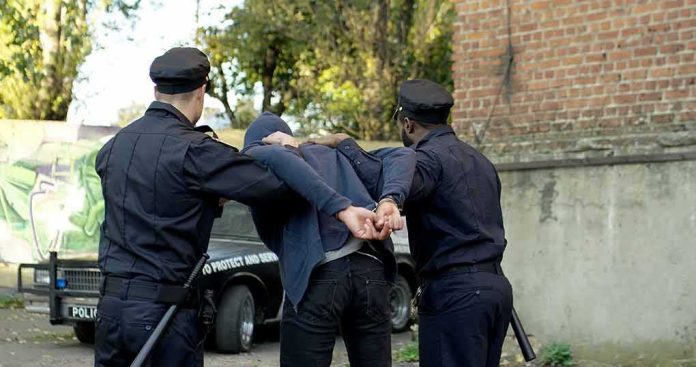
Germany’s indictment of seven suspected Hamas operatives is not an isolated police success; it is the clearest statement yet that European prosecutors now treat Hamas as a transnational apparatus capable of directing armed attacks on the continent, with logistics, weapons pipelines, and target sets that extend well beyond the Middle East.
The Short Version
- German federal prosecutors filed formal terrorism charges against seven men for Hamas membership and preparing attacks, moving the case to Berlin’s State Security Senate for trial authorization.
- Prosecutors allege the cell acted on orders from senior Hamas figures and secured a fully automatic rifle, 13 pistols, and over 700 rounds of ammunition.
- The alleged target set included Israeli, Jewish, and pro-Israel sites in Germany and Austria, timed to the second anniversary of the October 7 attacks.
- The suspects remain in pretrial detention, signaling courts have already found a sufficient threshold of risk and suspicion.
What prosecutors say happened and why it matters
Federal prosecutors in Karlsruhe charged seven men with membership in a foreign terrorist organization and preparing a serious violent act endangering the state—Germany’s core counterterrorism offenses. The indictment, submitted to the Berlin Higher Regional Court’s State Security Senate, alleges the group functioned as an operational node of Hamas in Europe, procuring firearms and ammunition while receiving direction from senior Hamas figures. According to the charging documents summarized by multiple outlets, investigators recovered a fully automatic rifle, 13 pistols, and more than 700 rounds—quantities consistent with a team-based attack concept, not a lone-wolf improvisation.
Prosecutors further allege the intended targets were Israeli, Jewish, and pro-Israel sites in Germany and Austria, with timing keyed to the second anniversary of Hamas’s October 7 attacks. The Berlin-Vienna axis is telling: it suggests cross-border planning and support infrastructure, and it tracks with how European security services model contemporary terrorist tradecraft—small cells, decentralized caches, and instructions relayed via hard-to-attribute channels.
How Germany builds cases like this: secrecy first, adjudication second
To a U.S. reader, the pace and opacity of German state security prosecutions can feel unfamiliar. German counterterrorism practice typically moves early with pretrial detention, secrecy-heavy investigations, and a filing to the State Security Senate, while the public record lags the evidentiary core. That is the point, not a bug: it preserves operational sources and methods, ring-fences foreign intelligence contributions, and keeps the most probative intercepts or human-source reporting compartmented until the court requires disclosure.
This pattern has precedent. In February 2025, four alleged Hamas members went on trial in Berlin in what was described as Germany’s first prosecution for Hamas membership tied to a European weapons network; by March 2026, the court handed down prison sentences, affirming the terrorism framing and Germany’s designation of Hamas within the criminal law context. The trajectory—indictment, detention, security-senate trial, and ultimately convictions—maps the institutional playbook for handling organizations treated as transnational terrorist entities inside Germany’s legal system.
Alleged command-and-control and the weapons pipeline
The centerpiece of the new indictment is command responsibility: prosecutors contend the seven acted on instructions from senior Hamas officials. In European terrorism cases, such direction often surfaces through a blend of digital forensics (encrypted chat recoveries, device imaging), human sources, and partner-nation intelligence passed via mutual legal assistance. While the full bill of particulars is not public, the allegation itself carries weight because it upgrades the theory of the case from mere ideological affinity to organizational membership and tasking—precisely what German law criminalizes at lower thresholds than completed attacks.
On the materiel side, the recovered firearms and ammunition matter for two reasons. First, they demonstrate procurement capability—access to automatic and semi-automatic weapons with sufficient ammunition for multiple engagements. Second, they invite tracing: serial numbers, ballistics, and import pathways that can expose handlers, logistics hubs, and criminal intermediaries. In earlier European cases tied to Hamas-support networks, authorities have documented weapons caching across borders and contact with organized crime; the new indictment’s inventory, if validated at trial, would fit that operating picture.
Targeting logic and timing
Attacking Israeli, Jewish, and pro-Israel sites inside Europe would serve three overlapping objectives for a group like Hamas: retaliation signaling, propaganda-of-the-deed effects amplified by European media markets, and strategic pressure on European governments over Middle East policy. The timing around the October 7 anniversary is similarly legible to counterterrorism practitioners. Anniversary-linked plots are a known phenomenon; they compress planning calendars into symbolically potent windows and seek to hijack public memory with renewed fear. That prosecutors name this alleged timing in their charging narrative is consequential—it asserts intent beyond abstract readiness.
Where this fits in Europe’s counter-Hamas evolution
Across Europe, enforcement posture toward Hamas has hardened from primarily financial and political-network scrutiny to active disruption of suspected operational cells. Analysts have documented a shift toward transnational logistics—diaspora facilitators, criminal partnerships for weapons and forged documents, and prepositioned caches—that enables geographically opportunistic attacks. Germany’s recent court outcomes against Hamas-linked defendants, culminating in prison sentences in Berlin in 2026, show this is no longer theoretical in the German context; courts have been willing to translate intelligence-derived allegations into criminal liability when evidence meets statutory thresholds.
That precedent matters for the current case. Once a court has accepted that a network storing weapons for Hamas inside Europe constitutes terrorist-organization membership and preparation for serious violence, subsequent indictments alleging similar structures—orders from senior figures, cross-border caches, defined target categories—enter a doctrinally settled lane. It does not pre-judge the seven defendants’ guilt, which remains for the court to determine, but it clarifies the legal terrain on which prosecutors will argue and judges will weigh risk and intent.
Plotter of Hamas Jihad Massacres in Germany and Austria Had an Unusual Day Job https://t.co/e7GwVorU8R
— CHRISTIAN CONSERVATIVE FIGHTERS FOR FREEDOM !!! (@timlatimer365) September 14, 2026
What to watch as the case moves forward
First, detention review rulings. In Germany, sustained pretrial detention in a State Security matter typically signals the court’s acceptance of concrete suspicion and risk factors such as flight or collusion. Written reasons, when published, can surface high-level summaries of the evidence without exposing sources. Second, weapons tracing disclosures. Even partial serial-number or ballistics narratives can illuminate whether the firearms came via known Scandinavian or Balkan pipelines, a recurring feature in European terrorism and organized crime cases.
Third, any courtroom references to communications with senior Hamas figures. Judges are cautious with intelligence-derived evidence; if prosecutors rely on intercepts or foreign partner reporting, pay attention to how they lay foundation and whether the court accepts summaries, redactions, or classified briefings in camera. Finally, the articulation of targets. If the indictment or trial filings name specific synagogues, community centers, or diplomatic premises—paired with reconnaissance, maps, or surveillance—expect the court to treat that as strong corroboration of operational intent rather than abstract propaganda alignment.
Bottom line
By filing formal charges against seven suspected Hamas operatives for membership and attack preparation—anchored in alleged direction from senior figures, a concrete weapons cache, and a time-stamped target set—German prosecutors have placed Hamas’s European operational question squarely before a security court that, in recent years, has shown it will convert intelligence-shaped investigations into criminal verdicts when the record supports it. The legal doctrine is in place; the adjudicative test now shifts to the particulars of this cell, its chain of command, and its guns.
Sources:
dw.com, streamlinefeed.co.ke, yahoo.com, ground.news