

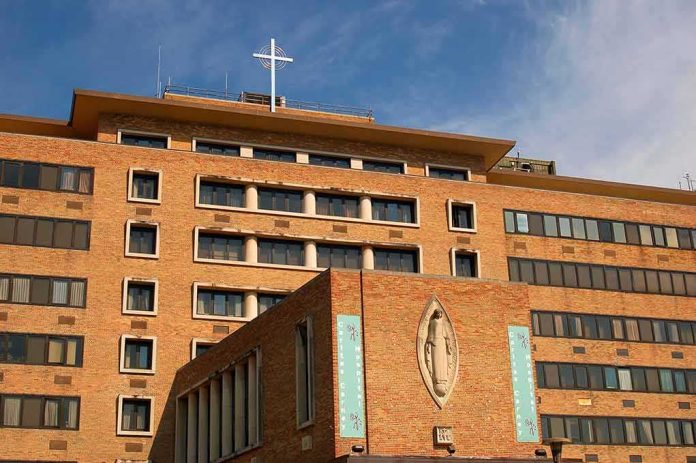
When a faith community sells a mission‑defining property, New York law treats the cash not as a windfall but as a charitable asset that must remain tethered to the organization’s stated purposes—sometimes in escrow—until the state is satisfied the next use honors that purpose. That is the quiet heart of the dispute over roughly $19.3 million in proceeds from the Sisters of the Congregation of Divine Providence’s Manhattan property sale.
The Short Version
- New York approved the sale of the congregation’s Jeanne d’Arc residence and allowed limited reimbursements, but conditioned all remaining proceeds on further approval.
- The Attorney General cited quasi cy‑près (use‑of‑funds alignment) and related‑party concerns, and required escrow of approximately $19.3 million pending state or court sign‑off.
- Under New York charities and religious‑corporation law, pre‑approval and, frequently, escrow are standard where a key mission‑linked property is sold.
- The core question is not who “owns” the money, but which future uses the law will deem consistent with the organization’s charitable purposes.
What the public record actually shows about the sale and the money
The Jeanne d’Arc property was sold for $22.5 million to an entity led by John A. Catsimatidis. New York’s Attorney General (AG) approved the transaction, authorized repayment of $2,737,459.88 to the Sisters for carrying costs and expenses, and acknowledged other routine closing disbursements. Crucially, the AG’s approval document states that the remaining proceeds—about $19,316,727—must be held in escrow by outside counsel until either the AG or a court approves their use. The same approval explicitly disclaims authorizing any other use or distribution and flags concerns grounded in quasi cy‑près principles and potential related‑party issues. Those details are not inference; they are written into the approval itself.
Independent coverage has mirrored those mechanics: the state reviewed and green‑lit the sale and limited reimbursements but objected to the Sisters’ plan for broader deployment—such as care for aging members and support of other ministries—unless and until that use passes the charities‑law tests. The funds remain restricted not because the sale was blocked, but because use‑of‑funds approval was withheld pending further review.
Why New York inserts itself here: the legal architecture
New York imposes a distinctive, well‑developed oversight regime on nonprofits and religious corporations. When a charitable entity proposes to sell all or substantially all of its assets—or, in the religious context, any real property transfer of consequence—the deal is not self‑executing. The AG or a court must conclude the transaction is fair and reasonable to the corporation and consistent with its purposes. That approval can come with conditions, including escrowing proceeds until a qualifying downstream use is identified and approved. The Charities Bureau’s own guidance contemplates escrow where a house of worship or main premises is involved and the organization has not yet secured replacement arrangements or a compliant plan for proceeds.
Two legal ideas animate these conditions. First, donor intent and corporate purpose: charitable assets are impressed with a trust‑like obligation to be used for the mission the law recognizes. Second, cy‑près and its close cousin, quasi cy‑près: when original purposes become impracticable or assets change form, the law channels funds to the “next best” use that most closely approximates the original charitable aims. If officials see a risk that proceeds will drift from that line—say, by subsidizing a related party, or funding activities not tightly aligned with the corporation’s stated purposes—they can hold the money while they scrutinize the plan.
Where the parties’ expectations diverge
The Sisters’ position is morally intuitive and practically urgent: they sold a costly, aging property, and they argue the proceeds should sustain their members and ministries. They point to the AG’s own approval language recognizing repayment of specific expenses and the existence of an escrowed “net proceeds” bucket intended, in their view, to support the congregation’s continuing charitable life. Advocates sympathetic to the Sisters read the escrow as a temporary administrative step that has become an undue and lengthy delay.
The state’s position is narrower and procedural—but firmly grounded in the statute and its guidance. The AG approved the sale price and reimbursed costs, then expressly withheld approval for any other use, citing quasi cy‑près alignment and related‑party concerns. The escrow is not an informal hold; it is the condition of approval. If the Sisters seek to fund elder care at a congregational facility or to underwrite other works, they must present a plan that persuades the AG (or, failing that, a court) that the uses are sufficiently close to the organization’s legally cognizable purposes and free of related‑party pitfalls. Until that happens, the default is stasis.
How quasi cy‑près, related‑party scrutiny, and escrow interact
Quasi cy‑près review asks a deceptively simple question: given the nature of the asset sold and the corporation’s purposes, does the proposed redeployment of proceeds preserve, as nearly as possible, the original charitable function? When the property was mission‑linked—housing, worship, or direct service—the bar for alignment rises. Paying for aging members’ care may feel contiguous with a religious order’s life, but if the order’s corporate purposes and donor‑restricted intents emphasize a particular apostolate or facility‑based service, officials may seek a tighter nexus or guardrails.
Related‑party rules add another layer. Even when a use is facially aligned, transfers that benefit entities or persons with a relationship to the nonprofit must be vetted for conflicts, fair value, and governance integrity. That can force creative structuring: restricted endowments, third‑party management contracts, or court‑blessed grantmaking programs with objective criteria can satisfy the law where direct transfers would not.
A few years ago, Letitia James aimed her peculiar interests in private property at Donald Trump. Now James refuses to release the proceeds of a Manhattan property sale to aging nuns who can no longer support the ministry they ran in New York City for more than a century.
— Dr. Michael Bunch (@dr21549) September 18, 2026
What would resolve the impasse
Three pathways typically break logjams like this. One, a revised use‑of‑funds plan negotiated with the AG that demonstrates cy‑près fidelity and cures any related‑party exposure—often by routing support through restricted funds with independent oversight. Two, petitioning the state supreme court for approval on notice to the AG, presenting appraisals, purpose statements, and expert affidavits to show the proceeds will preserve the mission as closely as practicable. Three, a hybrid: partial releases tied to discrete, pre‑approved projects or expenditures, with the balance remaining restricted until additional plans mature. Each option uses the same vocabulary the approval document invokes; the Sisters do not need to invent a new doctrine, only to satisfy the existing one.
The larger lesson for charities and religious corporations
This episode is not an outlier; it is a case study in how New York’s protective posture toward charitable assets works in practice. The state will bless fair sales, reimburse legitimate carrying costs, and then demand a legally disciplined plan for the corpus. Escrow is a feature, not a glitch. For boards contemplating a sale of mission‑critical real estate, the practical takeaway is to reverse the usual sequencing: build a cy‑près‑grade deployment plan, scrub it for related‑party entanglements, and engage with the Charities Bureau early. That homework does not just speed approval; it protects leadership credibility when hard stewardship decisions meet public scrutiny.
Sources:
thegatewaypundit.com, thefp.com, static1.squarespace.com, cdn.ymaws.com, ag.ny.gov