

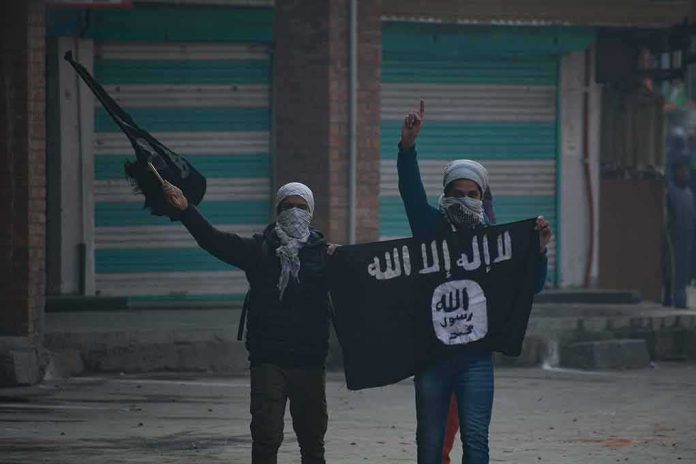
Three ISIS-inspired extremists plotted a mass shooting against Jews in Manchester, exposing once again how Western weakness toward radical Islam and open borders has put innocent families in the crosshairs.
Story Snapshot
- Three men were convicted for an ISIS-inspired plan to massacre Jews in Manchester as supposed “revenge” for Israel’s war with Hamas.
- The plot shows how global jihadist propaganda seeps into Western cities and targets visibly Jewish communities first.
- Years of soft-on-terror, open-borders, and multicultural appeasement policies in the West helped create this threat environment.
- Under Trump’s renewed focus on security, Americans are demanding stronger action against Islamist extremism and antisemitism at home.
ISIS-Inspired Plot Targets Manchester’s Jewish Community
British prosecutors revealed that three men were convicted over a detailed plan to carry out an ISIS-inspired mass shooting against Manchester’s Jewish community, allegedly as revenge for the conflict between Israel and Hamas in Palestine. Limited information from the case indicates the men embraced jihadist propaganda that frames Jews worldwide as legitimate targets whenever Israel defends itself. The conspirators reportedly focused on civilian locations where Jewish families gather, seeking maximum casualties and shock value to advance their radical cause.
The revealed plot follows a years-long pattern in Europe, where Islamist extremists have repeatedly targeted synagogues, kosher shops, and Jewish schools, betting that weak political leadership and politically correct policing will fail to deter them. In this case, intelligence and law enforcement eventually intervened in time, but the fact that such a plan progressed far enough for convictions underscores a deeper failure. Jewish communities now live with constant security perimeters, while the original policy architects who opened doors to extremism rarely face accountability.
Radical Ideology Fueled by Global Conflict Narratives
The Manchester conspirators reportedly justified their plan as retaliation for Israel’s operations against Hamas, mirroring a propaganda line long pushed by ISIS and other jihadist groups. These narratives deliberately erase distinctions between Israeli soldiers and Jewish civilians worldwide, encouraging lone wolves and small cells to “avenge” Gaza or Palestine by attacking unsuspecting worshippers thousands of miles away. When Western media and politicians amplify one-sided rhetoric that demonizes Israel, radicals interpret that climate as moral permission to move from online anger to physical violence.
Years of tolerance for extremist preaching, radical online networks, and imported sectarian hatreds created an environment where such a plot could grow. Authorities frequently focused more on avoiding accusations of “Islamophobia” than on shutting down dangerous sermons or hate-filled community events. That hesitancy allowed recruiters and propagandists to operate in gray zones, grooming young men to see Jews as enemies and terrorism as a heroic response. This case is one more example of how moral relativism toward terrorism and equivocation about Israel’s right to self-defense can have deadly downstream consequences.
Lessons for America After the Biden Years
For American conservatives watching from across the Atlantic, the Manchester case illustrates what happens when border control, cultural confidence, and clear opposition to extremism are sacrificed on the altar of globalism and woke politics. During the Biden years, the U.S. government downplayed Islamist threats, loosened border security, and prioritized diversity narratives over honest discussions about radical ideology. That approach mirrored Europe’s earlier mistakes, where leaders dismissed warnings about imported extremism and rising antisemitism until terror plots and street attacks made the problem impossible to ignore.
With Trump back in the White House, many Americans expect a hard pivot away from that failed model. Trump’s previous and current terms have been defined by strong border policies, clear-eyed counterterrorism, and an unapologetic defense of American and allied security. Those principles resonate with voters who believe that the first duty of government is to protect its citizens, not to appease international activists or radical interest groups. The Manchester plot is a foreign case, but to many U.S. families, it feels like a preview of what open-border, soft-on-crime governance can bring if it returns.
Protecting Jewish Communities and Constitutional Liberty
For conservatives who cherish religious liberty and the First and Second Amendments, attacks like the Manchester plot strike at core American values. An assault on a Jewish community abroad is a warning about what could happen to synagogues, churches, and other houses of worship here if the United States lets its guard down again. Robust support for Israel, strong penalties for terror financing, and close scrutiny of extremist networks are seen not as optional foreign policy choices, but as essential steps to defend freedom of worship and community safety on U.S. soil.
At the same time, many on the right argue that lawful gun ownership and local security preparedness remain crucial last lines of defense when authorities fail or arrive too late. While Britain’s strict gun control leaves most citizens disarmed and dependent on overstretched police, Americans still possess the constitutional right to protect their families and congregations. The Manchester case will likely reinforce calls among U.S. conservatives to secure borders, confront Islamist ideology honestly, support Jewish allies, and safeguard the tools free people need to defend themselves against those who hate their faith and freedoms.